

The Perry Goodrum House
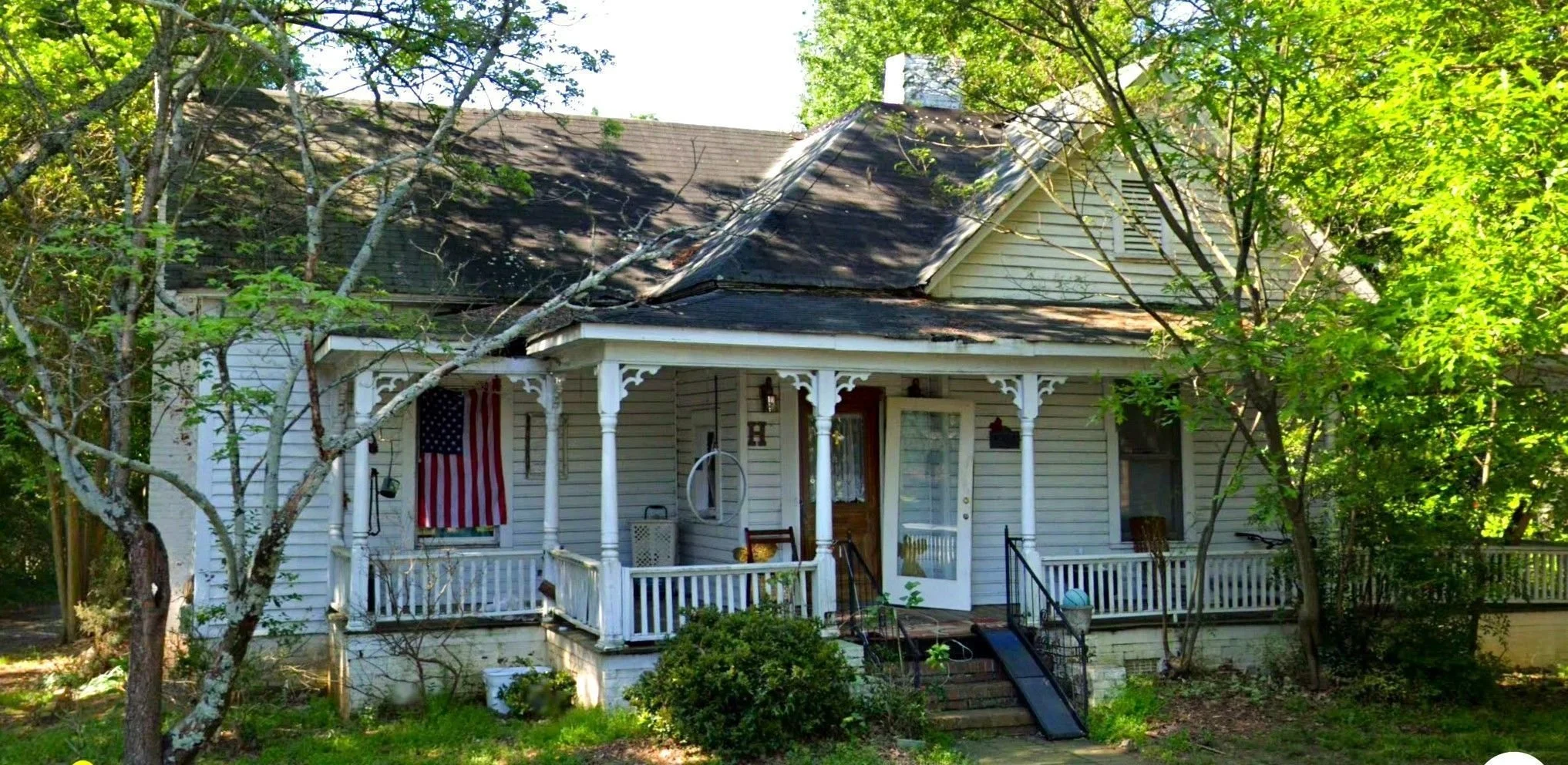
The Perry Goodrum house before revitalization by the Cain Center.
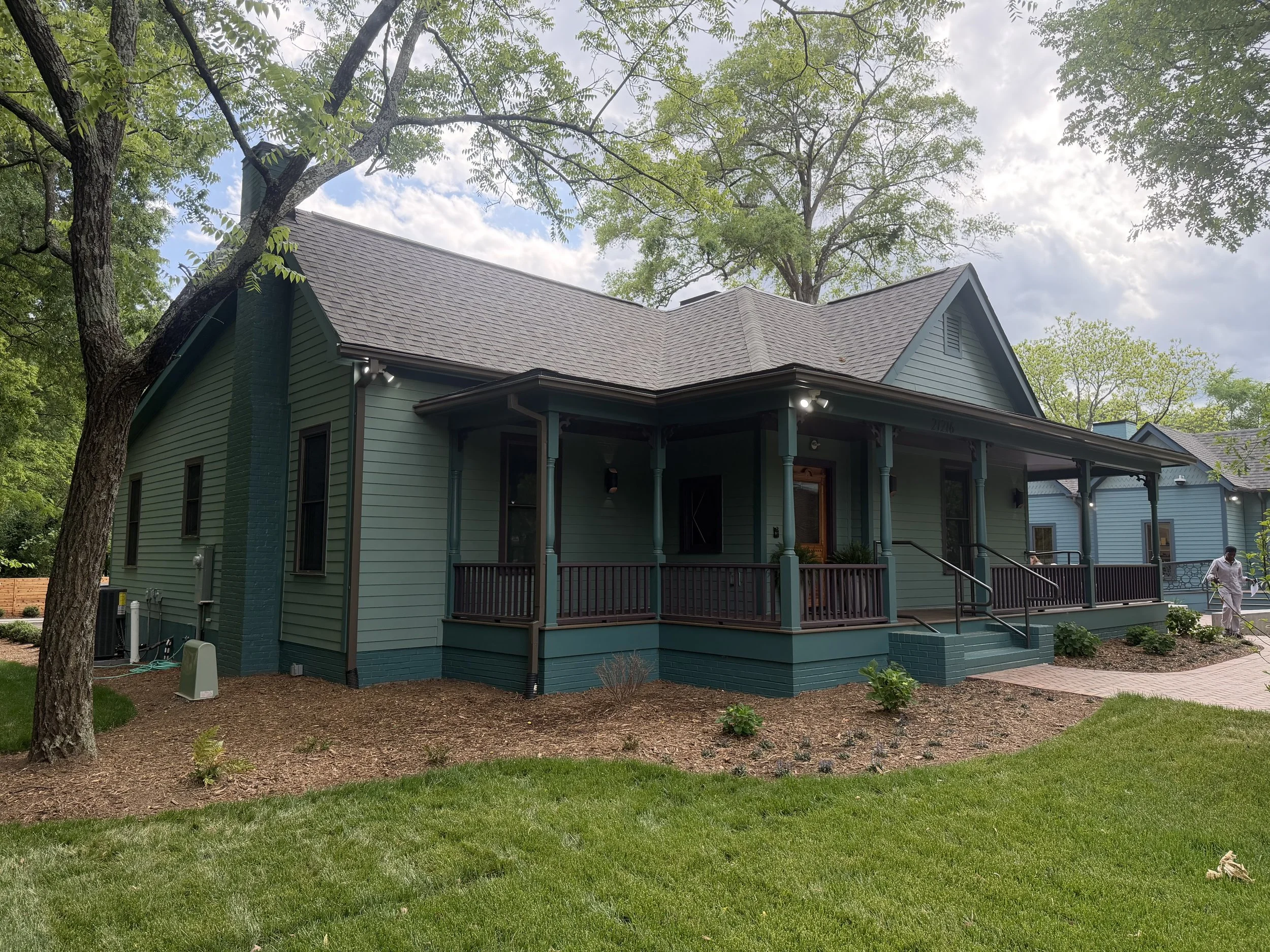
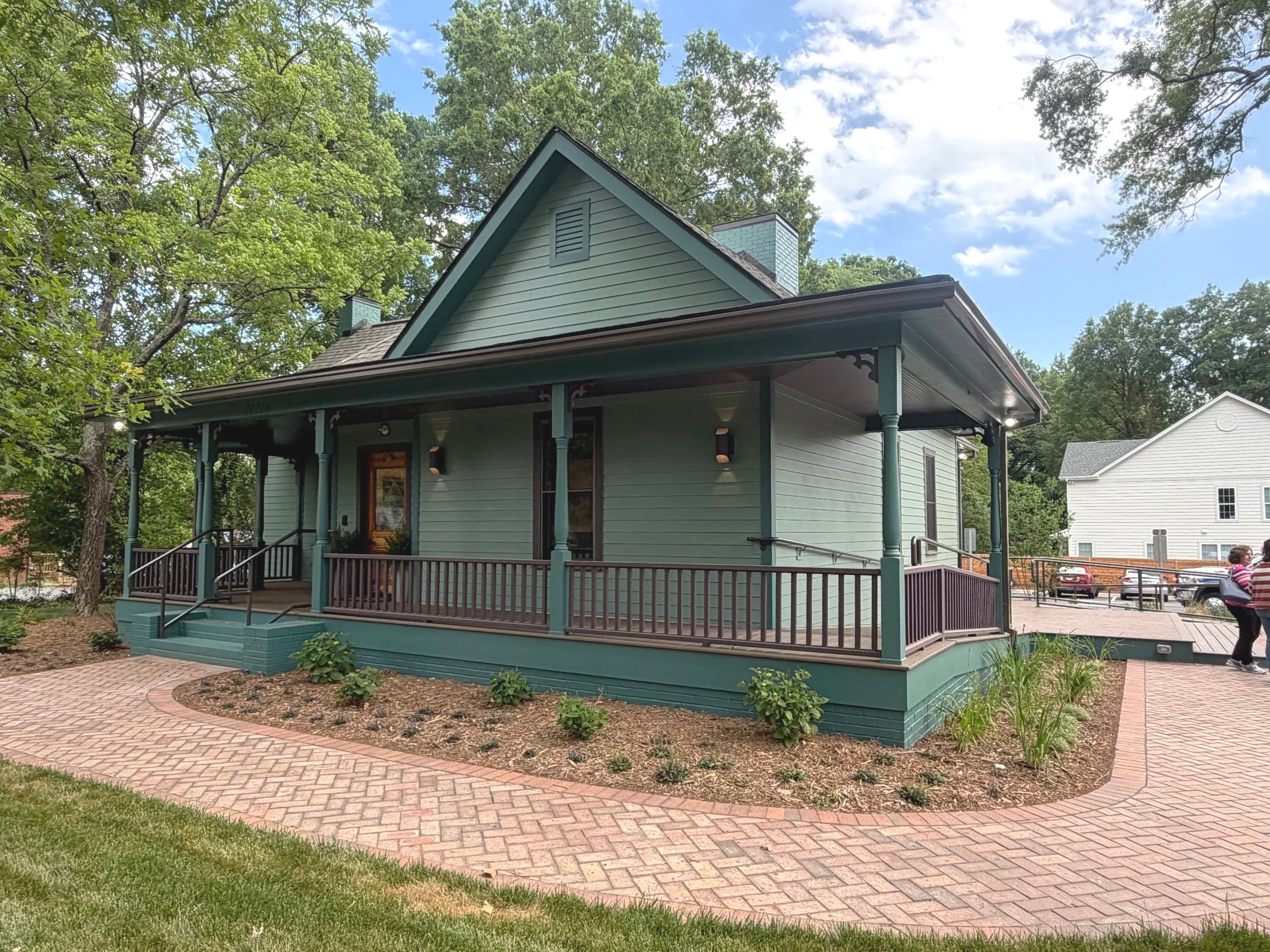
The Perry Goodrum house after revitalization by the Cain Center.
Video overview of The Perry Goodrum House courtesy of the Cain Center
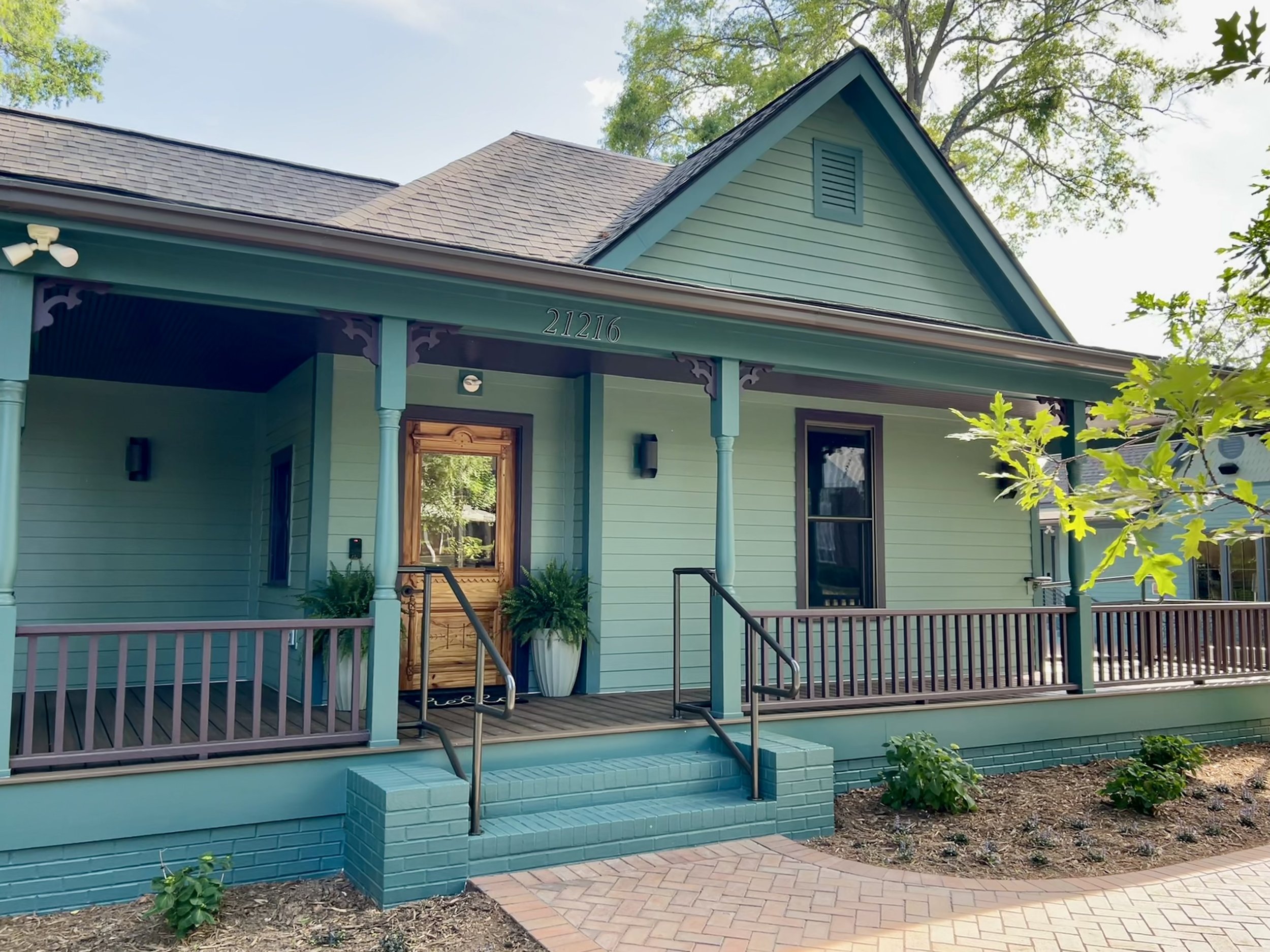
Photo’s of The Perry Goodrum house courtesy of the Cain Center
Perry W. Goodrum bought the lot in 1900 and erected the residence sometime thereafter, now known as the Perry Goodrum House. Perry died in 1911 of typhoid fever, likely due to contaminated water from a community well. Goodrum was the supervisor at the Cornelius Gem Cotton Mill (aka Oak Street Mill).
In October 1995, the Town of Cornelius produced a comprehensive evaluation of the built environment of the Town. This study determined that the Perry Goodrum House and the Gabriel-Puckett House were historically significant because: "Along Catawba Avenue and North Main Street, members of the middle class occupied a variety of Queen Anne cottages and, by the 1920s, bungalows. Exemplary Queen Anne cottages include the Perry Goodrum and William Puckett houses (sic.), which stand side by side on Catawba Avenue. Both were built before 1910, and are one-story, frame, hip-roofed dwellings, with projecting gable-roofed bays and turned-posts porches trimmed with millwork. As Cornelius grew in the early twentieth century, its progress was measured most clearly by the tree-lined blocks of handsome residences built for the local elite as well as the middle class. The great majority of residential areas remains well-preserved. They are characterized by mature shade trees and shrubbery, and houses that represent both traditional, regional forms as well as the most popular architectural styles of their time."
Today, the exterior of the Perry Goodrum house has been permanently preserved and is utilized as administrative offices for the Cain Center for the Arts.
A “Preserv-italization” Success Story
The Perry Goodrum and Gabriel-Puckett Houses exist today thanks to a collaboration by many. Although the Town of Cornelius and Mecklenburg County recognized that these homes were historically significant, these houses previously had no landmark status or preservation protection.
Both houses were built before 1910, and are one-story, frame, hip-roofed dwellings, with projecting gable-roofed bays and turned-posts porches trimmed with millwork. As Cornelius grew in the early twentieth century, its progress was measured most clearly by the tree-lined blocks of handsome residences built for the local elite as well as the middle class.
Preservation begins with the property owners’ support, and this is a key component for preservation success stories.
When the property owners, Phil and Elaine Howard, decided to sell their property, they hoped to find a buyer who would choose to preserve the houses. In addition to the houses, their property included additional land in a prime location, making this property very desirable to developers.
Debbie Monroe, a broker with Lake Norman Realty, brought the properties to the attention of Abigail Jennings, president of Lake Norman Realty and co-founder of HEARTS Collaborative. Jennings recognized the potential for a hybrid approach to help the property owners achieve their asking price and preserve the houses. In 2021, Lake Norman Realty encouraged Preserve Mecklenburg Incorporated (PMI) to take an exclusive, assignable option to purchase the houses and land. This protected the properties and provided the time to find the ideal buyers for the project, which ultimately were the Cain Center and Meeting Street Homes. This allowed the homes to be saved, the vacant land to be developed, and the property owners to achieve their financial goals. Most importantly, there is a permanent preservation easement held by PMI on the Perry Goodrum and Gabriel-Puckett Houses, which means they will never be demolished in the future.
The success of this project is a model for what can be achieved in preserving the character and charm of historic streetscapes in our region.
Thank you to the following for their involvement and collaboration, which made this project possible:
The Howard Family
Debbie Monroe and Abigail Jennings, Lake Norman Realty
Preserve Mecklenburg Inc.
The Town of Cornelius Planning Department
The Cain Center
Meeting Street Homes
Link to Lake Norman Publications Article: https://www.lakenormanpublications.com/articles/a-historic-preservation-success-story-in-cornelius/