
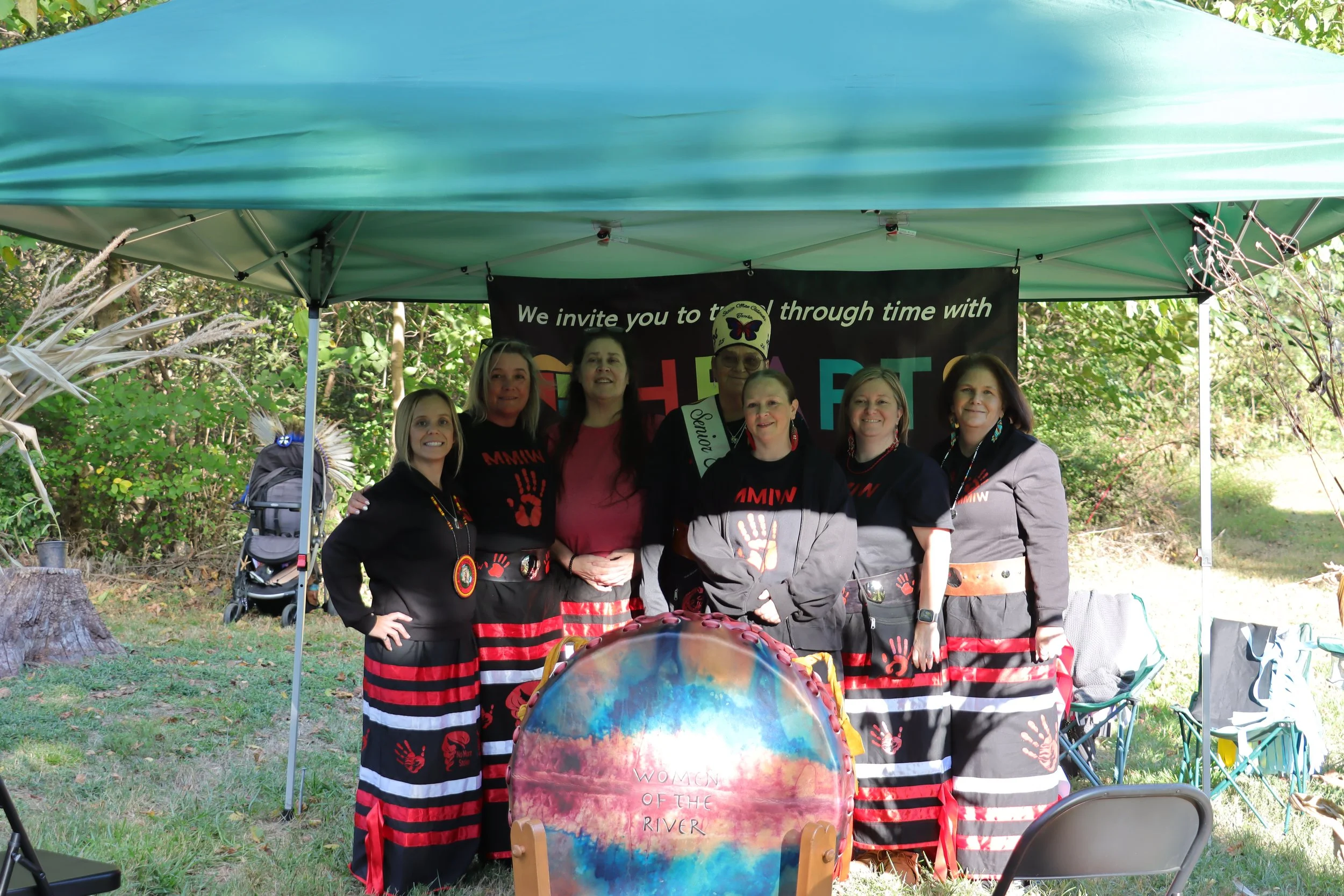
HEARTS welcomed back friends from the Catawba Nation to Cedar Grove on October 17, 2025, for our third annual HEARTS Catawba Nation ’26 happening. The program explored the historical roots, cultural traditions, and enduring legacy of the Catawba Indian Nation: Ye Iswa, the “People of the River,” who called our region home for more than 14,000 years. Through presentations, traditional ecological knowledge, local artifacts, and live cultural demonstrations, guests gained a deeper understanding of the people whose ancestral lands once extended across the Carolina Piedmont.
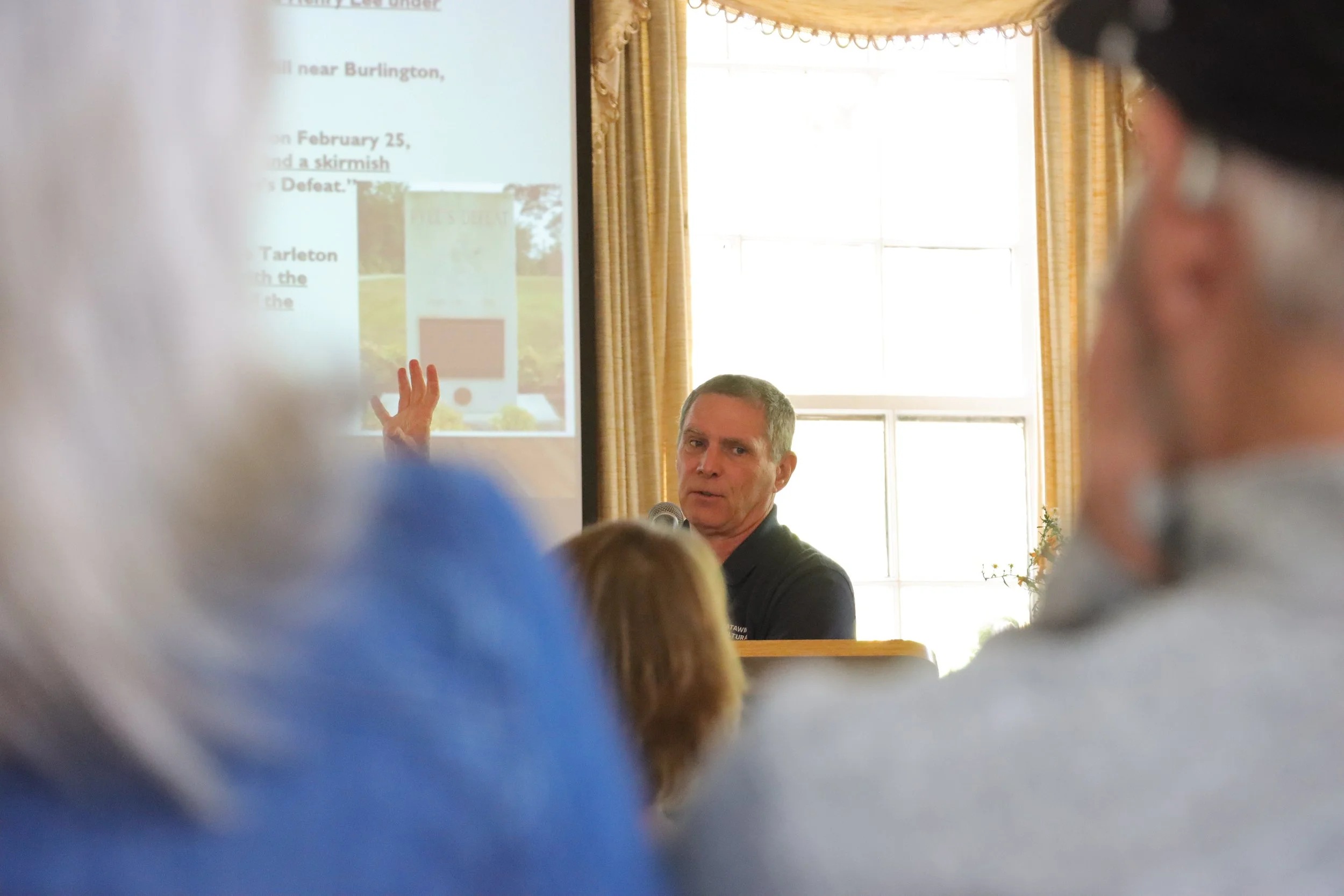
The program opened with Dr. Robert Carter, who works with the Catawba Nation and Clemson University. Dr. Carter provided an introduction to the history of Native communities in North Carolina and the profound changes brought by European settlement, sharing insights from his research on Catawba history, traditional plant uses, and Indigenous relationships with the natural world.
Dr. Carter highlighted the Catawba’s key role during the American Revolution, the challenges of protecting their ancestral lands, and their enduring connection to the environment. He detailed how Catawba leaders sought diplomatic alliances with American figures, including George Washington, in an effort to safeguard their sovereignty and territory. However, treaties ultimately contributed to significant land loss, illustrating the severe difficulties the Nation faced while trying to preserve its homeland.
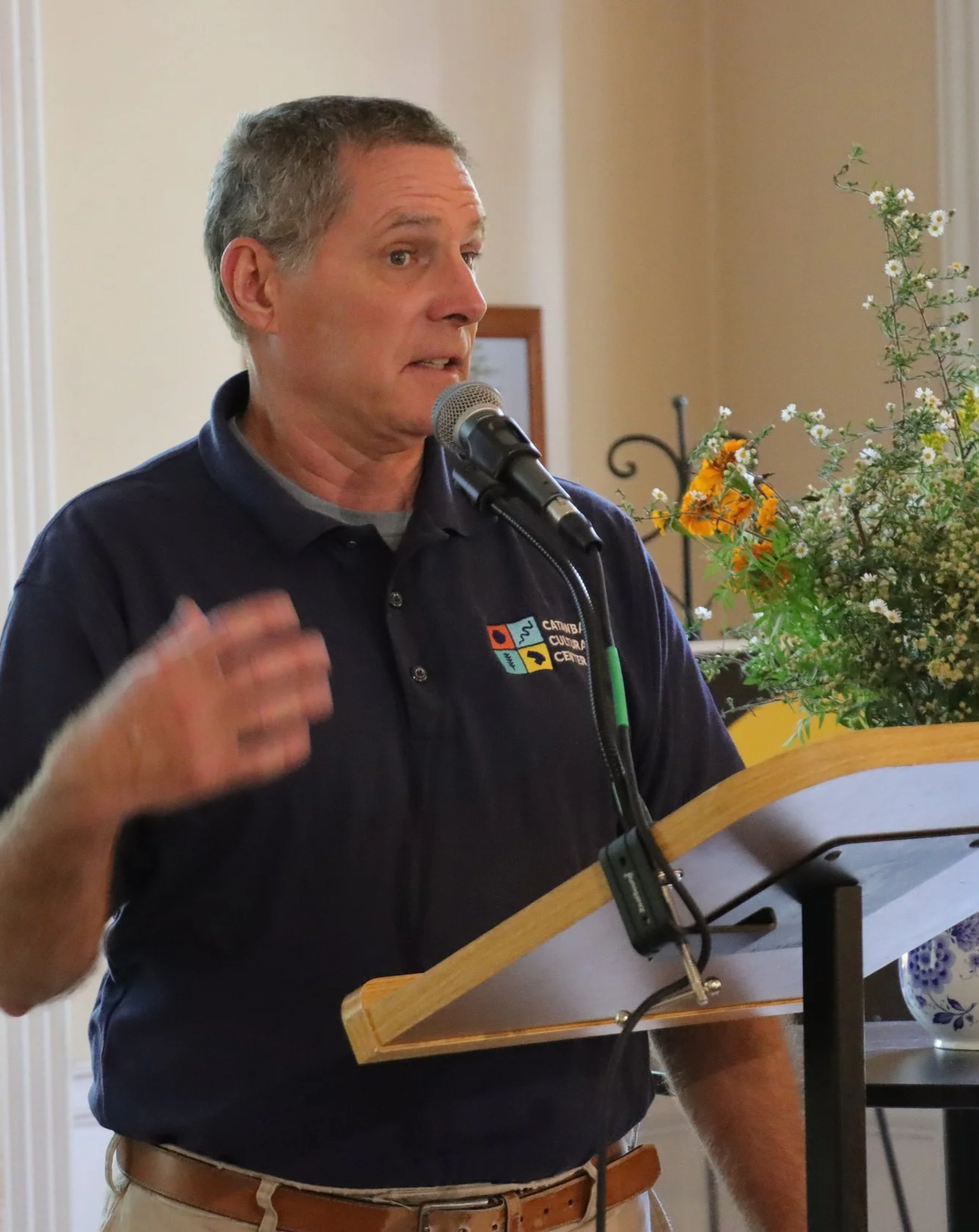
He also examined how traditional Catawba knowledge offers a distinct worldview regarding the environment. Contrasting Indigenous perspectives with Western approaches, he noted, “In Native traditions, nature is animate.” He explained that plants and animals were traditionally understood as vital members of a larger community rather than resources separate from human life: “In Native traditions, you work with nature because they’re part of your family.” Summarizing this shared duty, Dr. Carter emphasized, “Nature is a communal responsibility. Everybody has a responsibility.”
Additionally, Dr. Carter discussed yaupon holly, a native southeastern plant whose leaves are used to brew tea. Yaupon holds deep cultural significance tied to social gatherings and ceremonial practices. Notably, it is North America’s only native plant containing caffeine, making it an essential traditional source of energy and stimulation.
While yaupon leaves can be prepared as a tea for daily social enjoyment, concentrated preparations were used for ceremonial purification rituals. The plant’s botanical name, Ilex vomitoria, reflects early European observations of these purification ceremonies, which sometimes included ritual vomiting, a result of the ceremony’s intensity rather than an inherent property of the plant itself. This history demonstrates how a native plant carries rich meanings that span ecological knowledge, spiritual life, and community traditions.
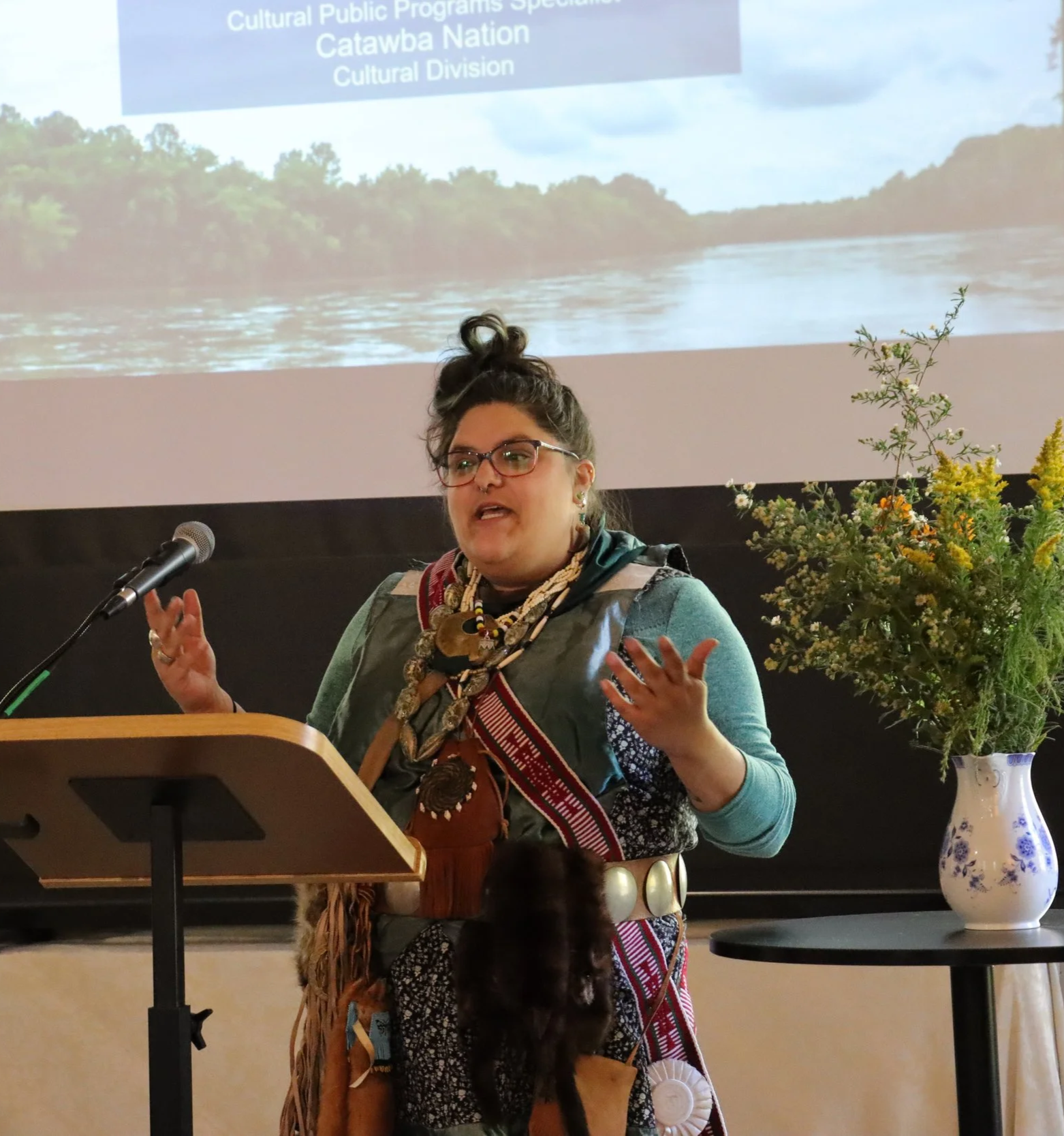
Next, Kassidy Plyer, a Catawba citizen and Cultural Program Specialist, shared her perspective on Catawba cultural traditions, history, and genealogy. Having grown up immersed in her culture, Plyer described learning through storytelling, oral tradition, and participation in community life. Today, she helps share that knowledge with the public through her work with the Catawba Cultural Center.
Plyer opened with a reflection on the reciprocal bond between people and the land: “The earth provides for us.” She connected this principle to the fundamental values of generosity and stewardship that continue to guide Catawba cultural practices today.
Explaining how she came to understand her heritage, Plyer said, “Everything I learned was through the traditional ways of people, which was through oral tradition and storytelling and immersion.” These practices have helped preserve knowledge across generations, particularly for periods of Catawba history that are not fully represented in written records. Plyer emphasized the importance of combining oral histories, archaeological evidence, and cultural practices to better understand the Nation’s past.
Plyer also discussed efforts to preserve and revitalize the Catawba language. Historical documentation has helped retain pieces of the language, while contemporary cultural programming creates opportunities to incorporate Catawba words and encourage their continued use. These efforts reflect the broader work of keeping cultural knowledge active and accessible rather than allowing it to remain only in historical records.
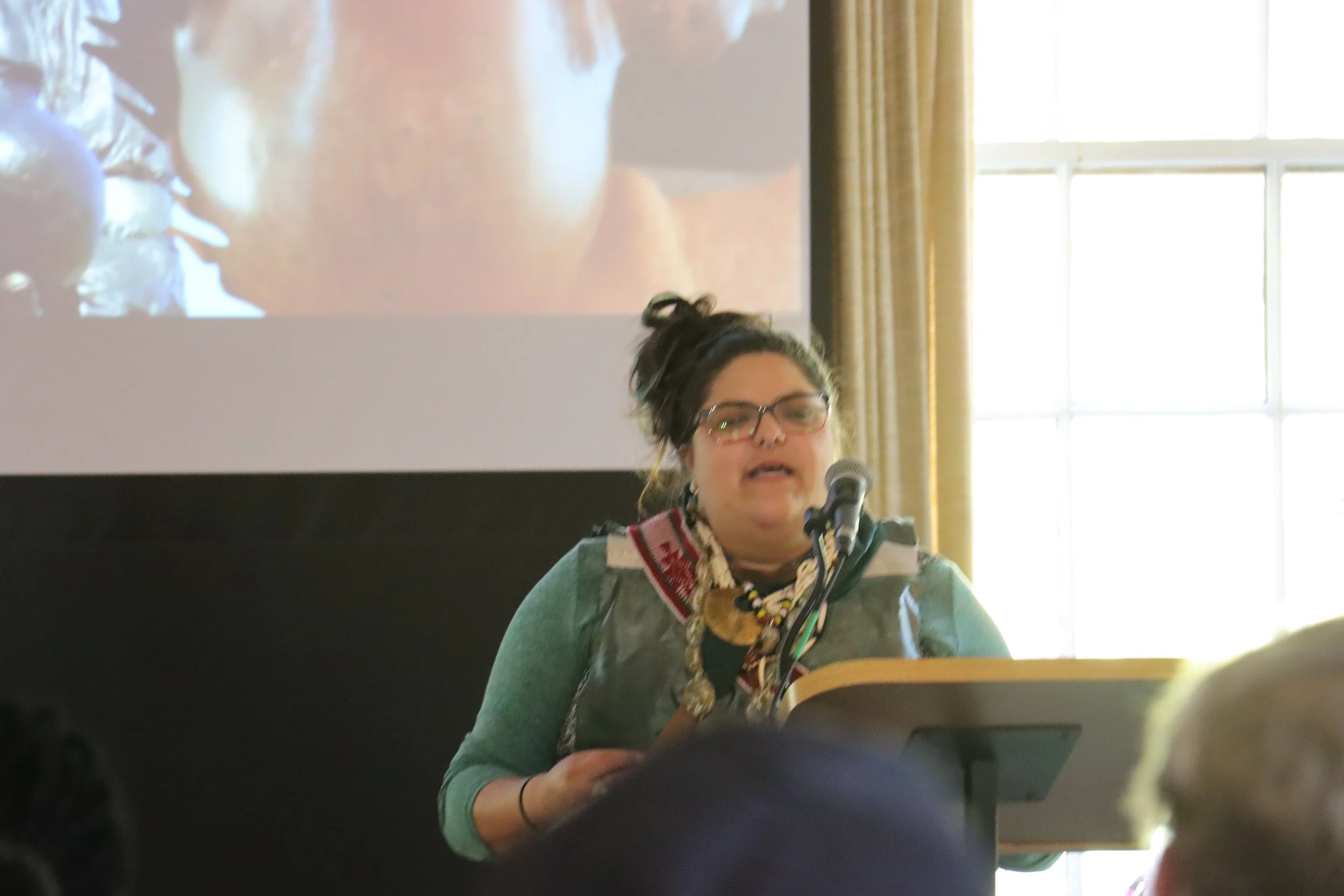
Another important part of Plyer’s presentation was genealogy and its role in Catawba citizenship. She explained that enrollment today depends on establishing direct descent from someone recorded on the Nation’s historical tribal roll. Tracing family connections and maintaining accurate genealogical records therefore serve an important purpose in documenting ancestry and supporting connections to the Catawba community.
She also addressed the history of land loss, treaties, and changing relationships with state and federal governments. Her presentation illustrated how these developments affected the Catawba Nation’s land and political status, as well as the long effort to restore federal recognition. These experiences provide essential context for understanding the importance of preserving Catawba identity, history, and community ties today.
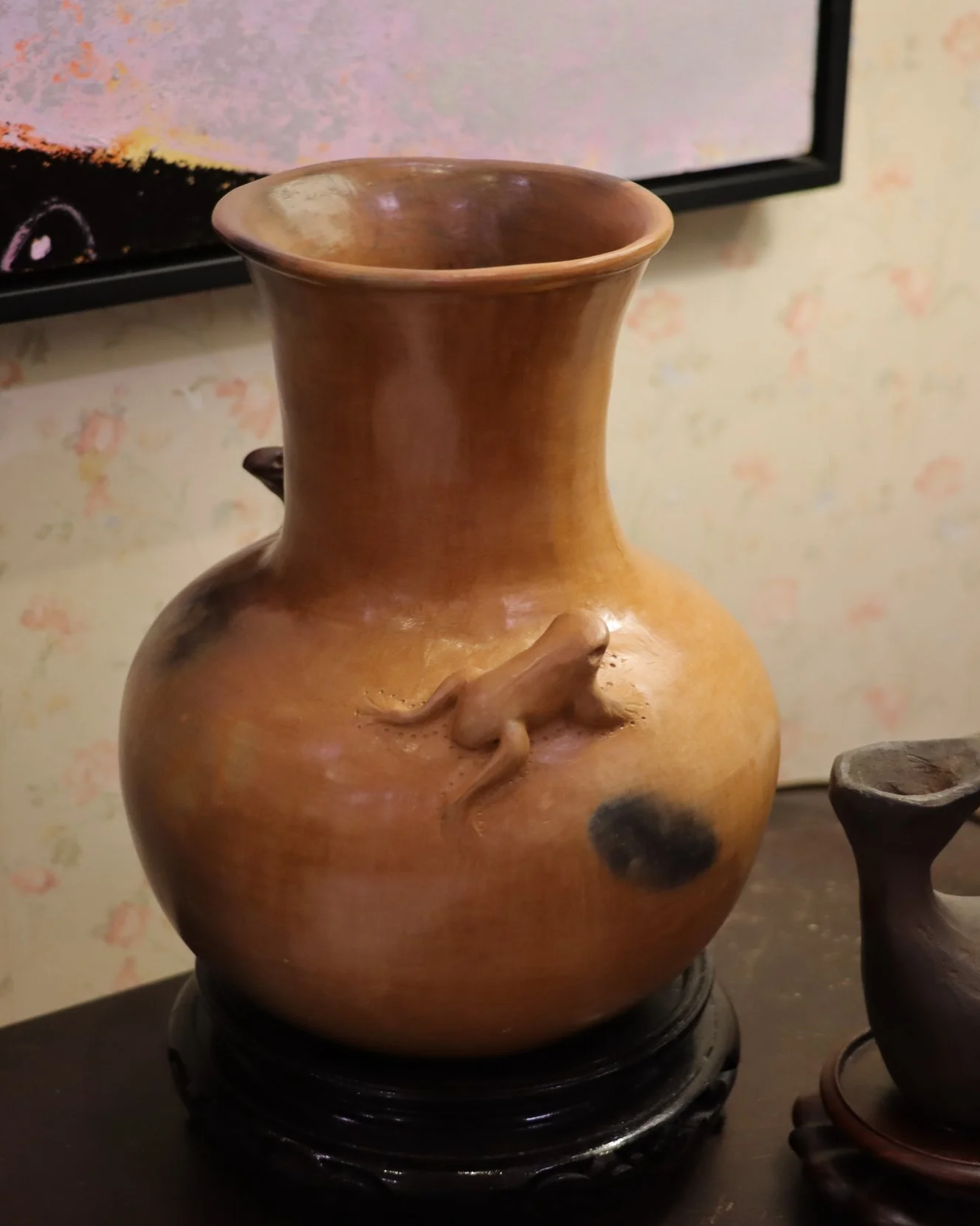
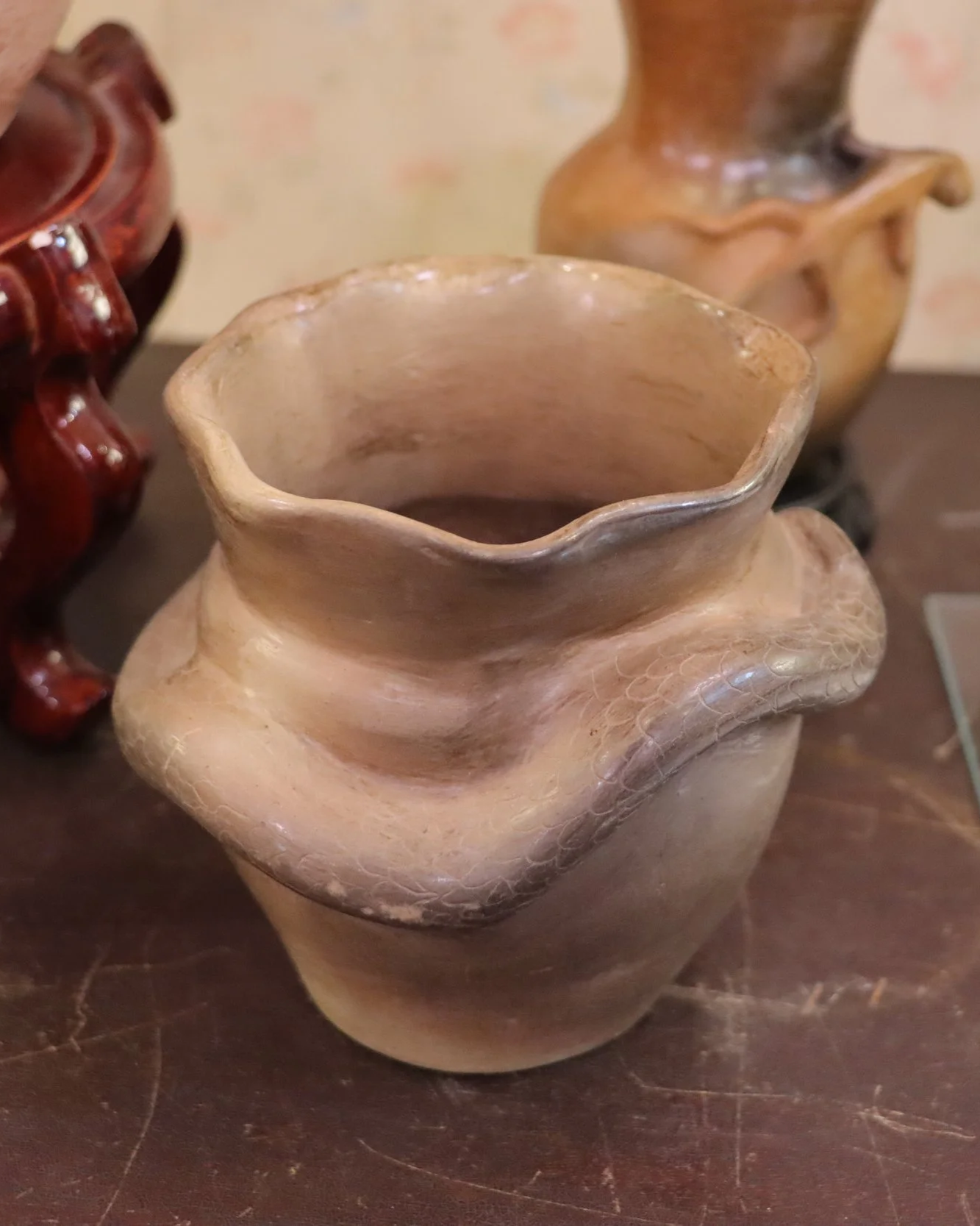
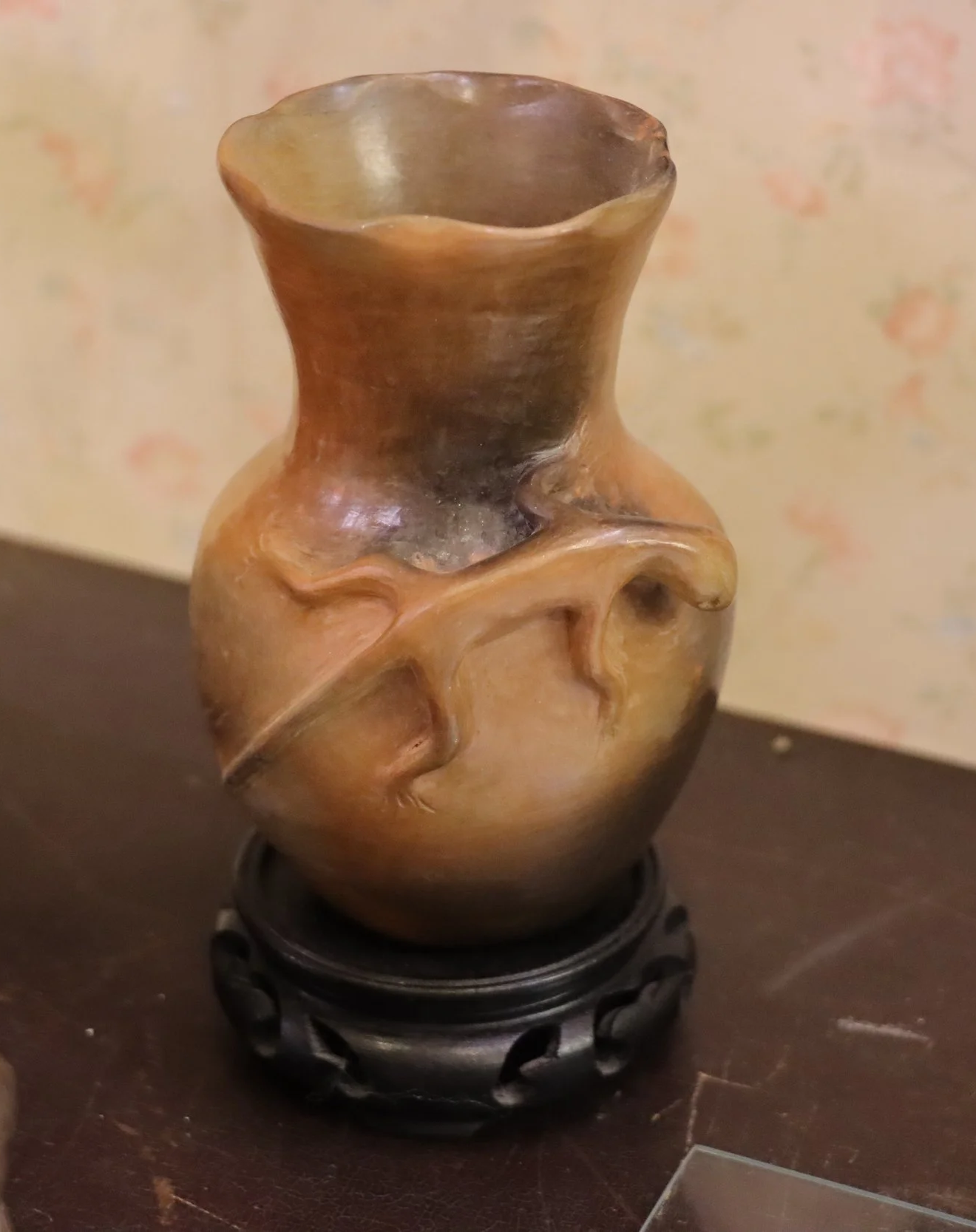
One of the most enduring expressions of Catawba culture is its pottery tradition. Plyer described how pottery developed from practical objects used for cooking and storage into an art form recognized far beyond the community. Although its forms and uses have evolved, Catawba people continue to make pottery today, keeping traditional knowledge and craftsmanship alive. The private collection of Catawba pottery displayed during the event offered attendees a closer look at this living tradition and its continuing importance to Catawba heritage.
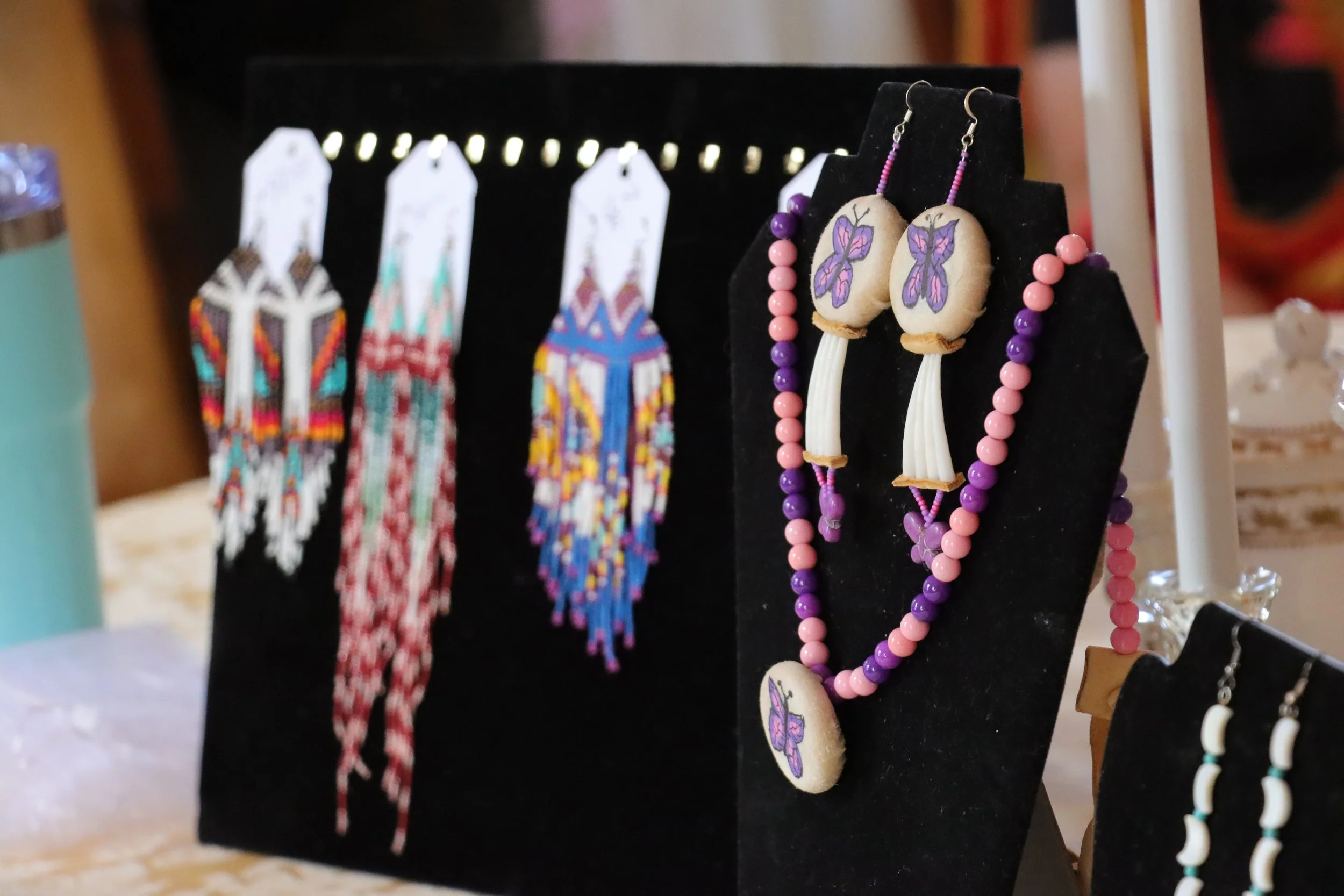
Catawba artisan Jeannie Sanders showcased her intricate handmade beaded jewelry, offering pieces for purchase while sharing her crafting techniques with attendees.
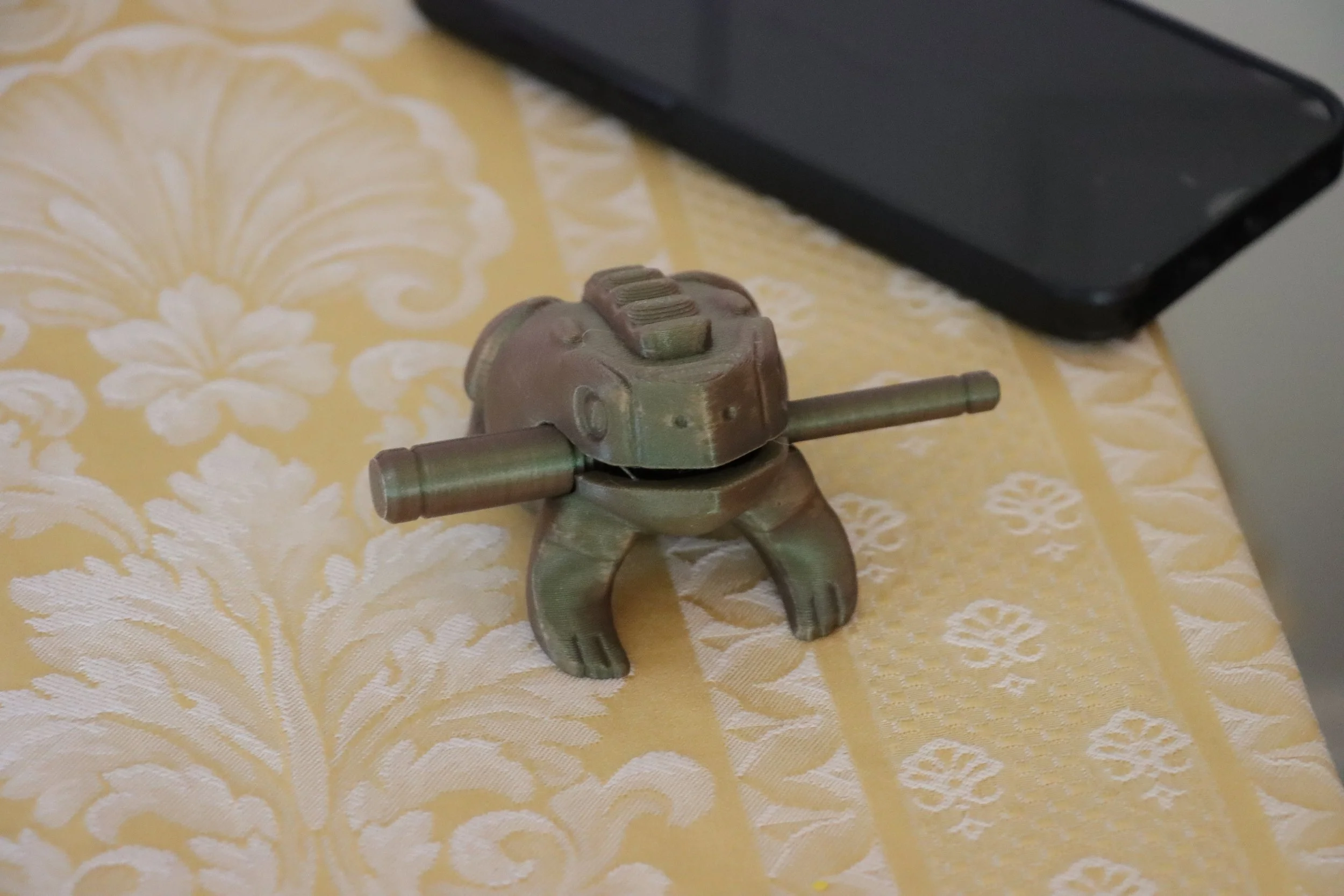
Catawba citizen Marybeth Corbitt presented works created by her children, who are bridging past and present through 3D-printed interpretations of traditional Catawba objects. Their creations included contemporary versions of clay ocarinas and wooden croaking frogs. Inspired by powwows and modern digital design, these tactile items offered younger guests an interactive, sensory way to engage with Catawba culture.
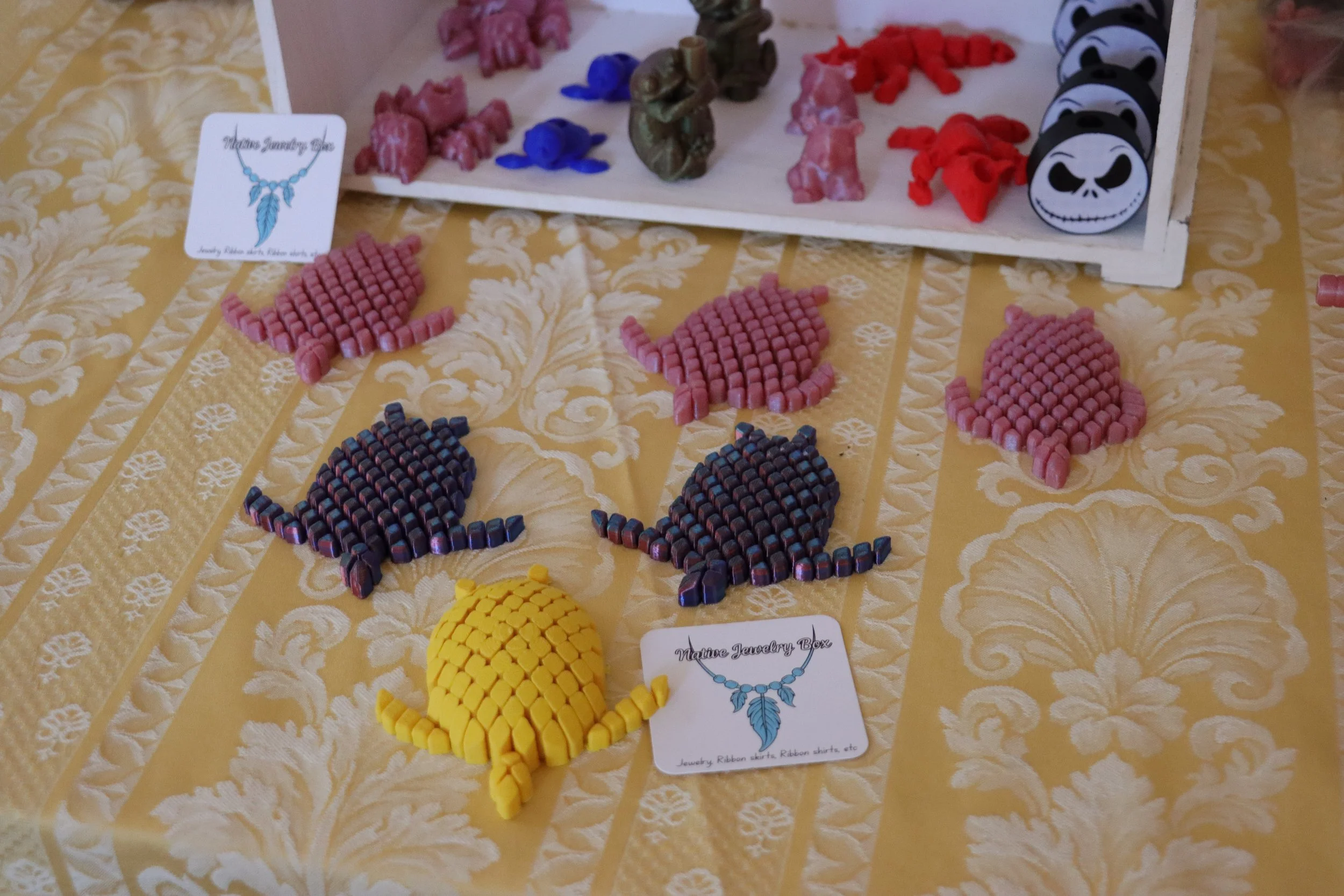
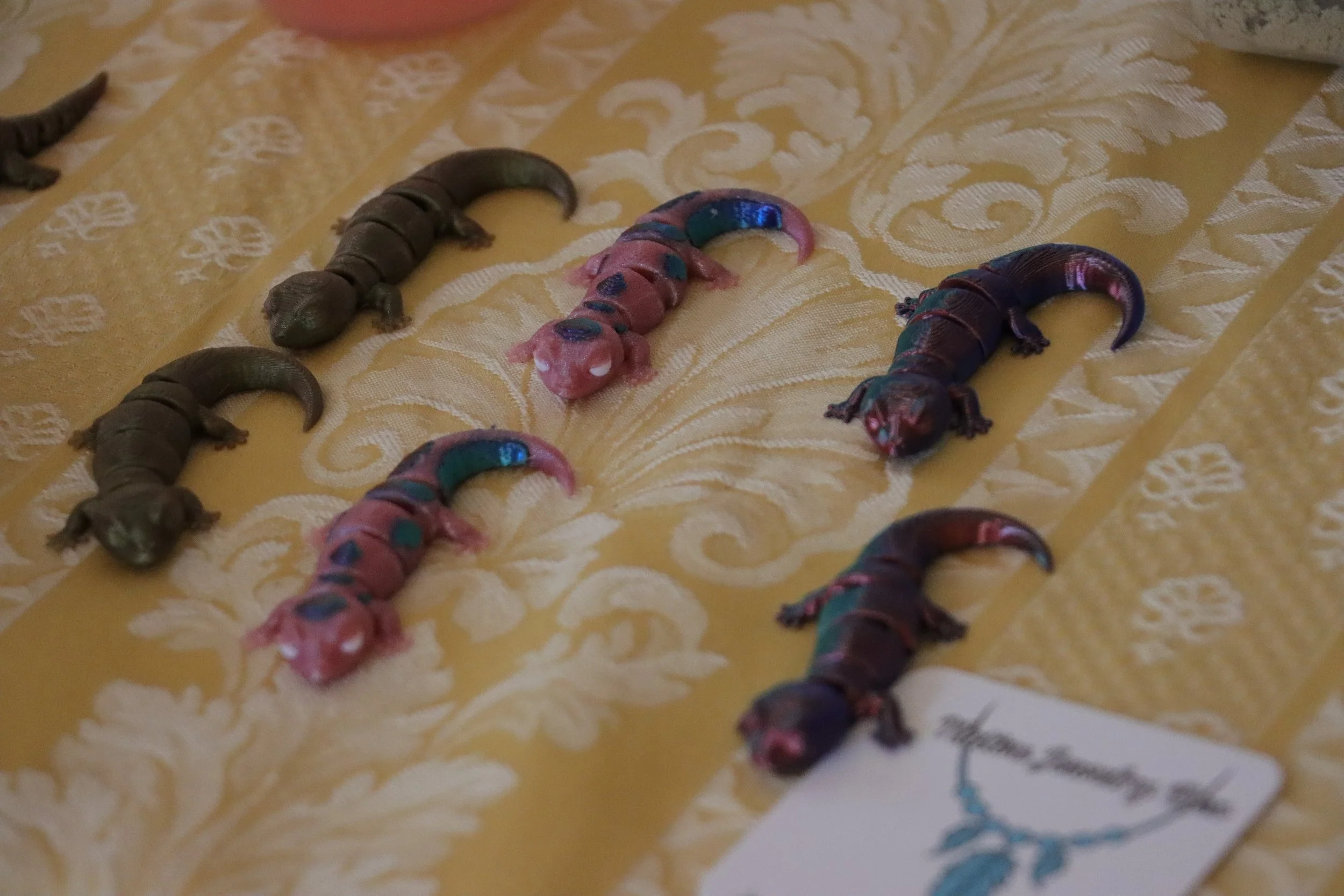
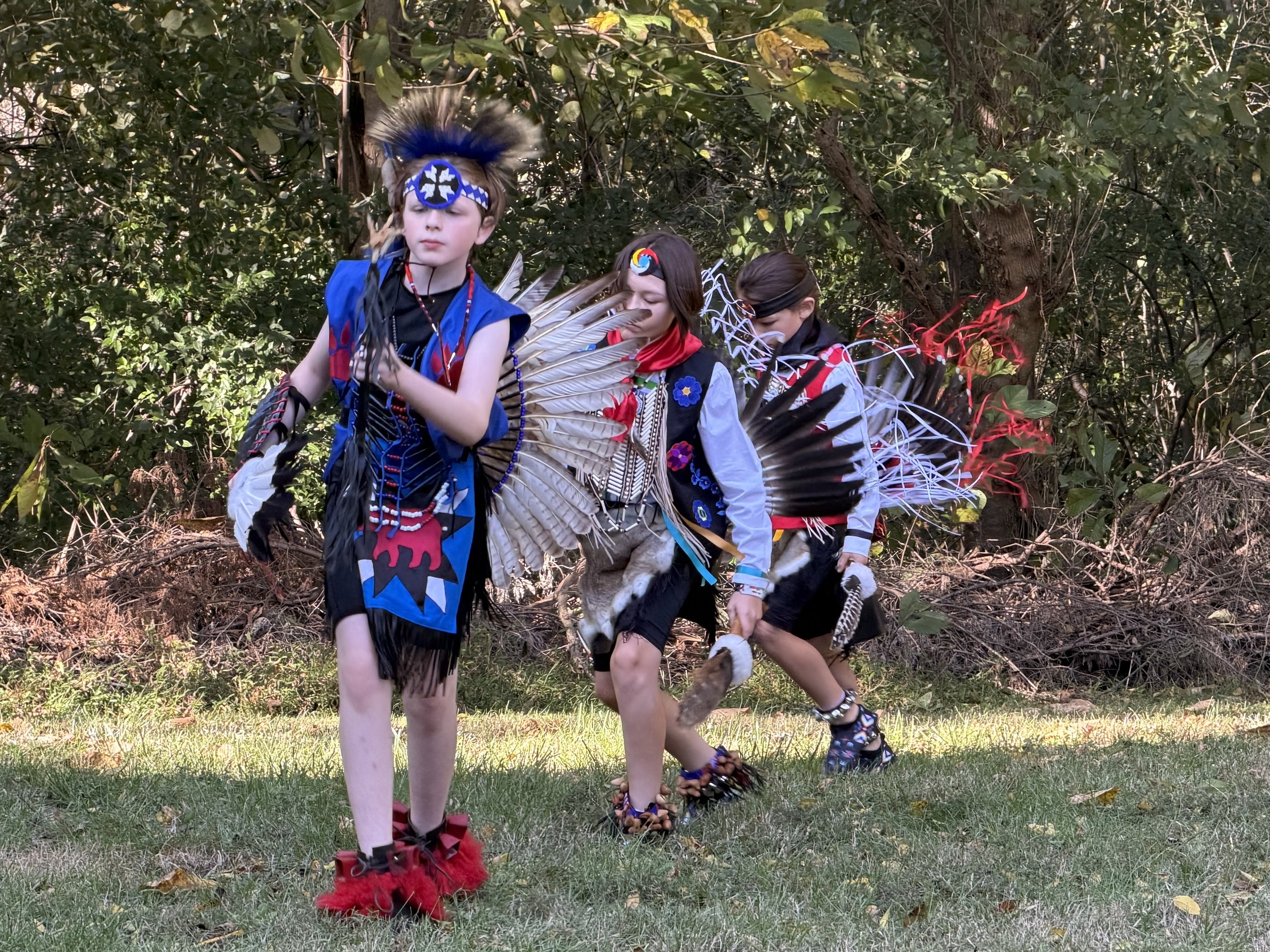
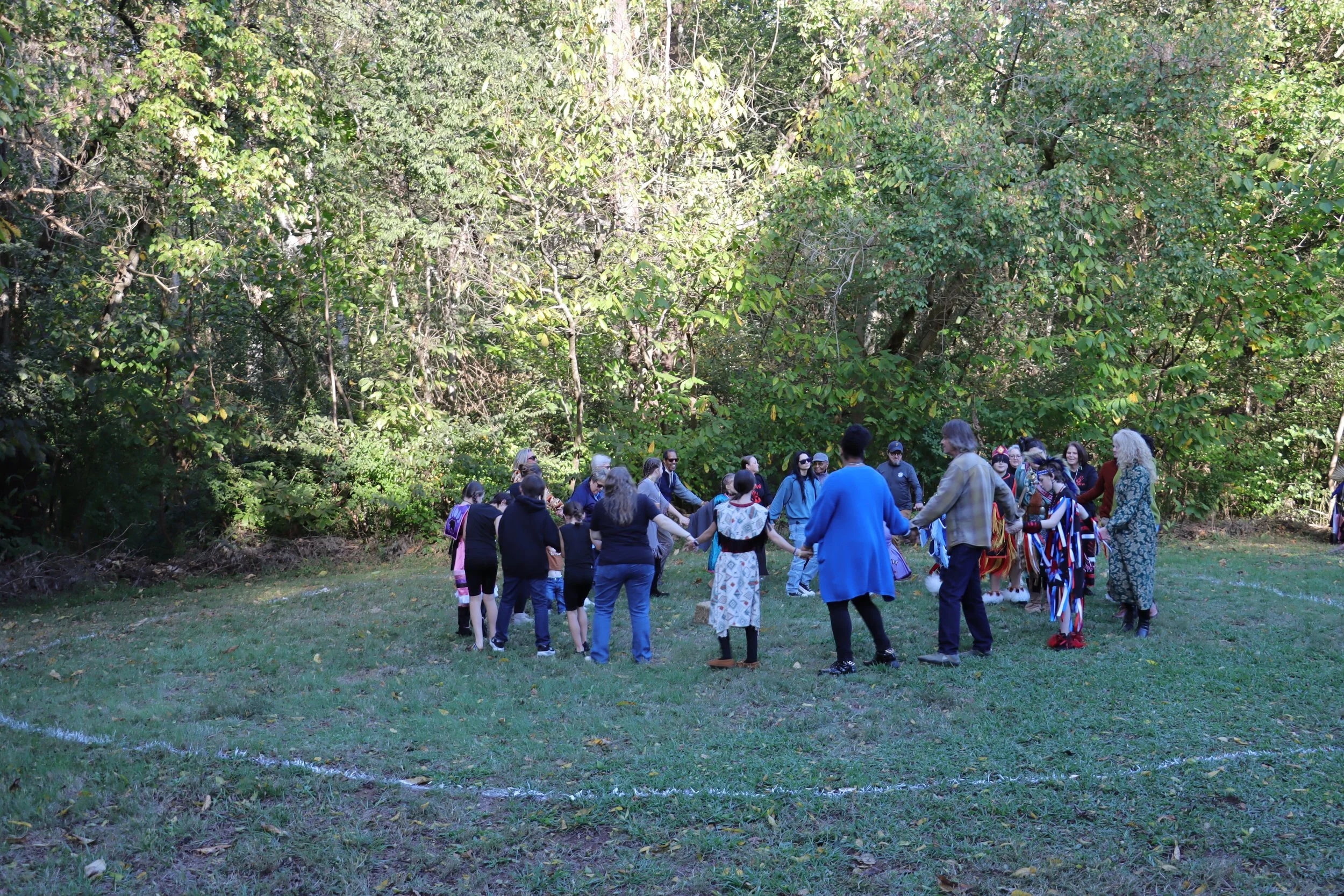
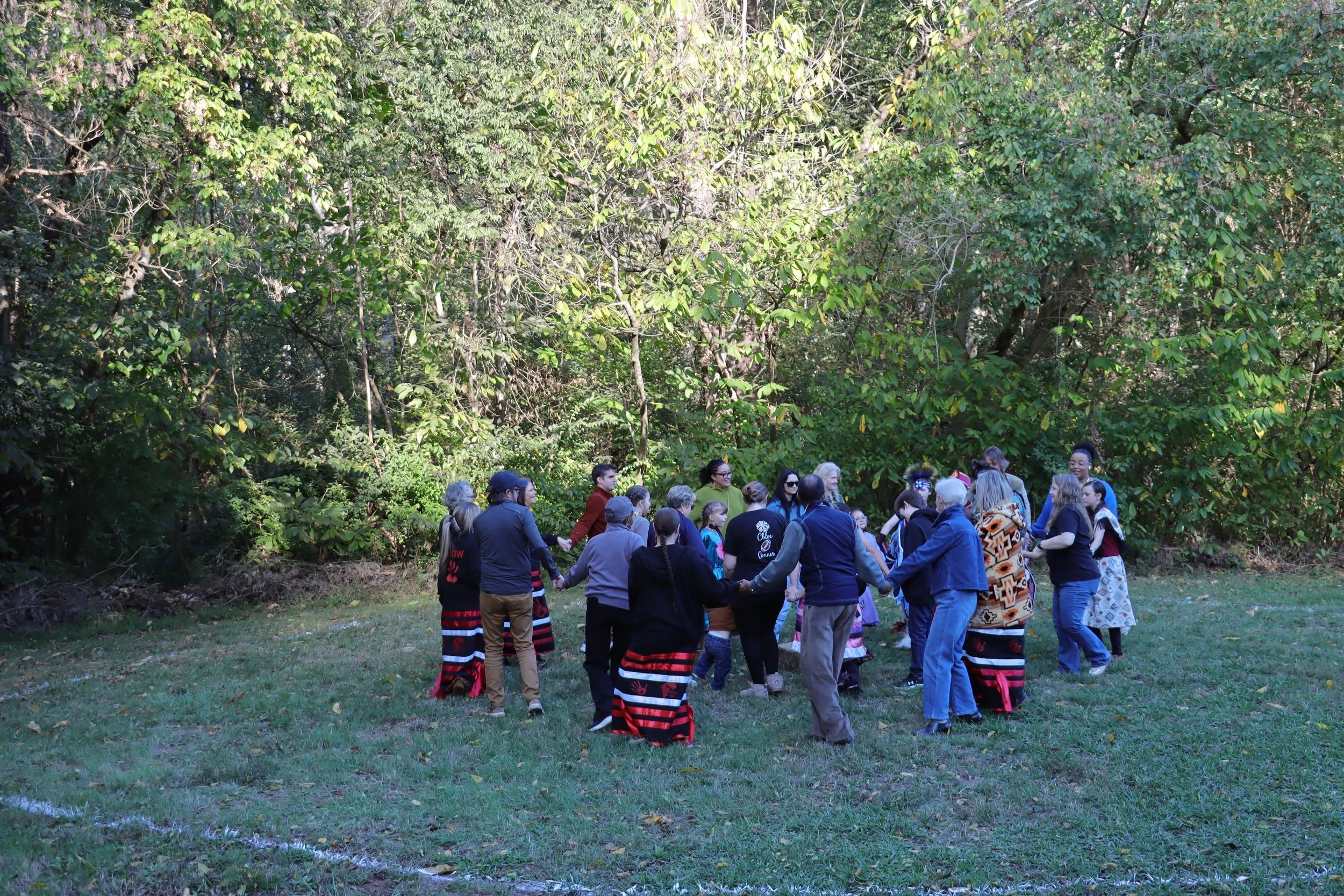
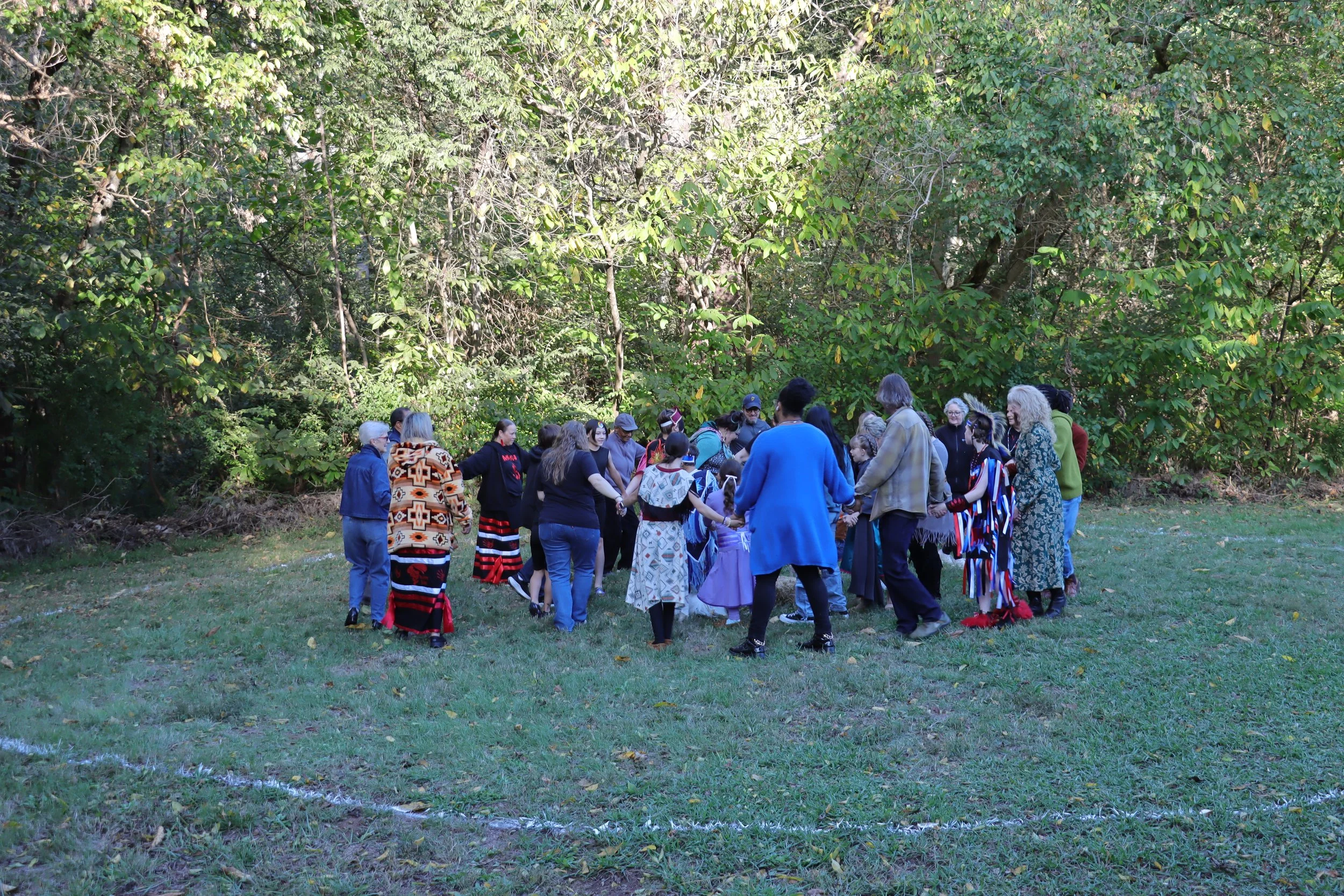
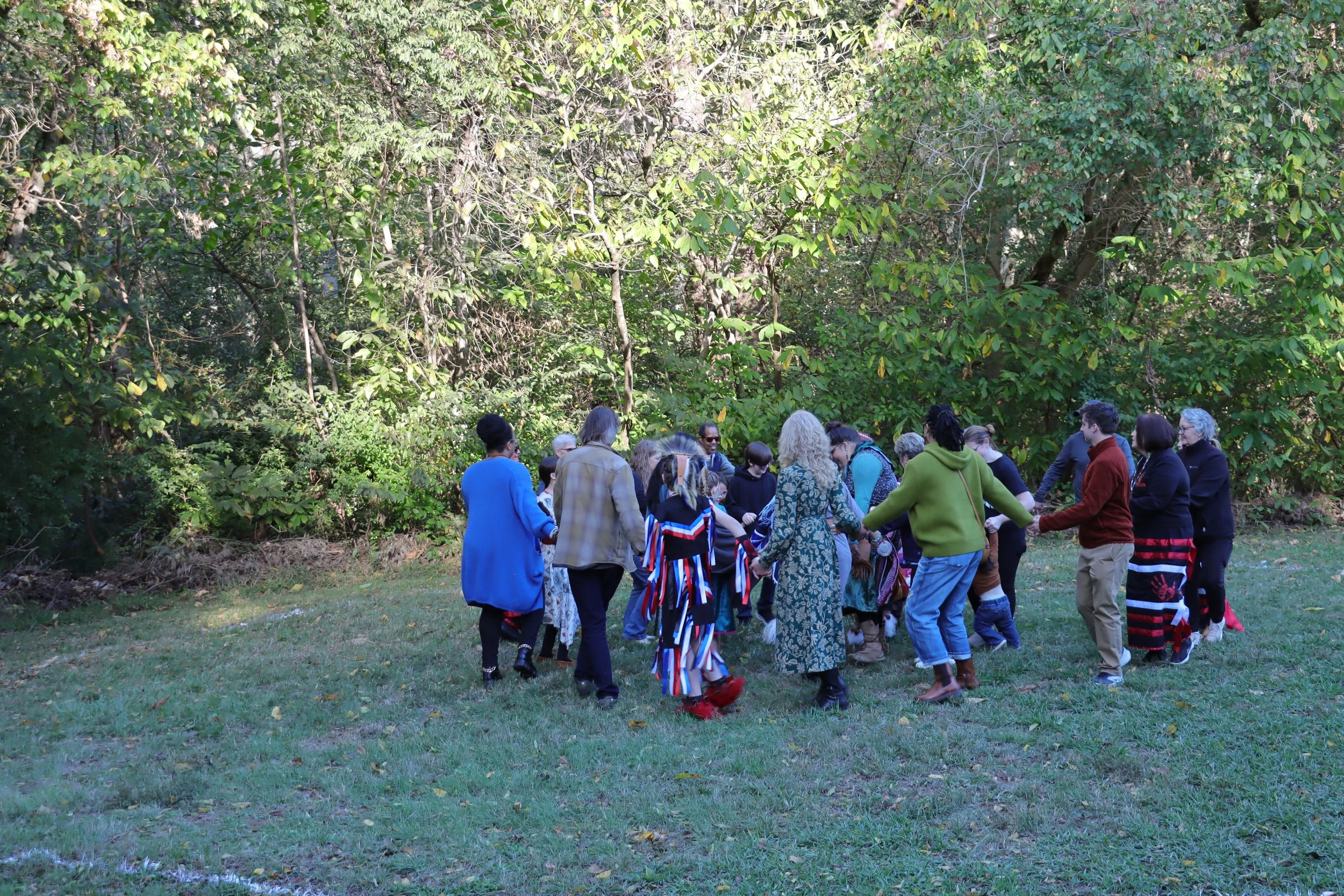
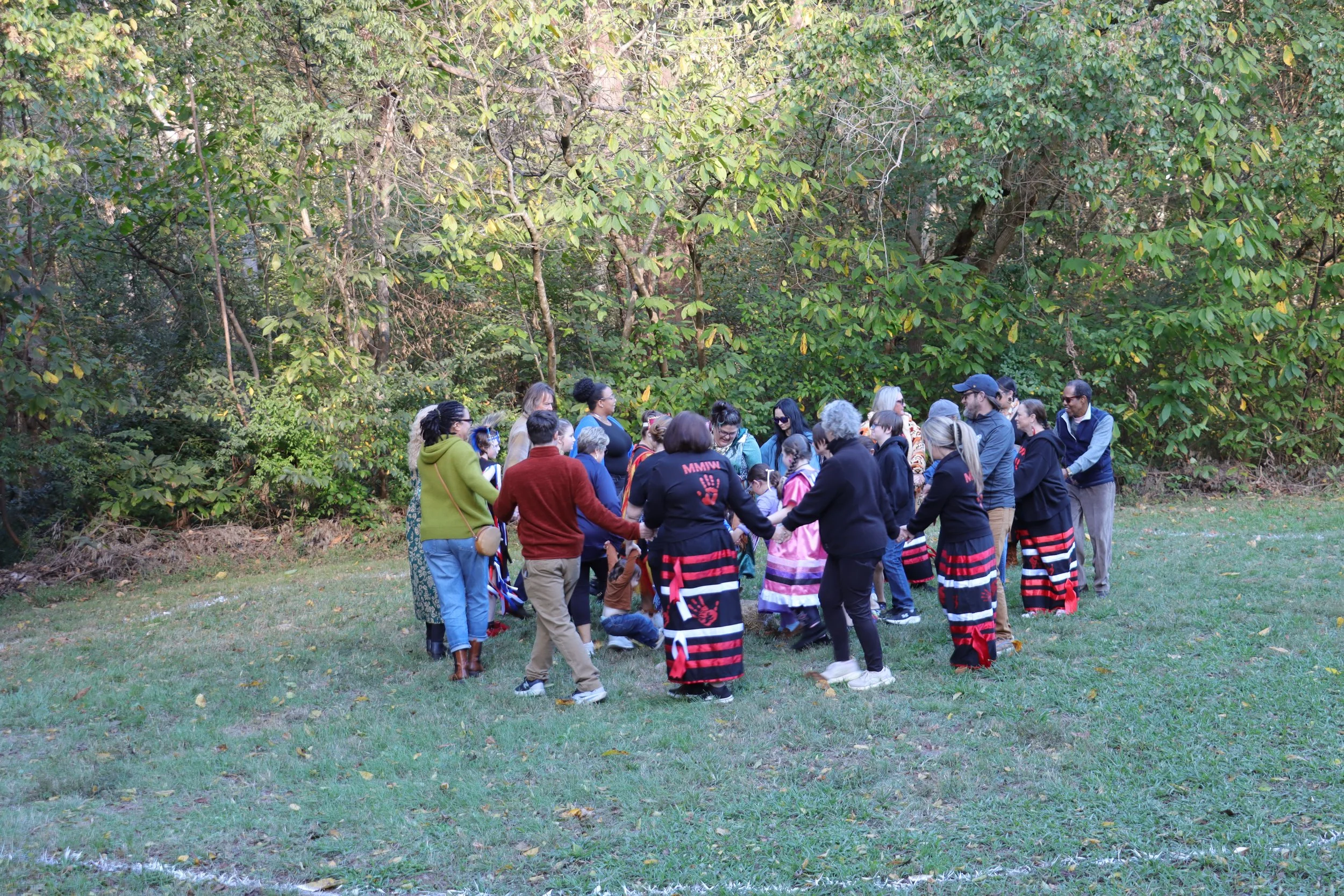
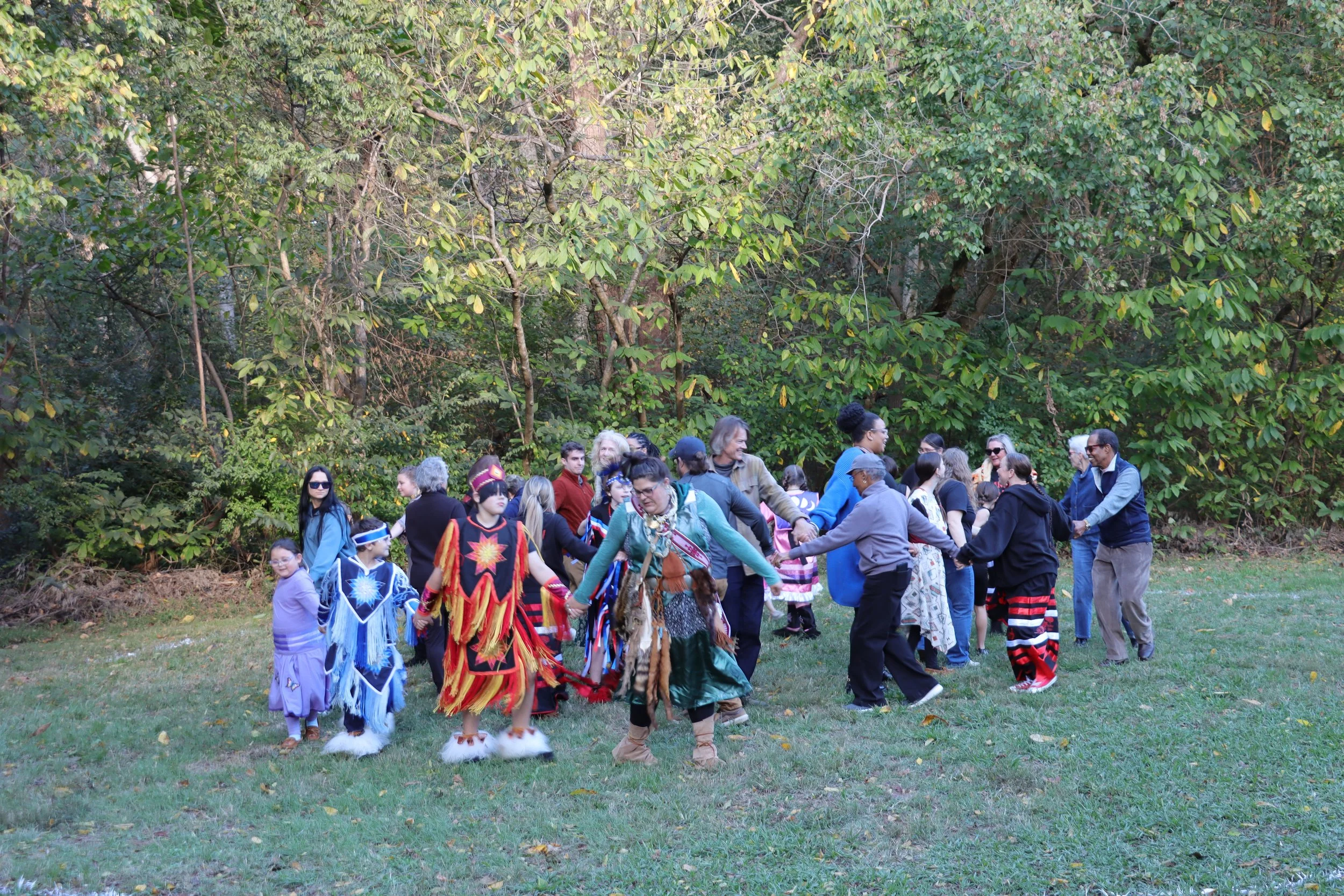
Following a brief intermission, guests gathered outdoors to experience living Catawba culture through traditional dance and drumming demonstrations. The outdoor setting connected the historical narratives discussed earlier with the vibrant music and movement of the living tradition. To close the day, the Catawba dancers invited all attendees to join together in the Friendship Dance, an interactive social circle dance celebrating community and unity.
Great Gift Ideas!
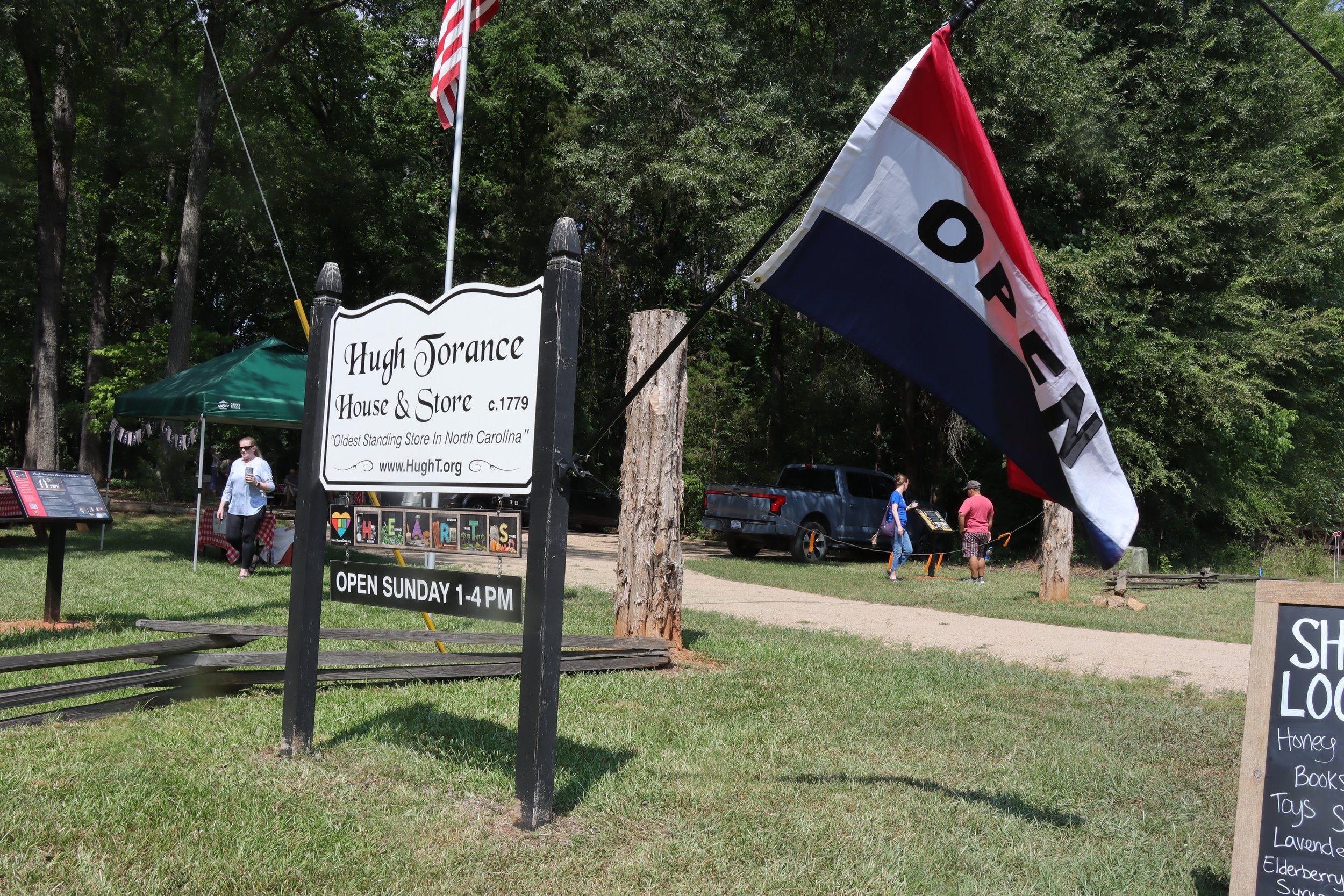
The Hugh Torance House and Store has roasted and green leaf Catawba Yaupon tea, handcrafted beaded jewelry by Jeannie Sanders, and 3D-printed crafts by the Corbitt children. The Store also offers local honey, books, and artisanal sundries.
Located at 8231 Gilead Road, Huntersville, NC 28078, the Hugh Torance House and Store is open most Sundays* from 1:00 PM to 4:00 PM. To take a tour while you’re there, please reserve your tickets in advance HERE.
*For current hours, special events, and more, visit heartsco.org, Events
