

Recap of HEARTS Trails Through Time: Sherrill’s Path
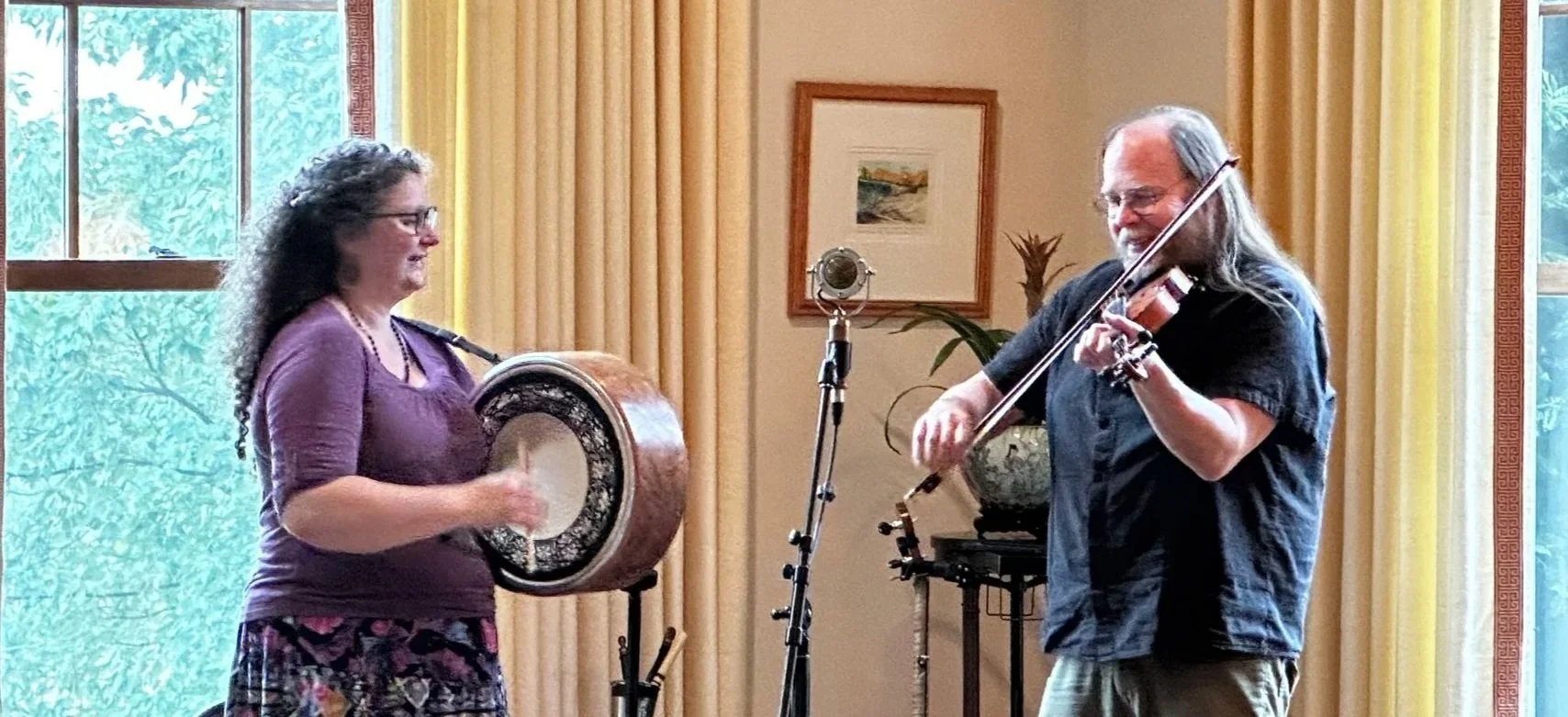
Musical guests, Tom Eure and Amelia Osborne, shared folk and traditional music, reinforcing the theme of being rooted in place by historical connections to the land.
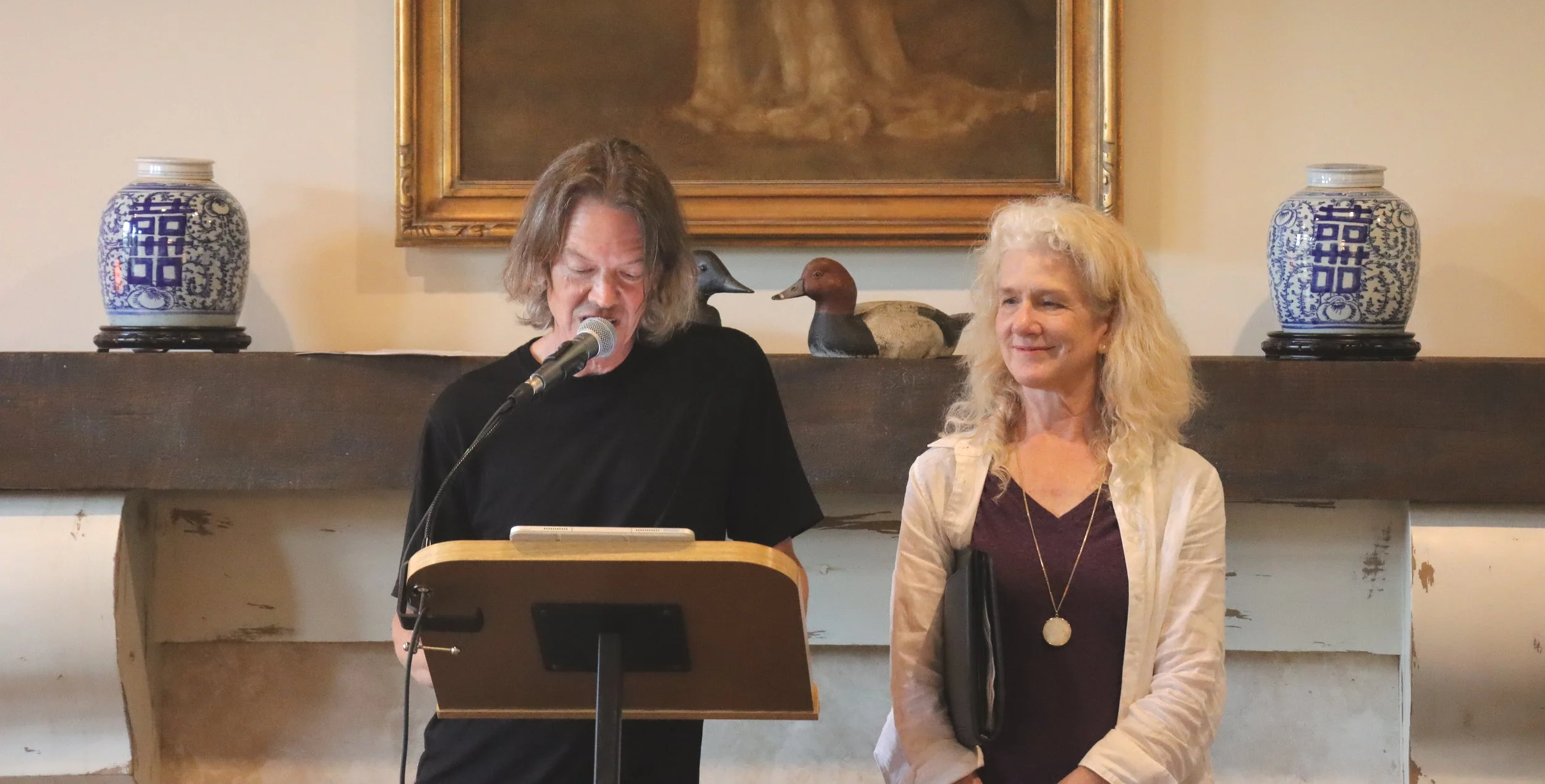
Randolph Lewis opened the program, introducing co-host Abigail Jennings, and sharing that the “T” in HEARTS represents Trails. He emphasized how pathways like Sherrrill’s Path connect people, settlement, and culture across generations. Reflecting on the HEARTS mission of saving special places and giving them new life includes preserving local trails not only as ecological resources but also as historical landscapes that will continue to tell the stories of regions for centuries to come.
HEARTS first “Trails Through Time” focused on Sherrill’s Path, and most notably Adam Sherrill, who travelled this path, which now bears his name, in the mid 1700’s on his way to a new home in the Catawba Valley.
Lewis shared, “There's an old saying that goes, “We make the way by walking.” This refers to the act of blazing your own trail, learning by doing, diving in, and pushing forward, even if there is no road beneath your feet. That is what these settlers did during the 18th century as they made their way from Pennsylvania down the Great Wagon Road, or GWR, as it is called for short, running south and west from Philadelphia through Maryland and Virginia and into North Carolina.
Imagine travelling that road nearly 300 years ago, what the experience must have been like. There was no GPS on the GWR, and travelers could expect to put several miles behind them each day, rather than several hundred we would travel today. The journey was long and grueling, and the conditions were harsh; the road could be either impassably muddy or intolerably dusty, depending on the weather. There were no moving vans; Families had to pare down their belongings before departing and carry everything else with them, often walking beside their heavily laden wagons.
Indeed, the decision to embark on the journey to the Carolina backcountry, and the experience itself, transformed the lives not only of those who travelled it, but also all those who came after them. The significance of the GWR, and its offshoots, like Sherrill’s Path, in our history is monumental. That is why it is so important to preserve the historic trails themselves and the stories of those intrepid wanderers who took them.”
Lewis gave special recognition to Jane Getsinger, who played a vital role in preserving this surviving section of Sherrill’s Path. When a new residential development was proposed that would have destroyed the trail, Getsinger worked with Dr. Gary Freeze to validate the path through archival and archaeological research. Her advocacy ultimately led to the Town of Troutman securing a permanent easement on the trail so that it may be walked and experienced by the community.
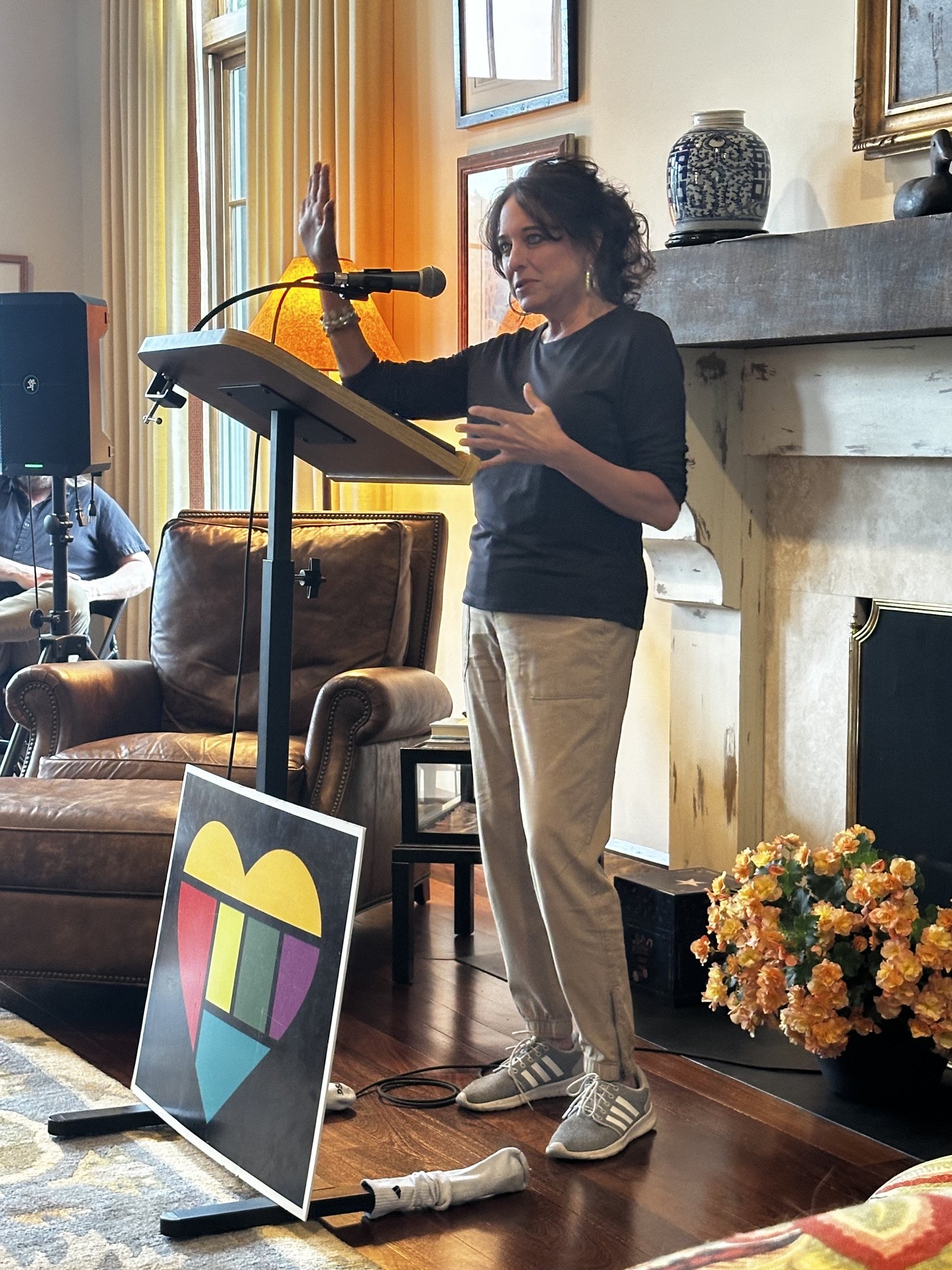
The event’s keynote speaker, Susan Autry, a historian and professor, further explored the story of Adam Sherrill and the Sherrill family’s migration into the region. Drawing from the research of historian Gary Freeze, Autry described the trail as “the first road through what became Iredell County”, and explained how it followed indigenous travel routes before evolving into a critical corridor for early settlement, commerce, and defense, even including access to Fort Dobbs
Autry noted that “so many of these places have such a history, and a lot of people don’t realize it,” emphasizing how seemingly ordinary landscapes throughout modern Iredell County played a role in the region’s development.
Autry described the Catawba River as looking much different than what we see today. Finding safe places to cross was paramount to a successful trail, which Sherrill did, which became known as Sherrill’s Ford.
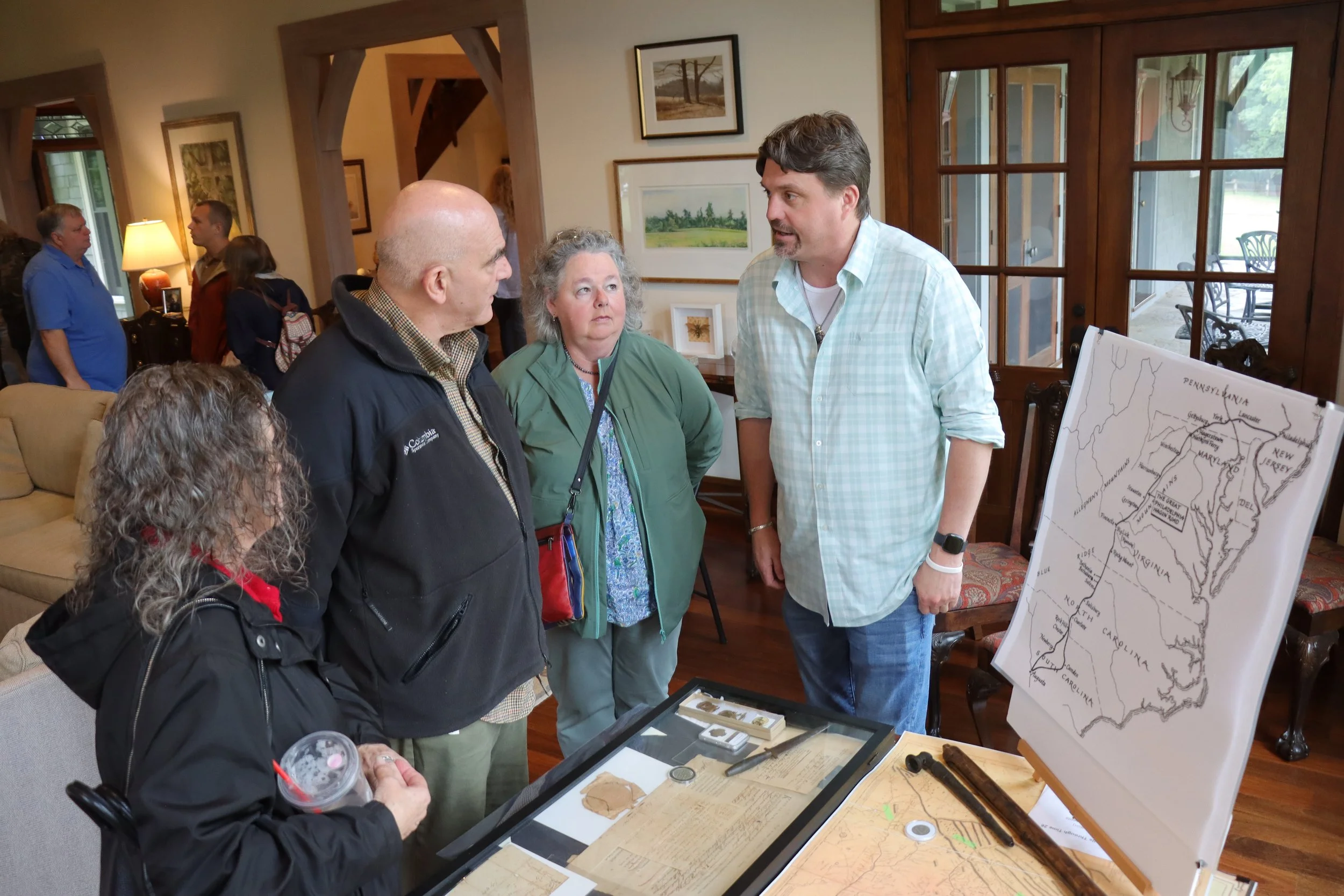
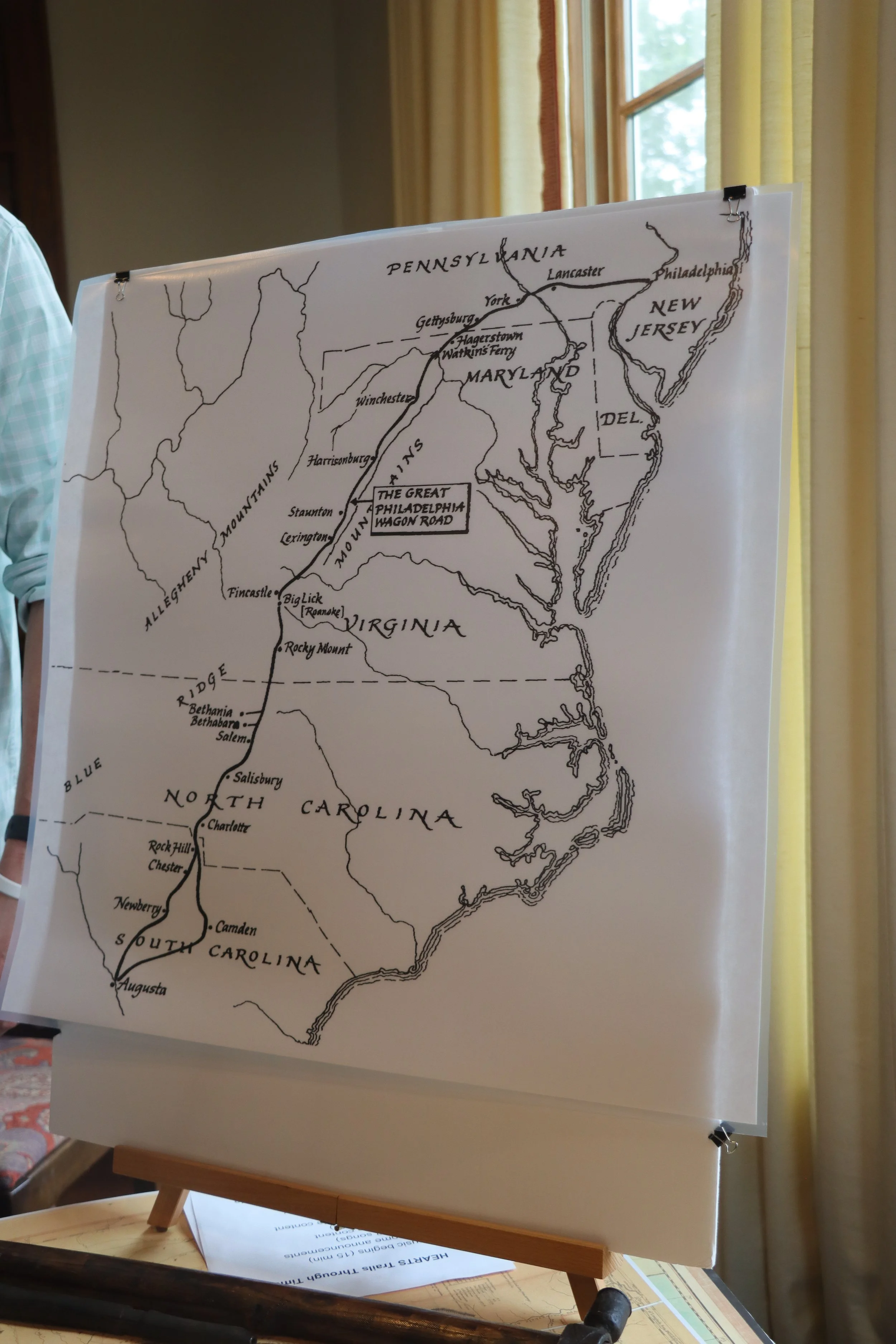
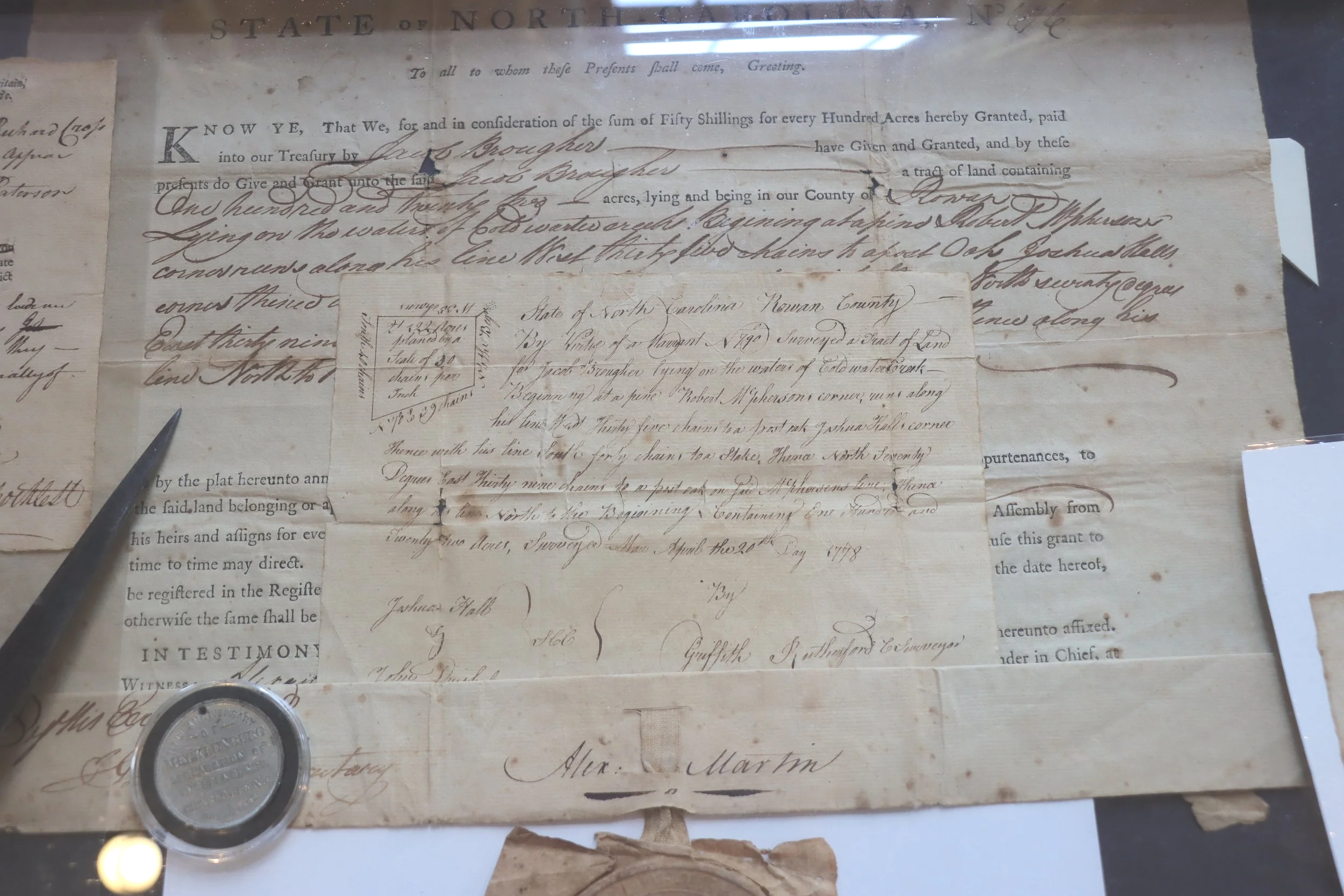
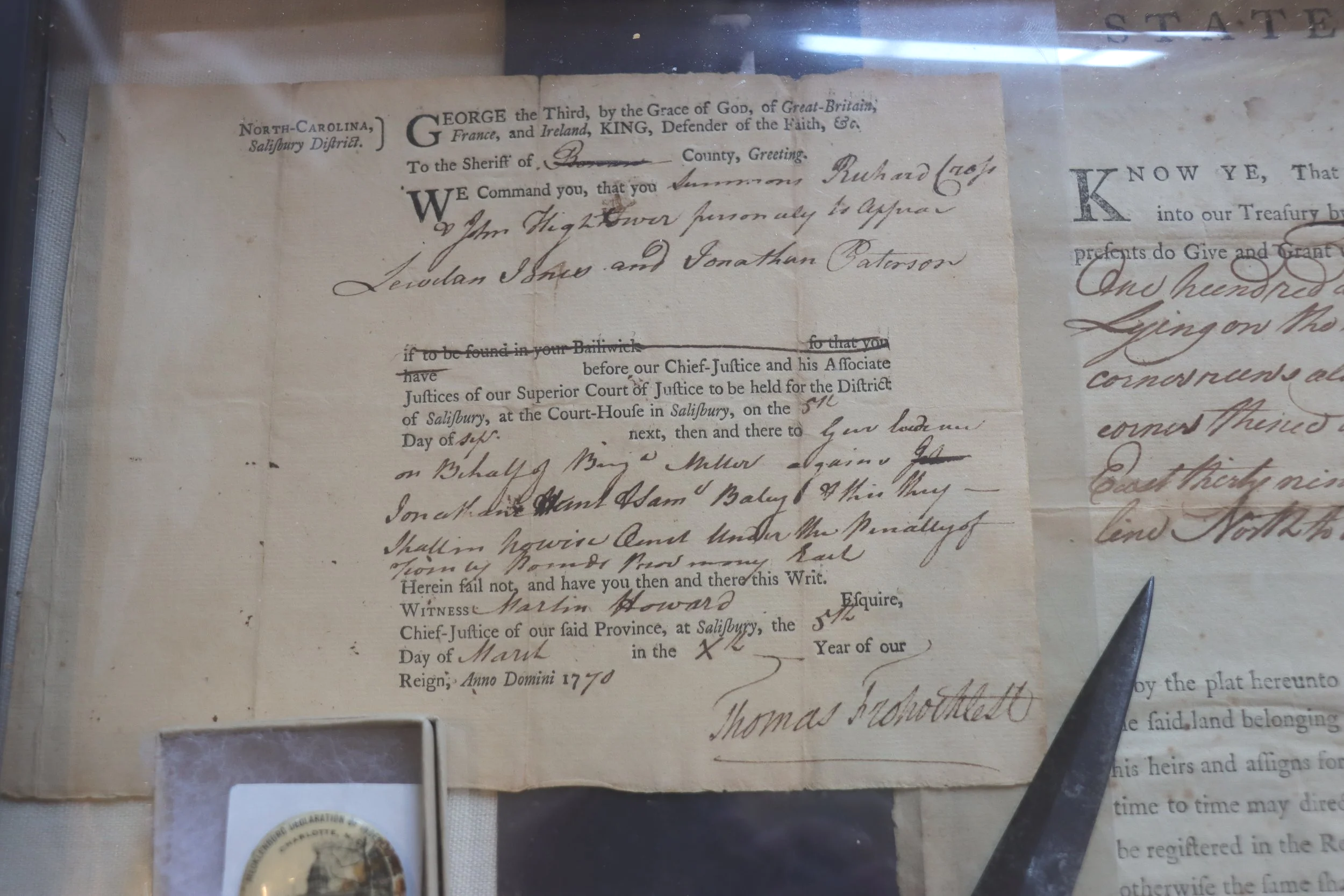
Adding a material connection to the past, historian and collector, Kris Manley, shared an engaging display of historic maps, colonial documents, and artifacts related to the Great Wagon Road and Mecklenburg history. His collection included rare historical materials that helped attendees visualize the routes, families, and events discussed throughout the afternoon while encouraging a deeper appreciation for genealogy, local records, and the personal stories embedded in preserved objects.

The Eco-minutes led by HEARTS’ ecologist Aaron Kampe and Abigail Jennings focused on two native species found along the trail, Wild Comfrey (Cynoglossum virginianum) and Deerberry (Vaccinium stamineum), both with ecological and cultural significance. Kampe shared that
the natural landscape that travelers along Sherrill’s Path would have encountered would have looked much different during the pioneer days. Kampe introduced the oak-hickory-pine forest ecosystem that defines much of the region today, explaining how many of North Carolina’s forests have undergone cycles of clearing, regrowth, and ecological change over centuries of settlement.
Kampe described Wild Comfrey, also known as Houndstongue or Giant Forget-Me-Not as a shade-loving woodland perennial historically referred to as “knitbone” for its traditional medicinal use in healing fractures, bruises, and sore muscles. Guests learned about the plant’s distinctive hairy leaves, pale blue spring blooms, and barbed seeds designed to disperse by attaching to animals and clothing. While once highly valued in herbal medicine, attendees also learned how modern understanding of the plant’s toxic alkaloids has reshaped how it can be safely used today.
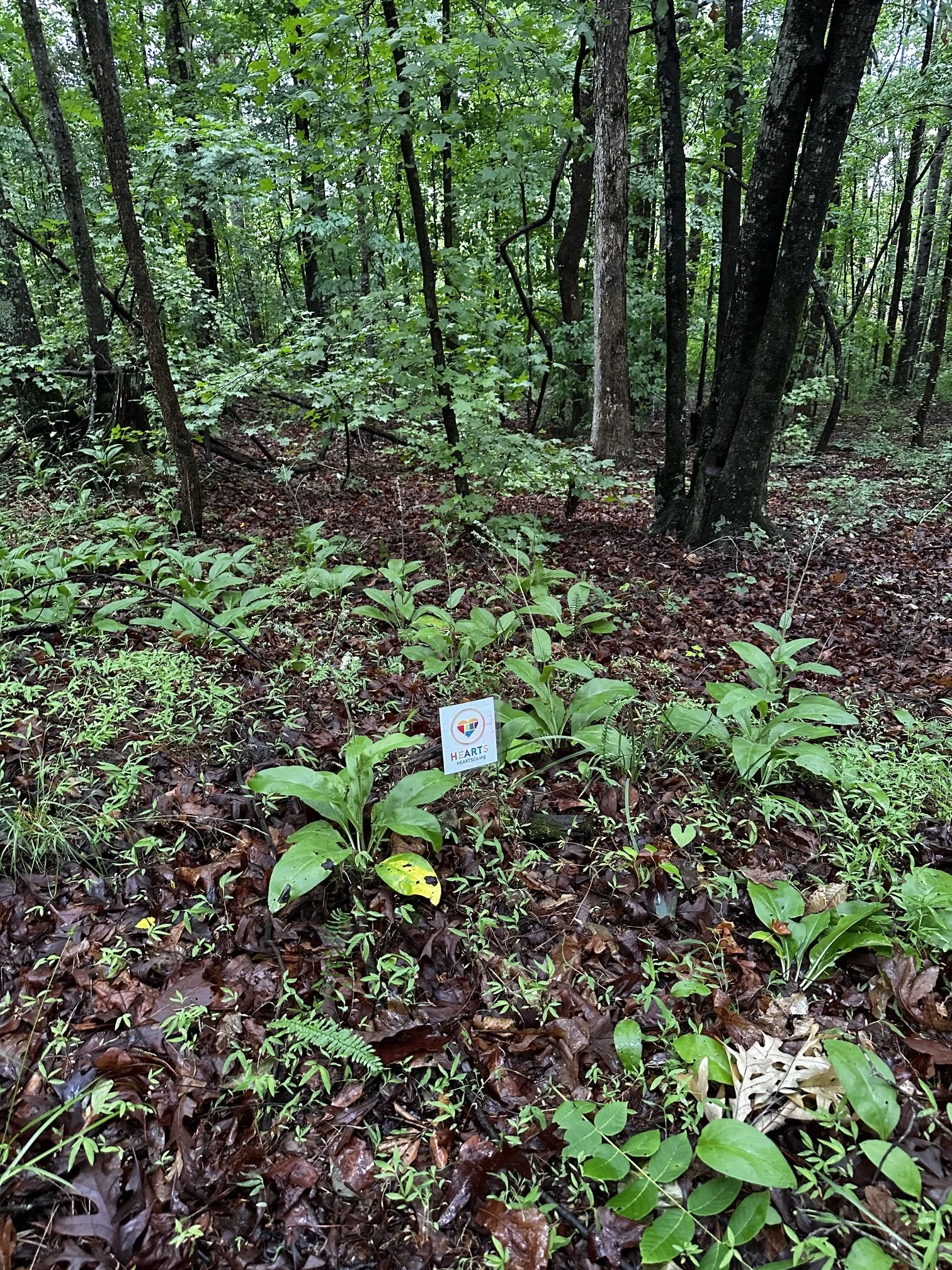
Wild comfrey along Sherrill’s Path
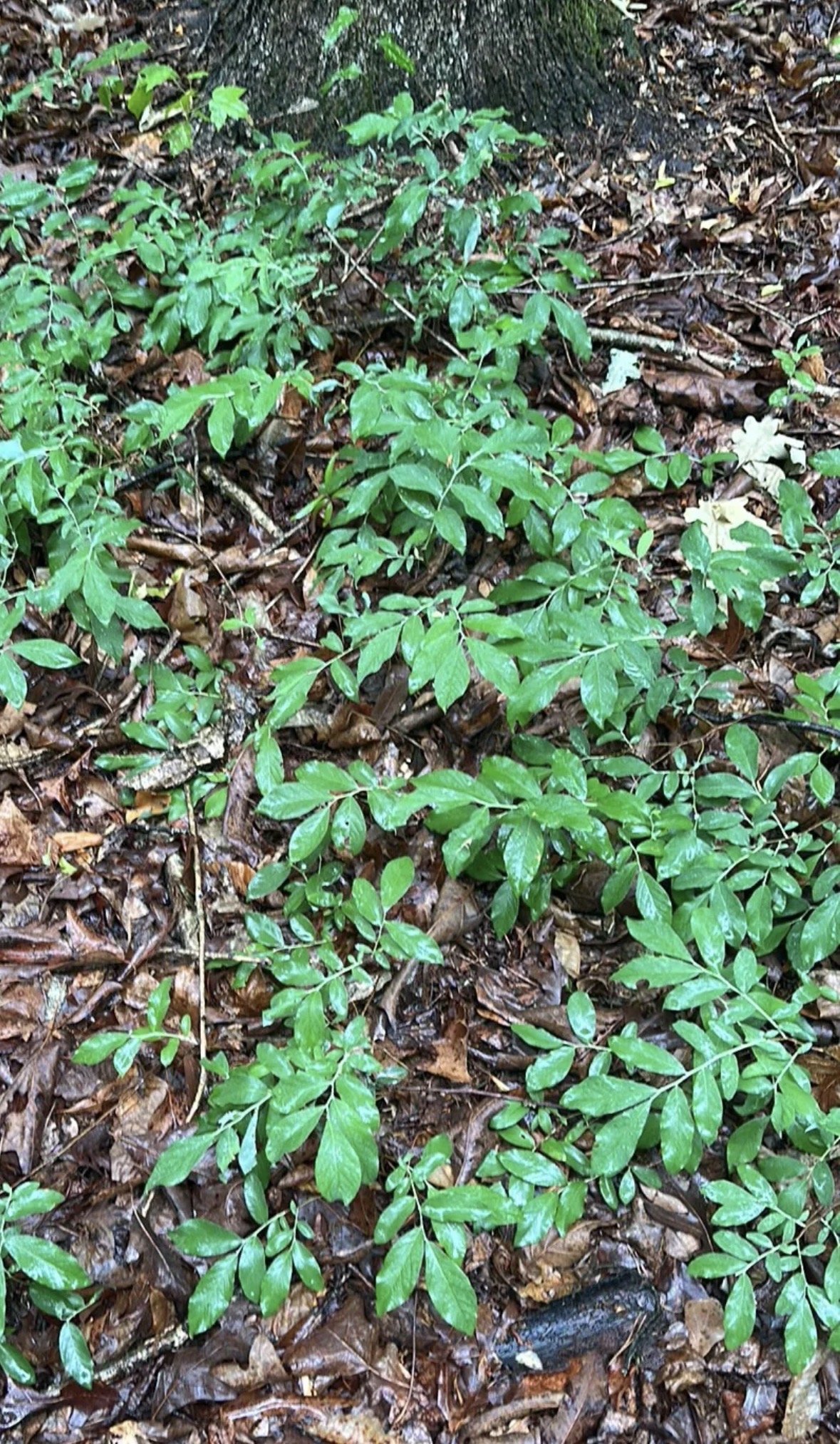
Deerberry along Sherrill’s Path
The Eco-Minute also highlighted Deerberry, a native shrub related to blueberries that thrives in North Carolina’s acidic soils and serves as an important food source for deer, bears, birds, and pollinators.
Kampe shared how Indigenous communities, including the Cherokee, historically incorporated Deerberry into folk medicine and how renewed interest in foraging and native foodways has inspired contemporary uses such as jams, jellies, and local wines.
The discussion reinforced the relationship between ecology and history, illustrating how native plants shaped both survival and cultural practices across generations.
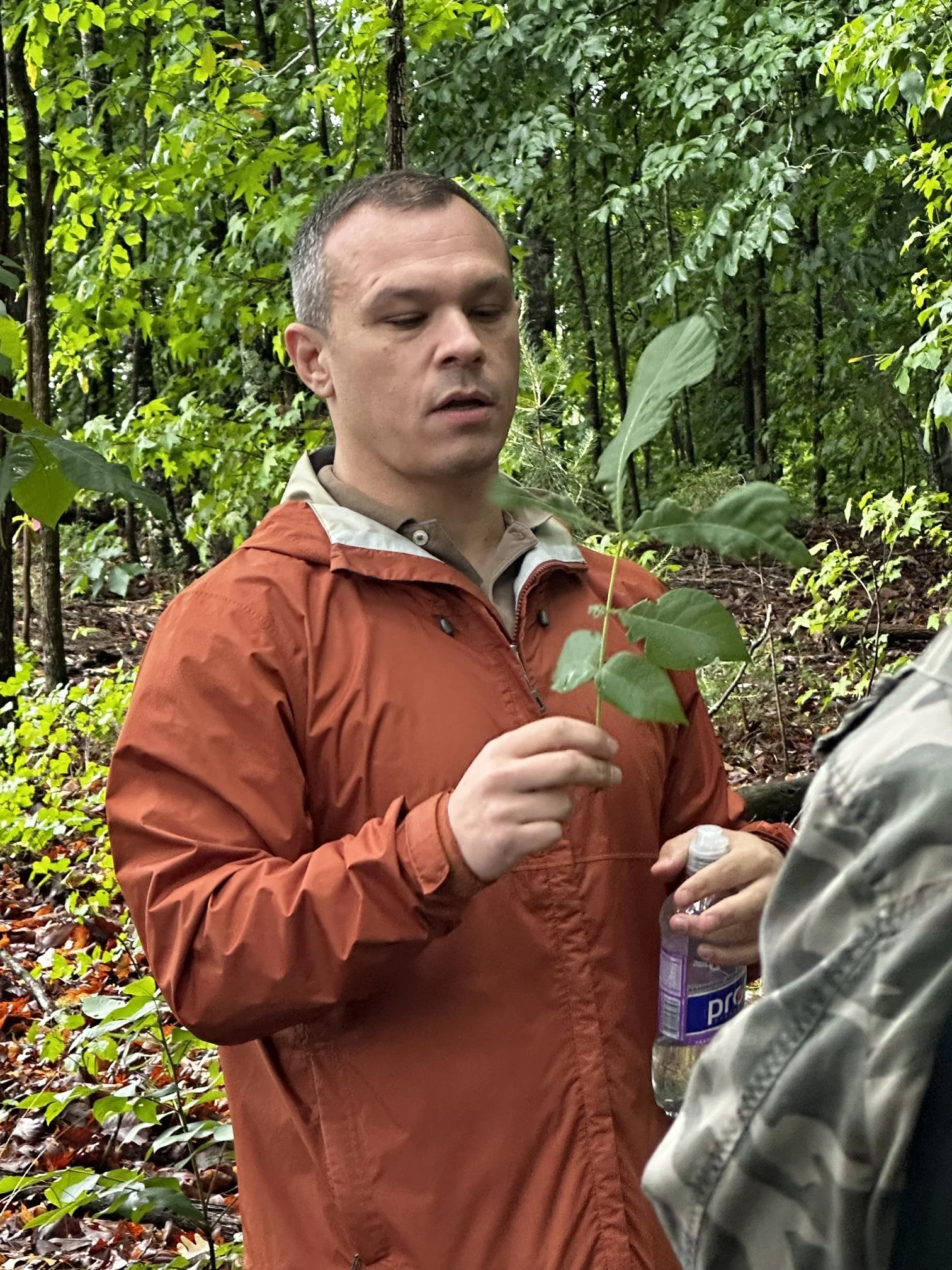
Following the indoor program, the clouds parted, the rain ended, and guests enjoyed a nature walk led by Kampe and Jennings. Kampe's insight into the ecological world along the trail was a highlight, as he shared fascinating details about many of the plant species in the forest.

About HEARTS
Designed to inspire and enhance our community’s shared sense of place, HEARTS Happenings are grass-roots events known for juxtaposing regional history and ecology with curated local music, visual art, and dance in multi-faceted, place-based programs. HEARTS (History, Ecology, Arts, Reunion, Trails, and Store) is made possible by dedicated volunteers, HEARTS Circle members, 2026 HEARTS Presenting Sponsors Lake Norman Realty and blueharbor bank, and generous donations from the community. This event was made possible in part through an Iredell Arts Council Grassroots Grant from the NC Arts Council. All proceeds further the HEARTS mission of historic preservation, ecological conservation, and forging community connections in our region.
HEARTS Collaborative is actively working to help preserve, connect, and share some of our region’s most important historic landmarks. Learn more about HEARTS and join us to achieve goals to honor our local history and enhance our communities through sustainable uses of our special places. www.HEARTSCollaborative.org.
Subscribe to HEARTS below for invitations delivered directly to your inbox!

Join or Renew Today!
Have you ever wished for “someone to do something” about our disappearing historic and natural places?
When you join HEARTS Circle, you are someone who is doing something!
Becoming a HEARTS Circle member means joining a community dedicated to preserving places and stories that shape who we are.
Join the Circle
Together, we can do so much more.
HEARTS Circle Members support HEARTS’ vital, local, place-based initiatives that promote history, ecology, arts, reunion, trails, and help preserve our special historic places. However, it’s not just HEARTS Happenings that your support makes possible. The Hugh Torance House and Store is fueled by HEARTS Circle members, Brevard’s Chapel is being saved by HEARTS Circle members, and most recently, the historic Sharpe House is utilizing HEARTS for enhanced programs and preservation. Through community collaborations, HEARTS is actively playing an integral role in historic preservation. The Alexander Tenant House restoration plan is (finally!) underway, and the Nelson House in Smithville is being transformed and preserved with HEARTS’ help. HEARTS is on the frontline for local preservation in our region, and we’re grateful we can help thanks to our HEARTS Circle Members and the generosity of our community.
Our 2026 new and renewing HEARTS Circle members will be invited to our 5th Annual HEARTS Circle Members’ Gala on September 12, 2026, at 6:00 PM at historic Cedar Grove. We’re cooking up something special to celebrate HEARTS fifth anniversary; you won’t want to miss it!

Save the Date!
Charly Lowry is a powerhouse singer-songwriter from Pembroke, North Carolina. She is an Indigenous woman of the Lumbee and Tuscarora tribes and is well-known for her soul-stirring music that blends her heritage with contemporary styles. Nationally recognized, she has performed with Rhiannon Giddens at Carnegie Hall, among many other notable performances. Charley’s September 12th house concert at Cedar Grove is a rare treat and an exclusive benefit for 2026 HEARTS Circle new and renewing members. So don’t wait, renew today. Help us preserve more, connect more, and share more with the community.
