
Recap of HEARTS Junion ‘26: Who Was Henry Brevard?
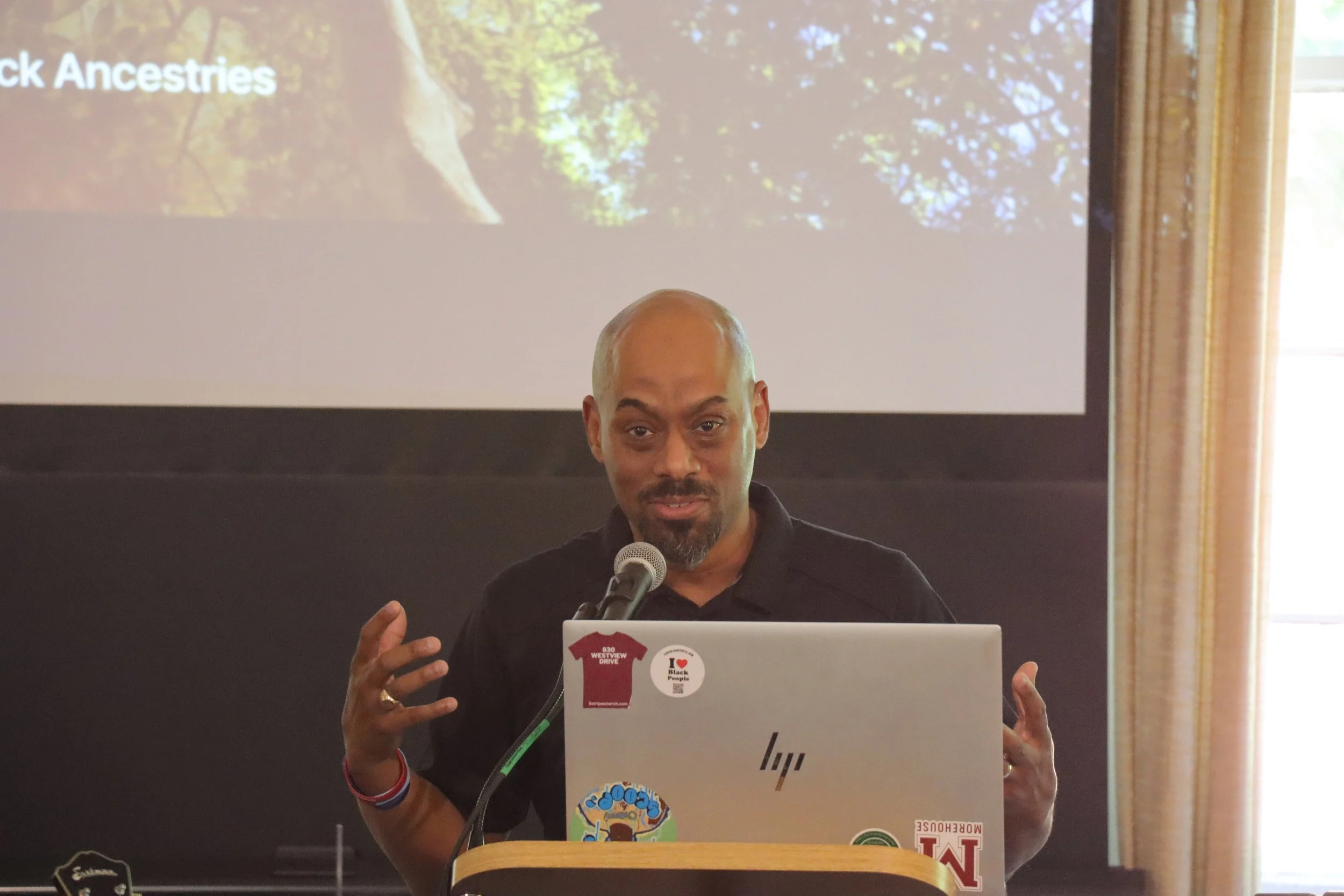
The “R” in HEARTS stands for the Reunion Project, and each June, we share research learned at the annual Junion HEARTS Happening. Genealogist and HEARTS Reunion Project Co-Chair, Andre’ Kearns, returned to historic Cedar Grove for the fifth anniversary of HEARTS Junion on June 13, 2026. This year, the research Andre’ shared centered on the life and legacy of Henry Brevard of Lincoln County, the namesake of Brevard’s Chapel. His keynote presentation, “Who Was Henry Brevard?” traced the life of the once enslaved ironworker who became a successful blacksmith and landowner after emancipation.
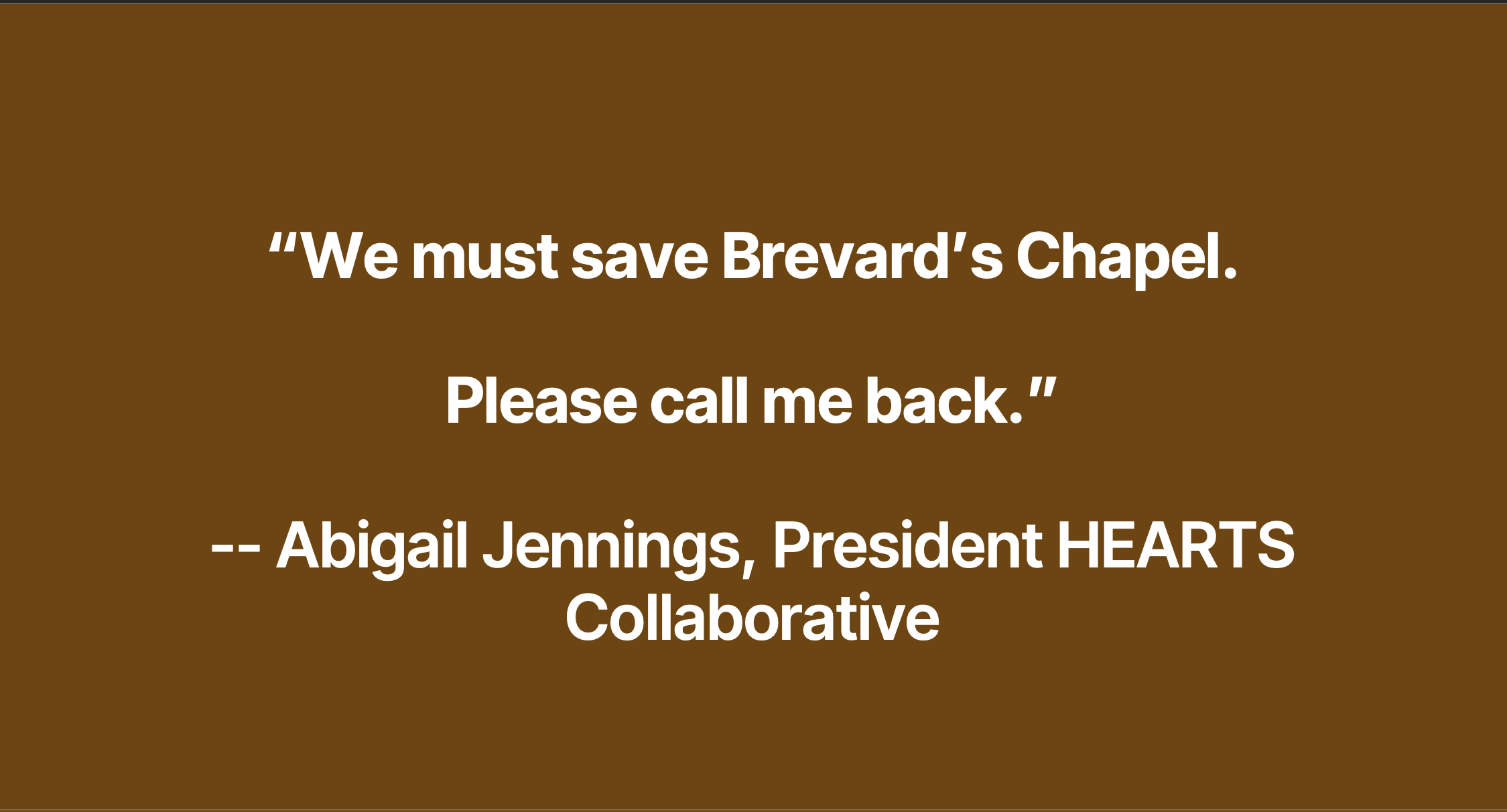
Andre’ opened by reflecting on his connection to Cedar Grove and the responsibility of sharing the story. While not a descendant of Henry Brevard, he described being honored to bring forward a history rooted in place, labor, and community legacy. He also recalled how the project began after receiving a voicemail from HEARTS President Abigail Jennings, urging immediate attention to the preservation of Brevard’s Chapel, a message that ultimately led to months of historical research and discovery.
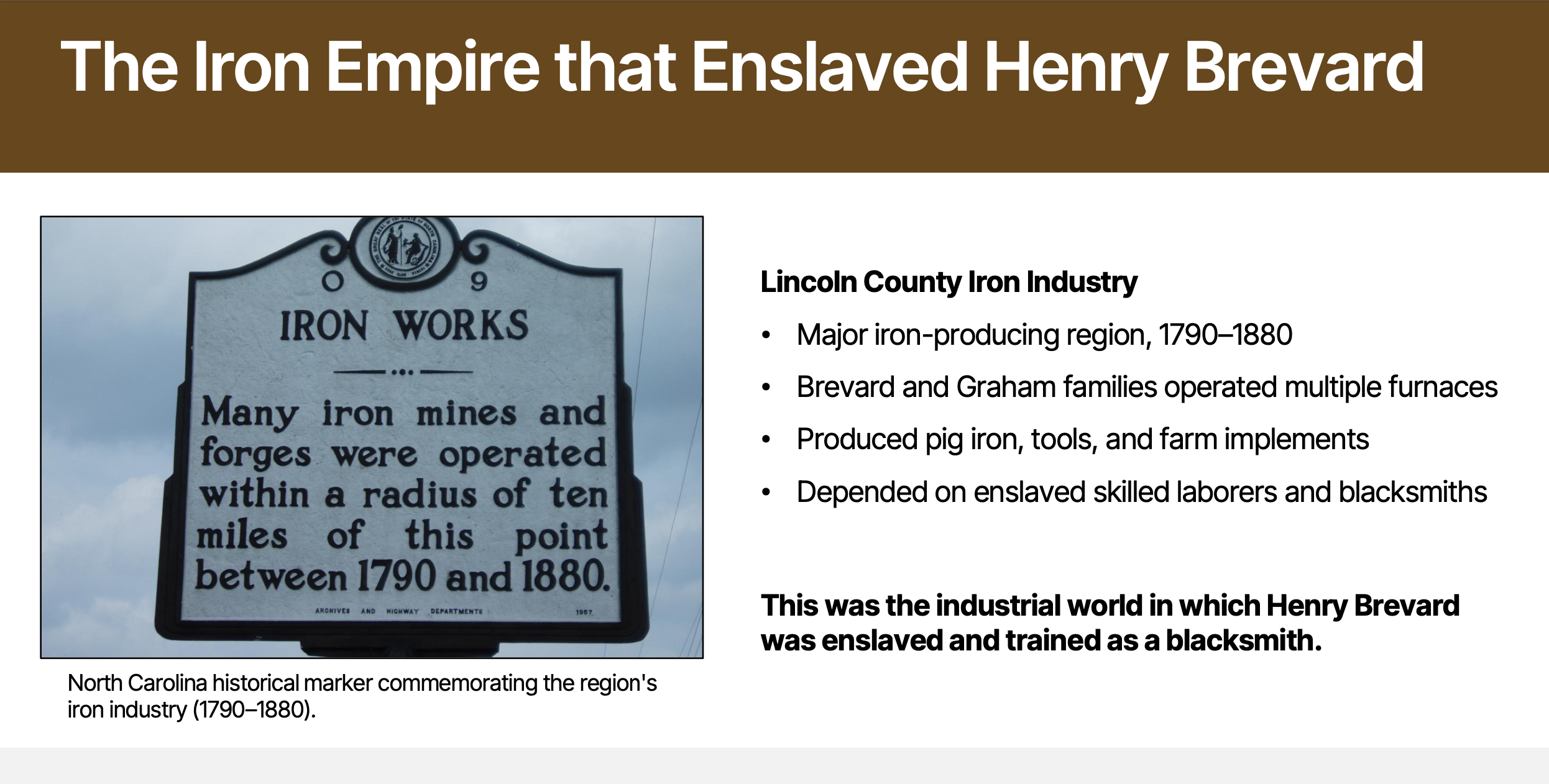
He began the narrative with Henry Brevard’s earliest appearance in the historical record: an 1860 slave schedule in which a 17-year-old enslaved male, likely Henry, was listed under the Brevard family’s iron operations in Lincoln County. From there, Andre’ situated Henry within the broader context of the region’s iron industry, an interconnected network of furnaces and production sites powered by skilled enslaved labor.
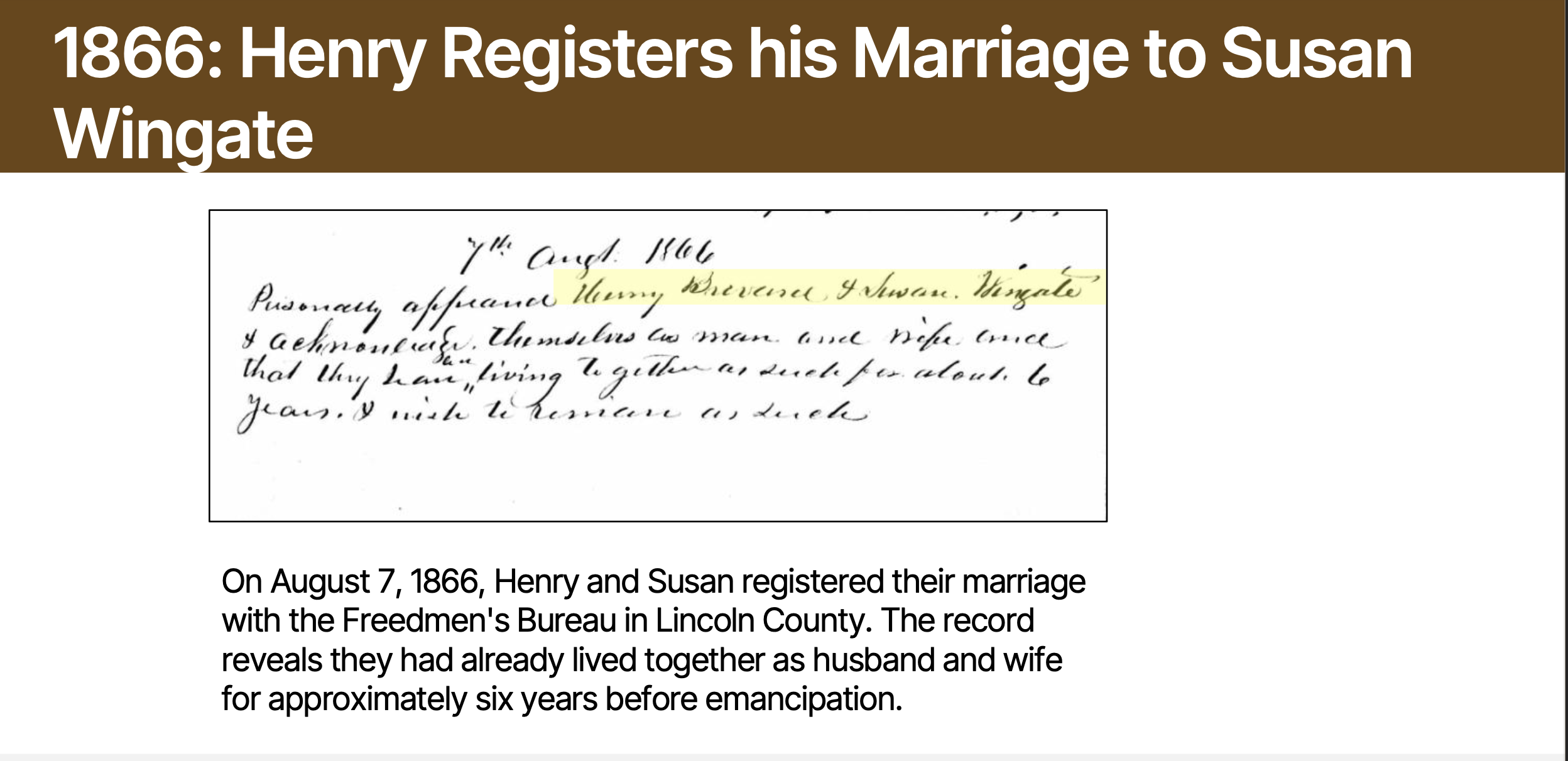
As he explained, Henry was trained as a blacksmith within this system, a skill that would later become central to his survival and success after emancipation. Following the Civil War, Henry reemerges in 1866 marriage records with Susan Wingate, formalizing a relationship that had already existed during slavery. By 1870, he was documented as a free man, living with his family in Lincoln County and working as a blacksmith.
Andre’ emphasized the significance of what followed: in 1874, less than a decade after emancipation, Henry purchased 90 acres of land in Lincoln County. That land, he noted, would later become home to Brevard’s Chapel.
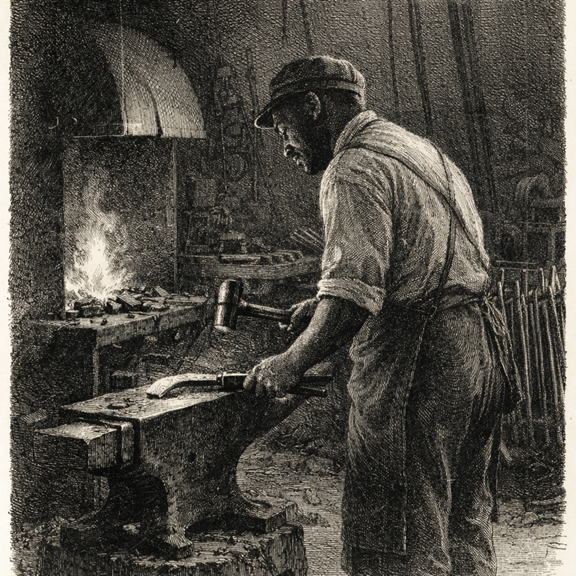
From that point forward, Henry’s life reflected rapid transformation and persistence. By 1880, he was established as a working blacksmith, landowner, and family man supporting both biological and adopted children, including Ola Prim Brevard. Andre’ used these family details to highlight the complex and often difficult realities of post-emancipation life, where kinship networks were rebuilt under conditions shaped by loss, displacement, and resilience.
He then turned to the formal establishment of Brevard’s Chapel. In 1885, Henry and his wife deeded a portion of their land to trustees of the Methodist Episcopal Church, securing the site that had already become a gathering place for worship, education, and community life. The chapel, Andre’ noted, became a vital center for formerly enslaved families who had previously traveled nearly four miles to attend church, anchoring faith and fellowship within walking distance of home.
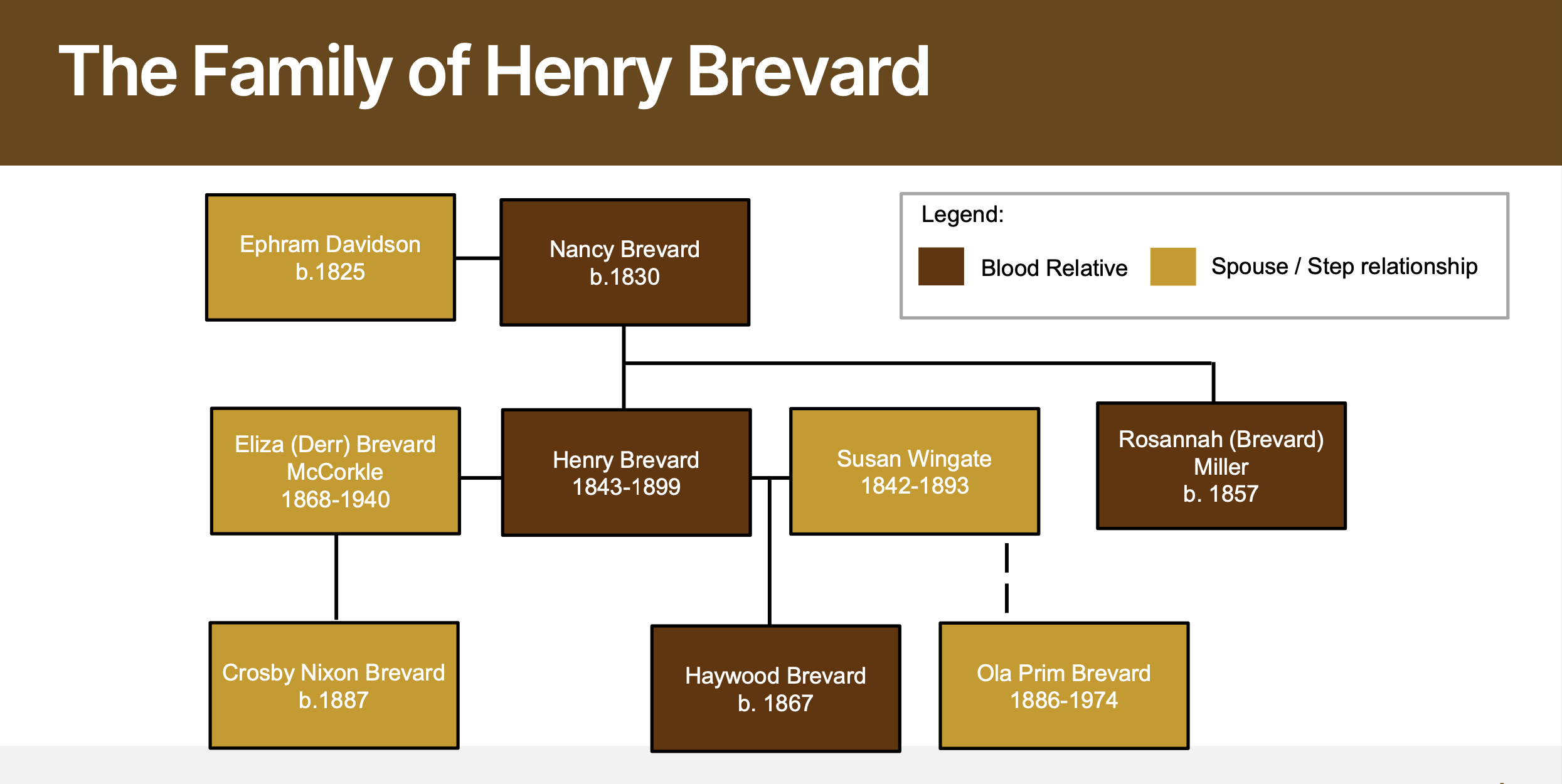
Andre’ continued through Henry’s later years, including his remarriage following the death of Susan Wingate and his death in 1899. He also outlined the complex probate proceedings that followed, noting how Eliza McCorkle, Henry’s widow, fought to retain ownership of the land after his death, ultimately preserving it within the extended family for decades.
While the Brevard family’s industrial legacy is widely memorialized in the region, Henry’s story has remained largely absent from public memory despite being foundational to that same history. He described his work as an effort to correct that imbalance by making visible the lives of those whose labor shaped the region but whose names were often left unrecorded.
Andre’ closed by connecting Henry Brevard’s life to the broader America 250 commemoration, framing the story within the longer arc of American history, enslavement, emancipation, Reconstruction, and ongoing redefinitions of freedom. Preservation, he said, is not simply about buildings or artifacts, but about responsibility to collective memory.
“This place is a living monument to Henry Brevard’s legacy,” he said in closing, urging continued support for the preservation of Brevard’s Chapel and the history it represents.
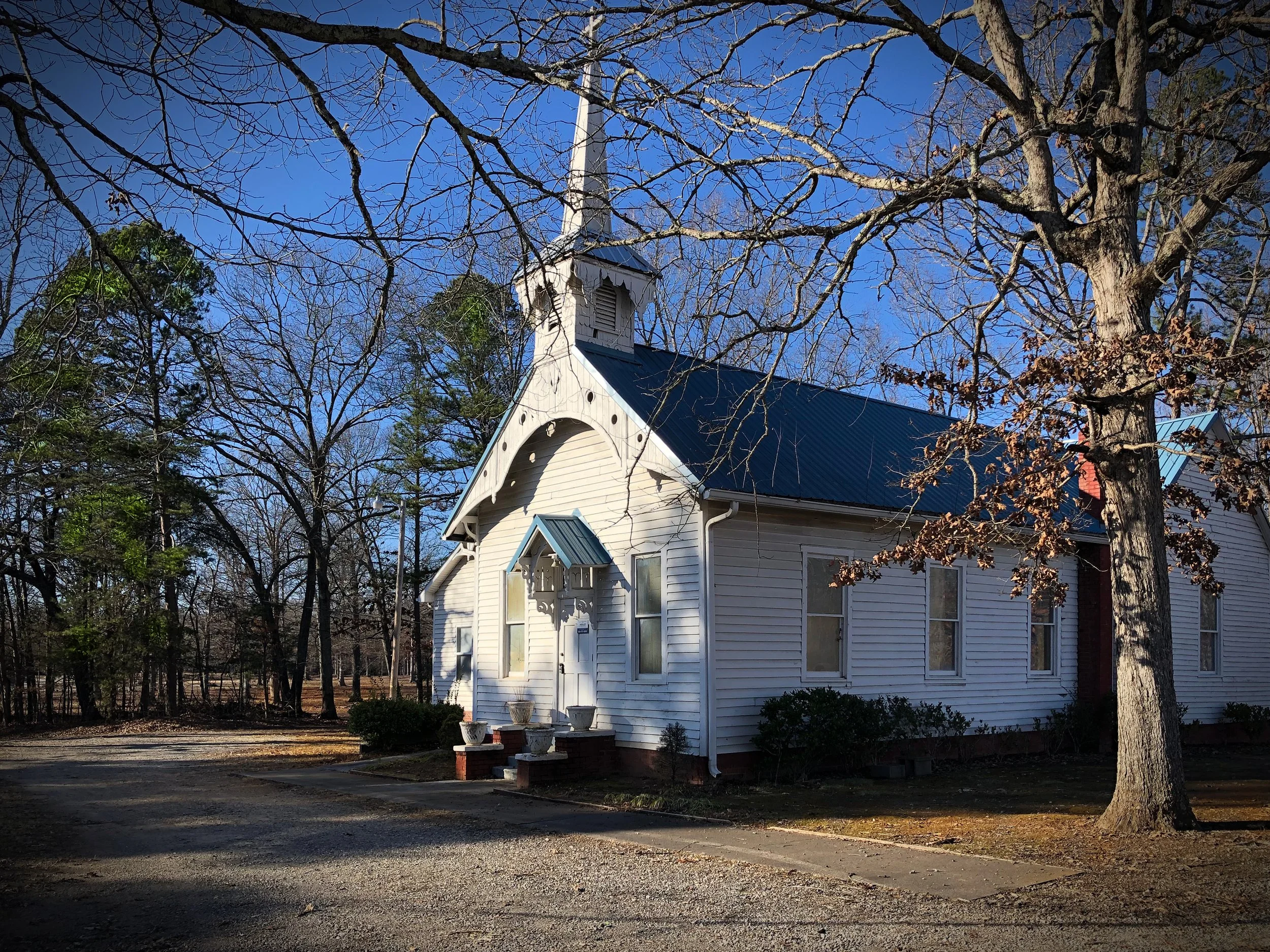
Randolph shared updates on the ongoing preservation effort to restore the chapel, noting collaboration with the Lincoln County Historical Association, Lincoln Landmarks, Preservation North Carolina, and the Jenrette Foundation. Nearly $90,000 has been raised through a combination of financial and in-kind support, though the work ahead remains significant.
Brevard’s Chapel, built in the 1870s in the Carpenter Gothic style by formerly enslaved individuals, stands on land purchased by Brevard in 1874. Over time, it became a cornerstone of community life, serving as a place for worship, education, nourishment, fellowship, and gathering across generations.
HEARTS looks forward to restoring Brevard’s Chapel to serve the community for generations to come.
Sacred Steel at Cedar Grove
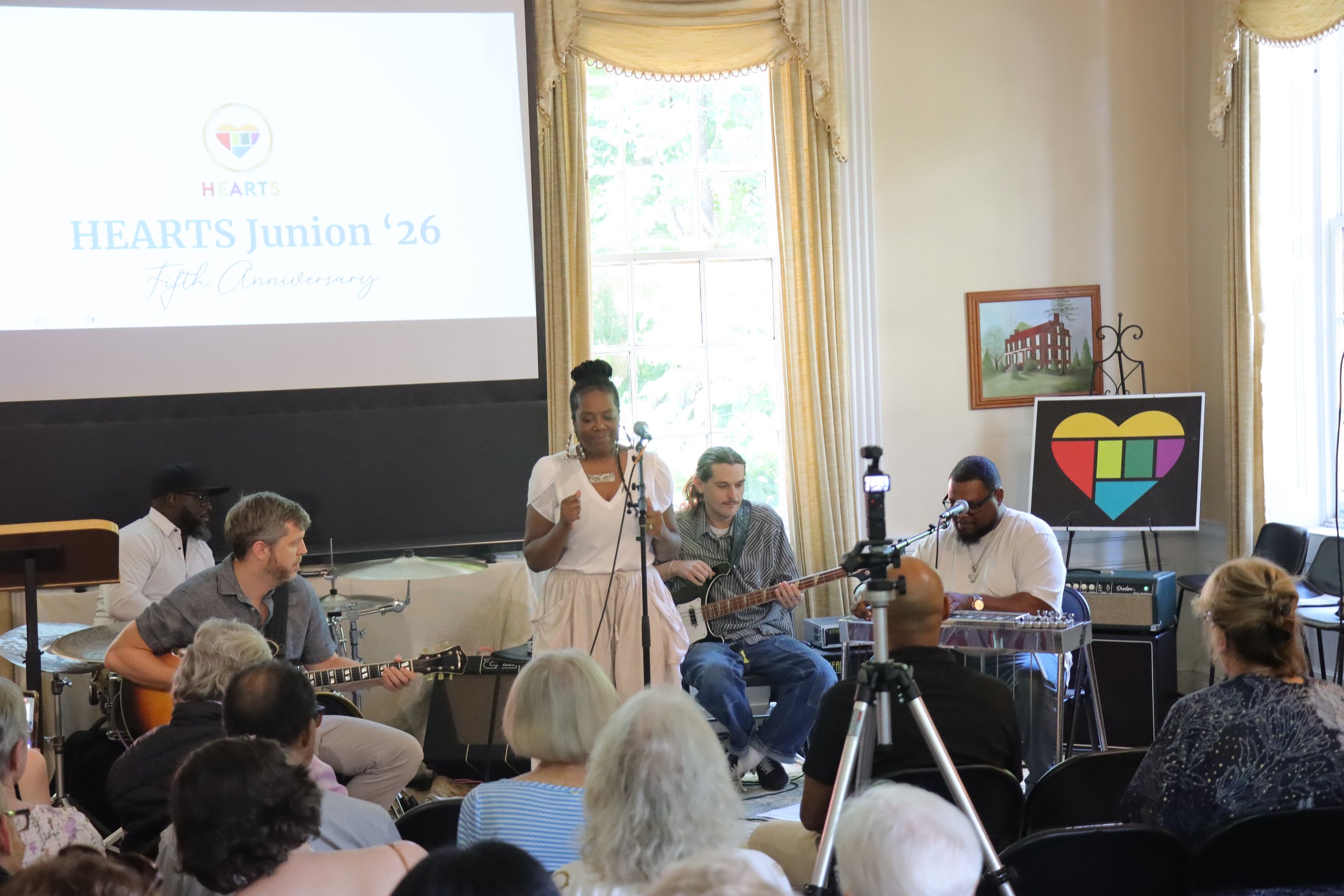
HEARTS Junion featured an incredible live music performance by DaShawn and Wendy Hickman, joined by Russell Kelley, Butler Knowles, and Chasiray Shank Shechink. Their performance carried across Sacred Steel, gospel, blues, and R&B traditions.
DaShawn Hickman, a nationally recognized pedal steel guitarist, shared his remarkable journey from learning the instrument at age five in his family’s church in Mount Airy to performing internationally with Cirque du Soleil’s Songblazers. Throughout the afternoon, the band blended gospel, blues, R&B, and sacred steel traditions, creating a powerful soundtrack that perfectly complemented the day’s themes of faith, freedom, and perseverance.
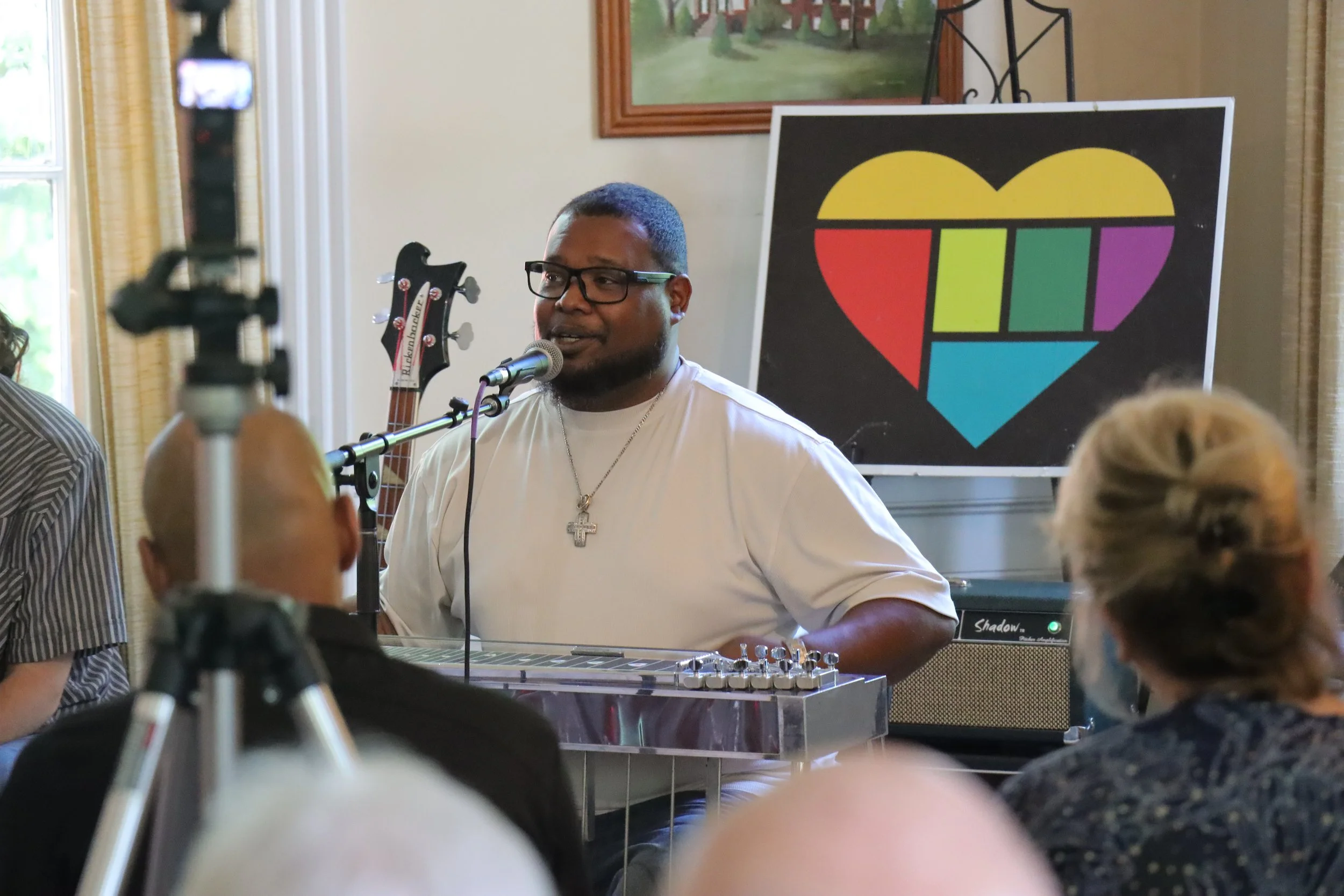
Next, Randolph invited DaShawn to the mic for a closer look at the instrument that had been carrying much of the afternoon’s sound, the pedal steel guitar, and the story behind how it shaped his musical path. DaShawn explained that while the instrument is often associated with country music, its roots stretch back to Hawaiian music and into African American church traditions, where he first encountered it. He shared that his introduction came through his mother, who played lap steel when he was a child. “I was three years old, and she was playing lap steel. That was my introduction to the instrument.” Given to him at age five after she entered ministry, he has been playing ever since.
.
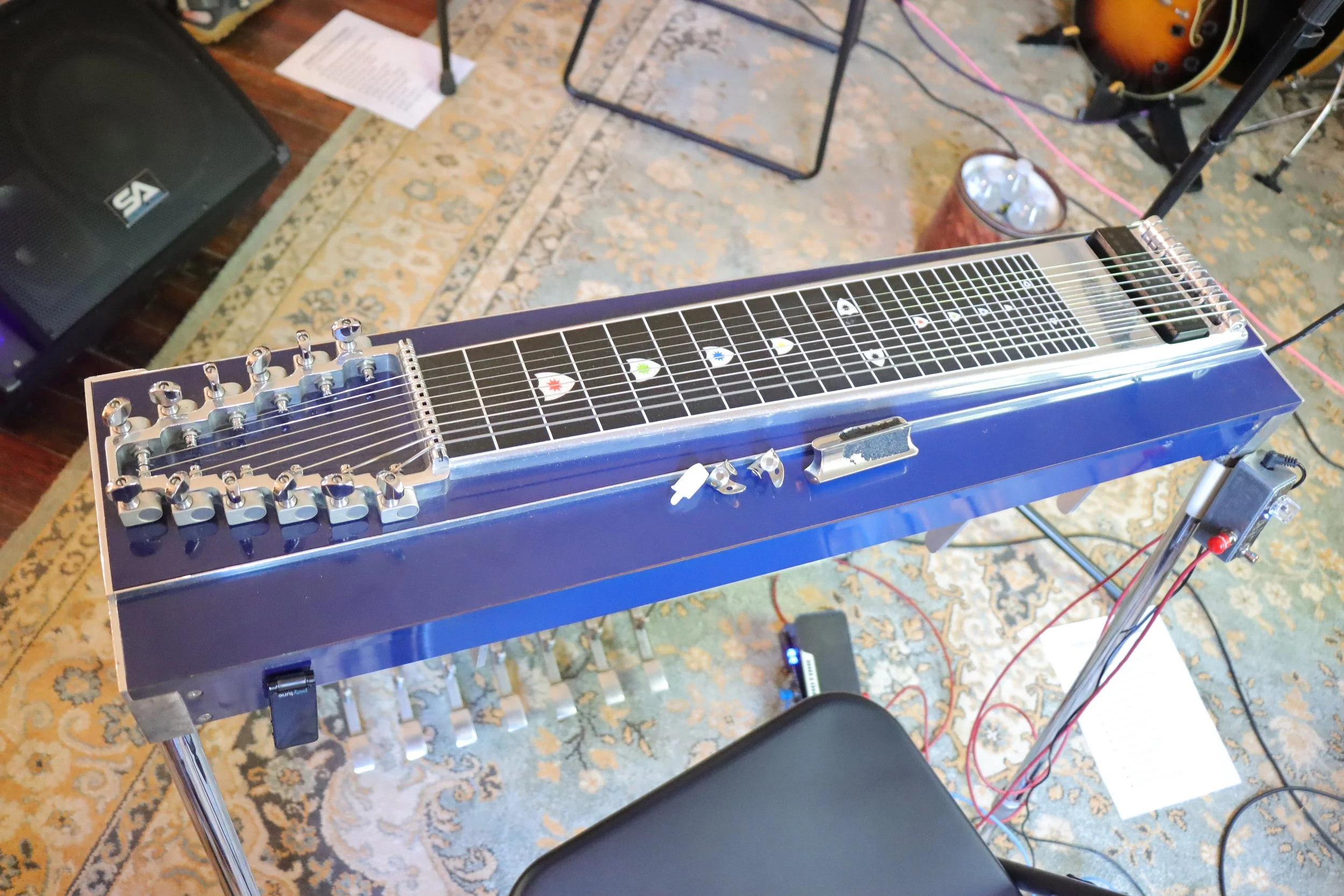
DaShawn described the complexity of the instrument, with its moving parts and layered mechanics that require constant coordination. “It’s a science project… everything on the guitar moves… I have knee levers, foot pedals…everything is happening at the same time.” Despite that complexity, he noted he is still learning every time he plays. “Up until today, I have learned something on this guitar every single day.” DaShawn also explained how he customizes his setup to mirror organ and keyboard-style playing, shaped by his experience in church music and his desire to bridge multiple musical influences
DaShawn closed with a reflection on how storytelling and music are inseparable for him, noting that many of the pieces performed throughout the afternoon were rooted in the music he grew up hearing in Mount Airy and in church. The segment transitioned directly back into performance with DaShawn and Wendy Hickman and their band performing a song titled “I’m Going Home on the Morning Train.”
Zebra Swallowtails and Pawpaws
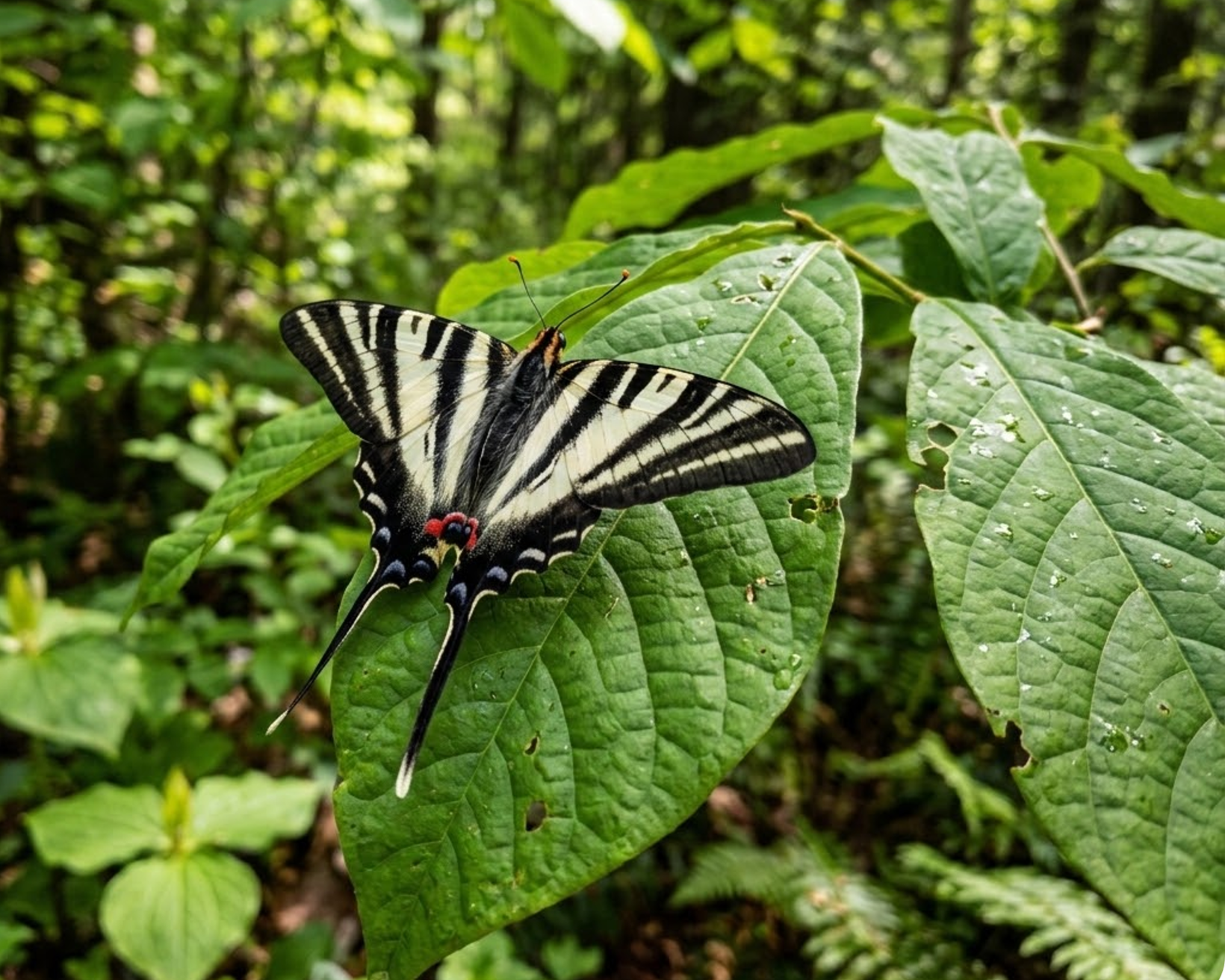
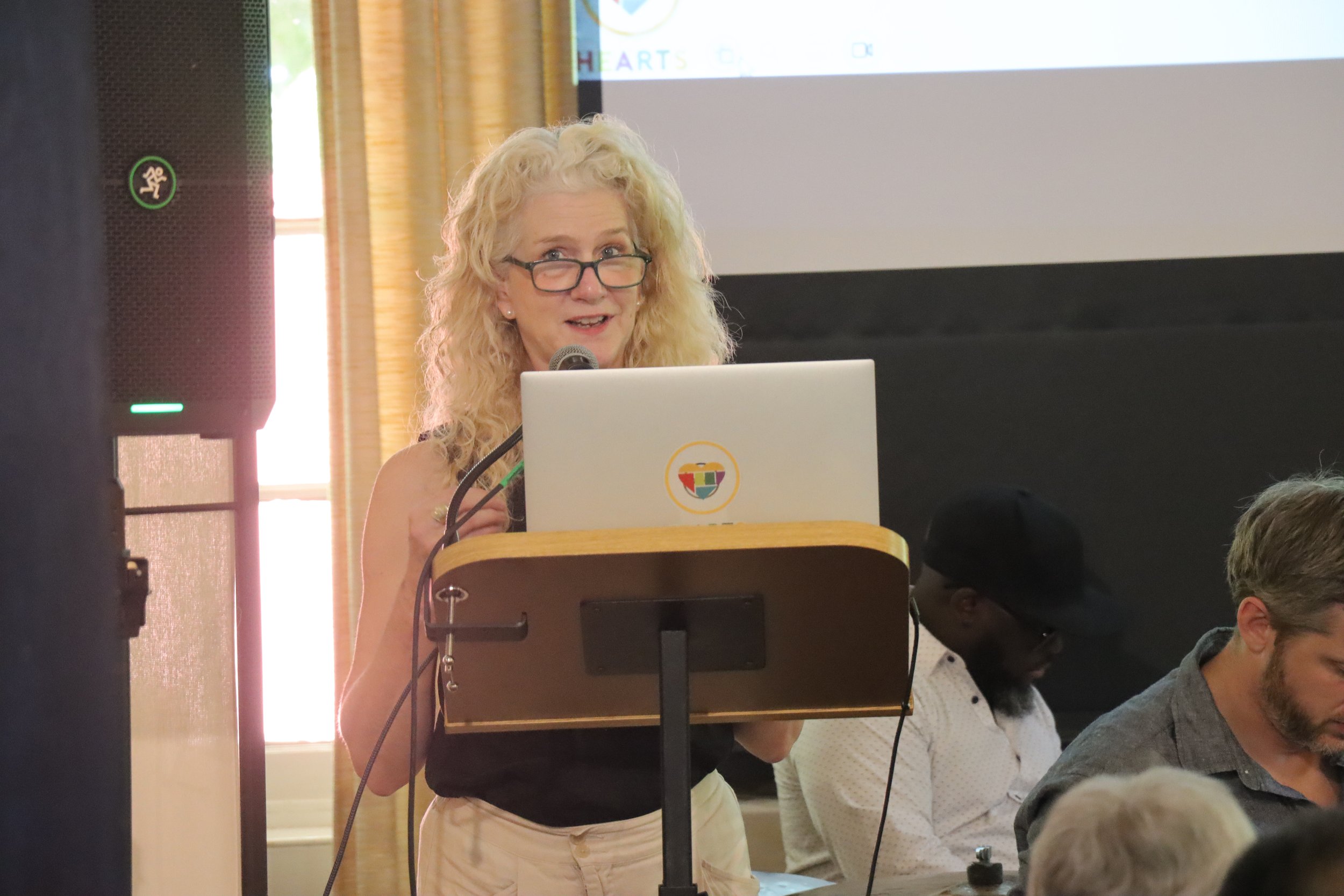
HEARTS Eco-minute featured Abigail Jennings sharing the fascinating relationship of the zebra swallowtail butterfly and the pawpaw tree. Abigail opened by sharing why she chose these species to highlight. “Earlier this week, I pondered what species I would share today, and I decided to go visit Cedar Grove for inspiration. As soon as I parked the car and got out, a butterfly flew by, and I immediately knew what I would share today.” That butterfly, she explained, was the zebra swallowtail, a native species directly tied to the presence of hundreds of pawpaw trees on the property.
She described the relationship between the two as highly specialized, with the zebra swallowtail classified as an obligate host species. “The only food these caterpillars will eat is pawpaw leaves.” Because of this dependence, zebra swallowtails are only found where pawpaw trees grow, making the two species deeply interconnected within the same landscape.
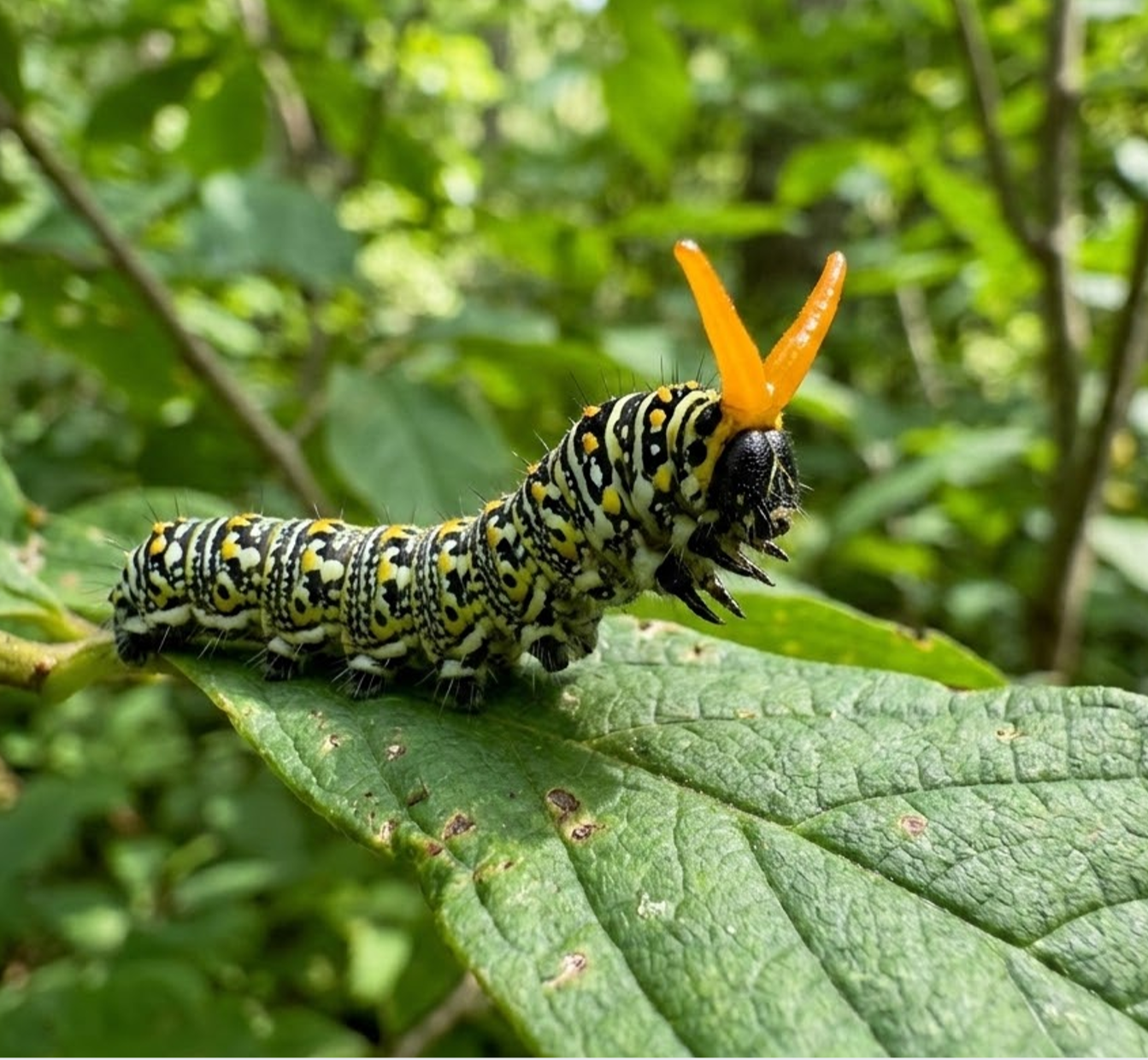
Abigail explained that the pawpaw produces natural chemical defenses, known as acetogenins, that deter most herbivores, but the zebra swallowtail has evolved to not only tolerate those compounds but to use them for protection. “By absorbing these toxins, the caterpillar and the resulting butterfly become highly unpalatable.” Additionally, the caterpillar’s defense mechanism is tied to this toxin too, resulting in a strong odor from their osmeterium when threatened. The osmeterium is a hidden, fleshy, Y-shaped scent gland located behind their heads. When threatened, they extend this brightly colored gland to release a foul-smelling secretion that deters ants and spiders. Simply put, Jennings shared, “Those little orange things just pop out of its head, and it makes a stink bomb.”
She walked through the butterfly’s life cycle, from a single golden egg laid on a pawpaw leaf to the camouflaged chrysalis hidden in the foliage, noting how intentional the process is in nature.
“They only lay one egg per plant… just imagine this little butterfly laying one little egg at a time, going tree to tree, on hundreds of pawpaw plants.” Abigail also highlighted the pawpaw as North America’s largest native tree fruit and an often-overlooked species that once had wider recognition before foodways became industrialized in the 20th century.
Presenting, “Liberty”
After Abigail’s Eco-Minute, Randolph introduced the new featured art exhibit, “Liberty” in Cedar Grove’s Center Hall. In partnership with Nine Eighteen Nine Studio Gallery, HEARTS presented a curated collection of work by five artists created specifically for the event. Randolph highlighted the participating artists: Barbara Ellis, Marvin Betaudier, John “Trey” Miles III, Camisha McDaniel, and Laurie Smithwick. The exhibit invited guests to engage with a range of visual interpretations of liberty, identity, and lived experience, extending the afternoon’s themes beyond music and history into contemporary artistic expression.
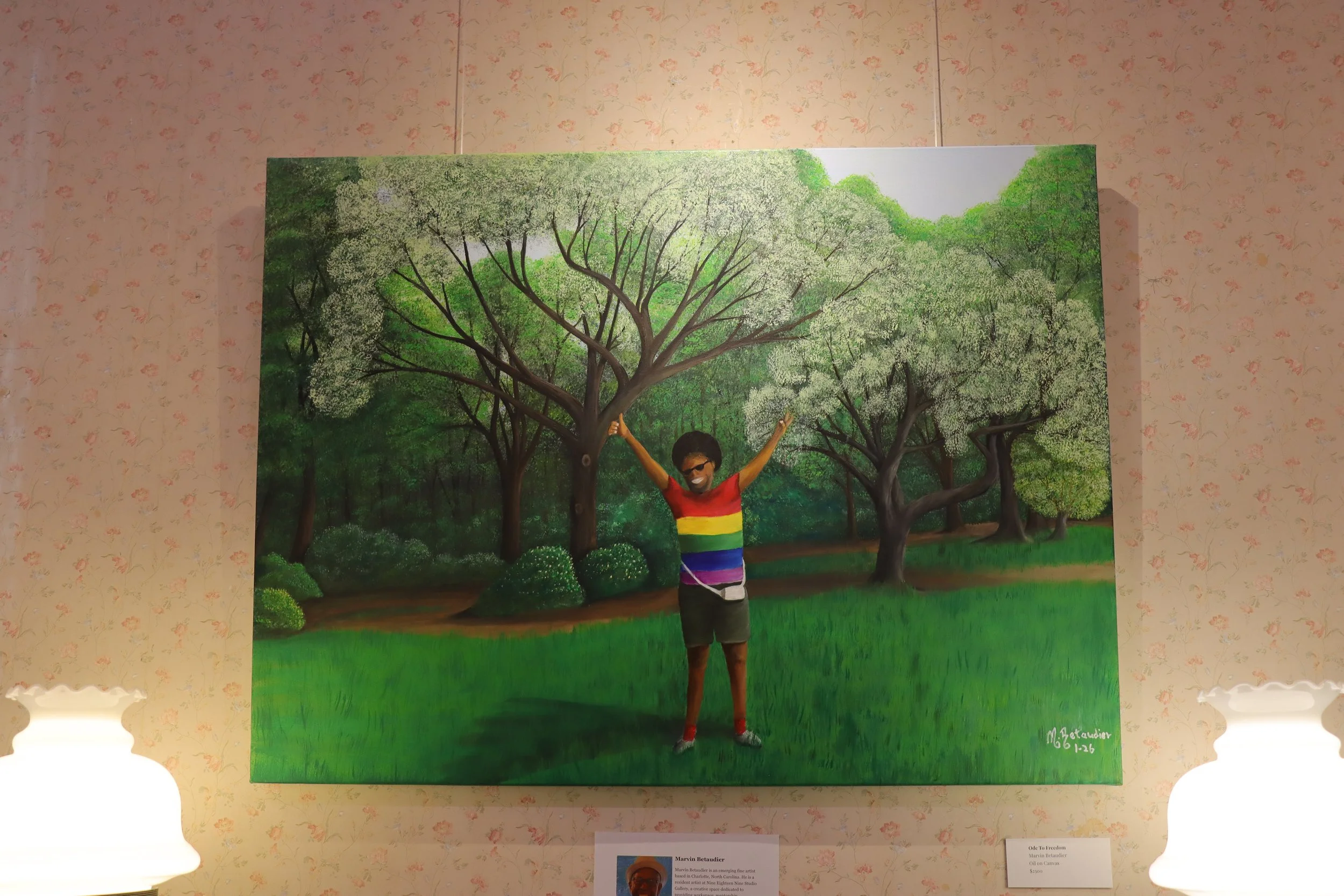
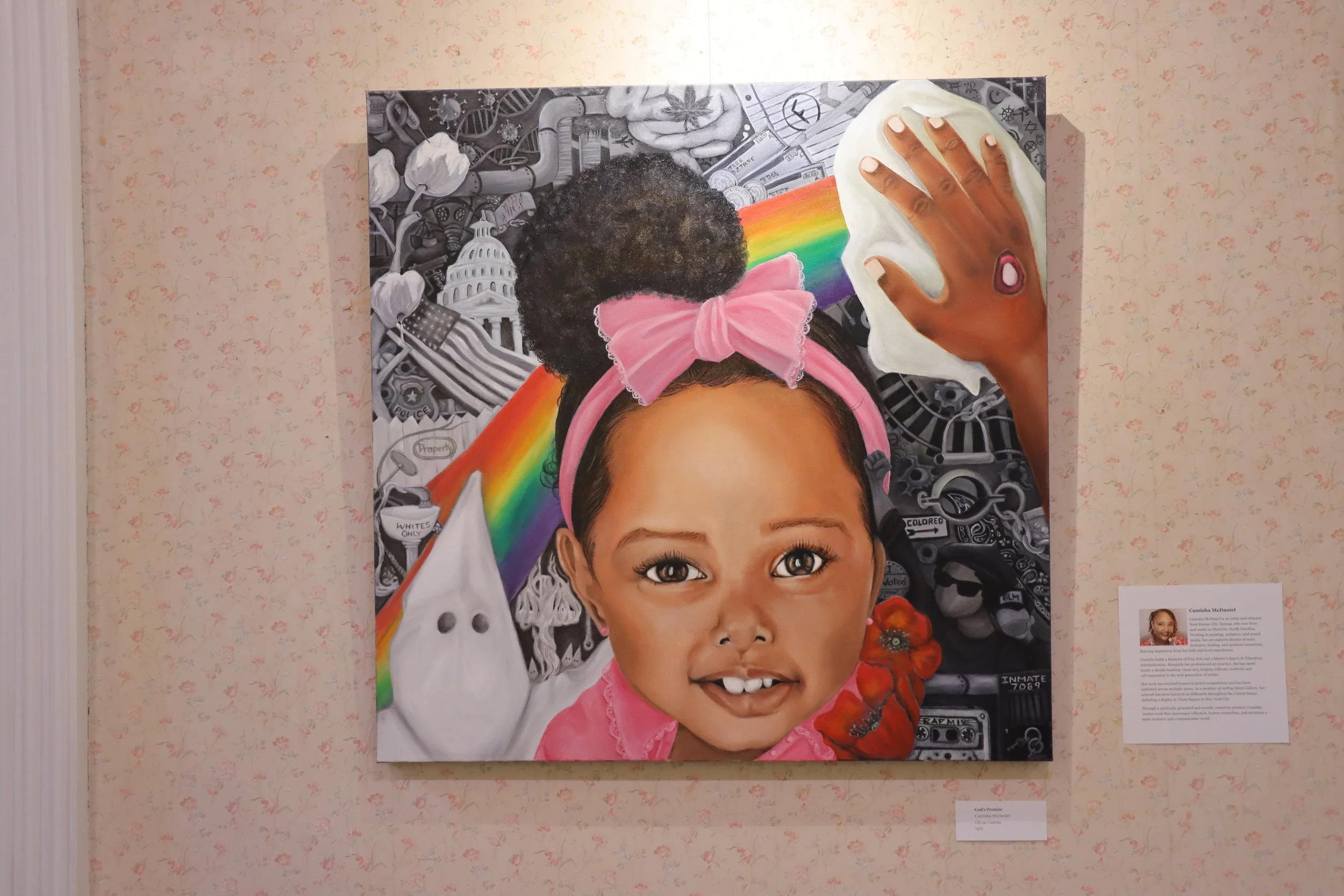
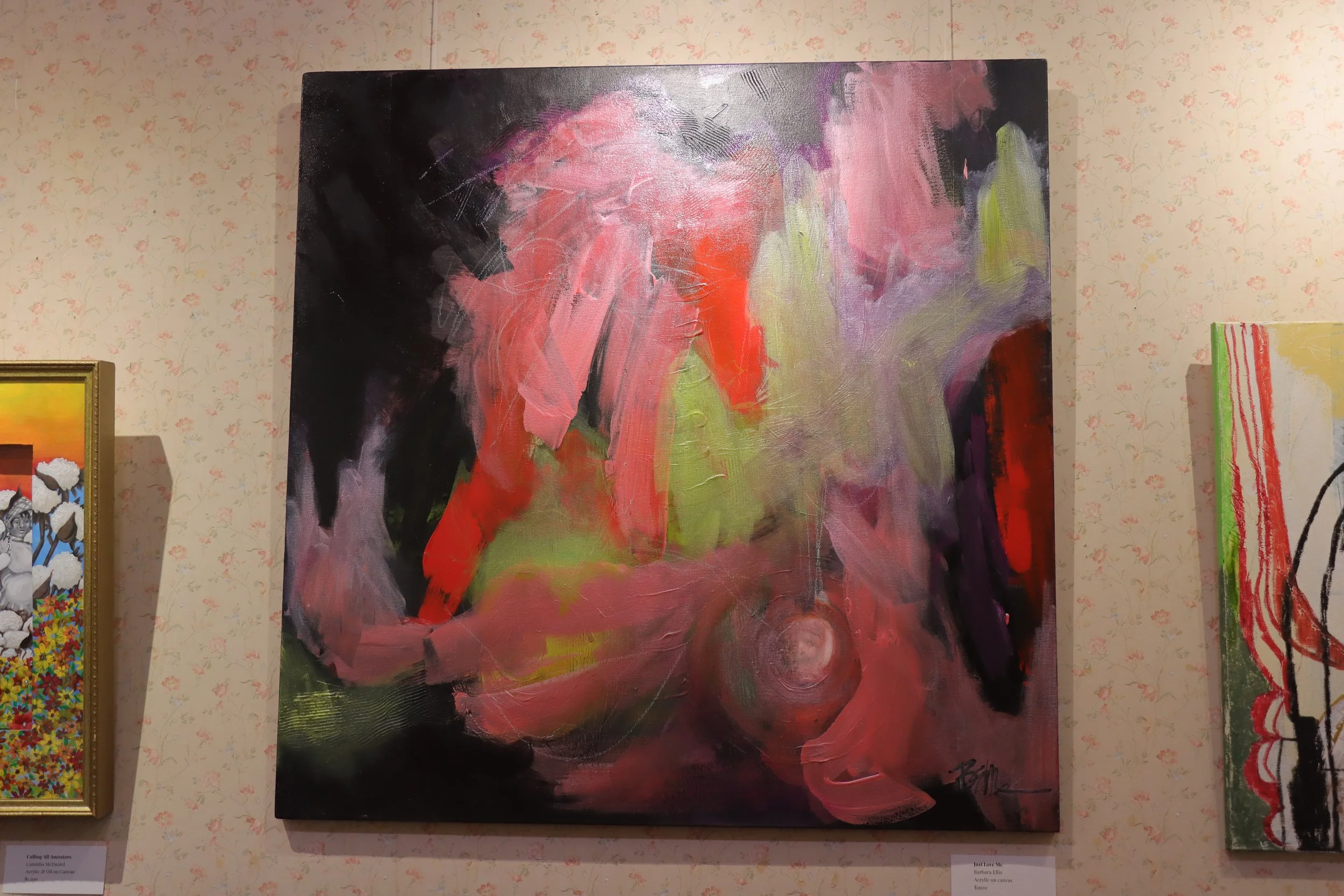
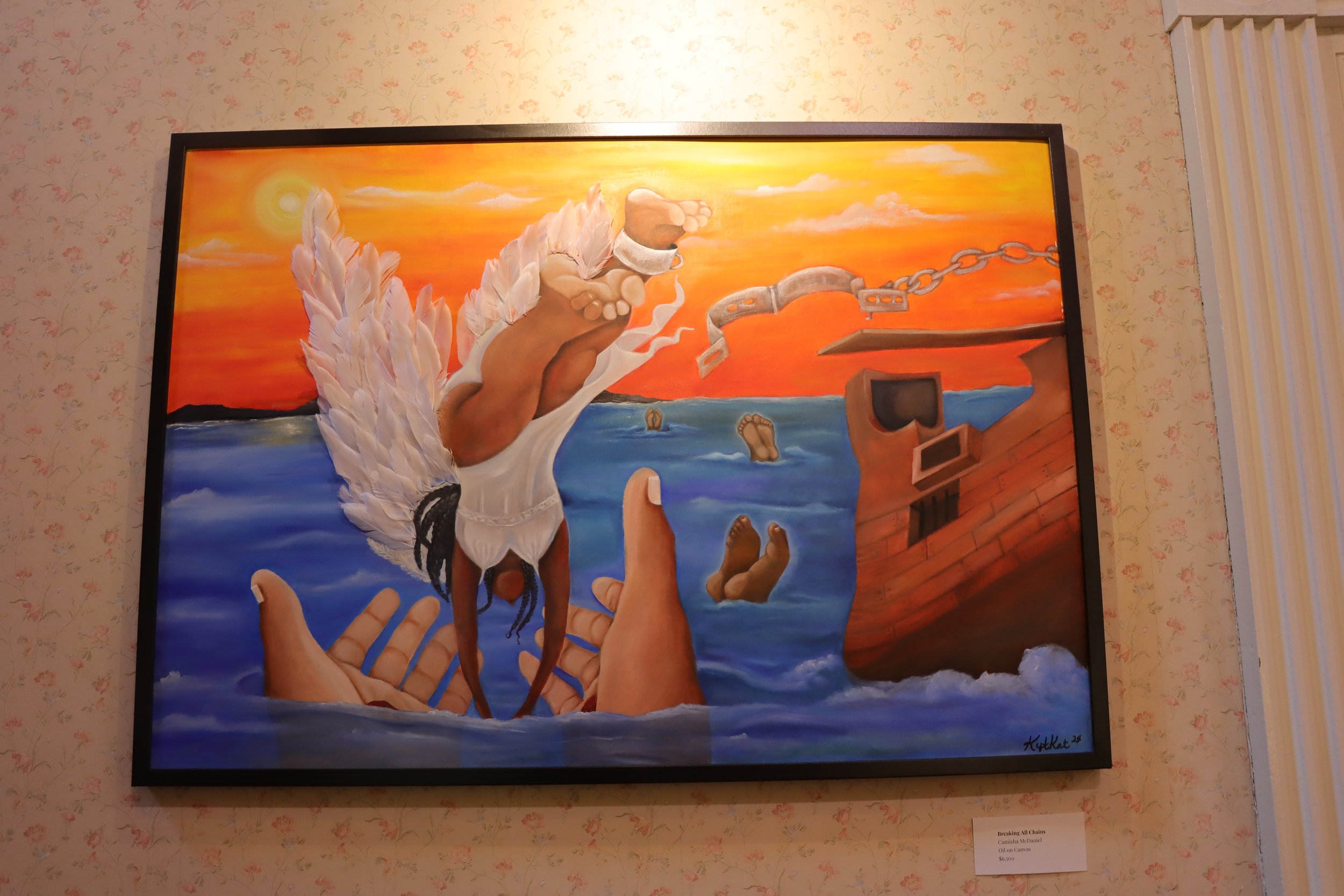
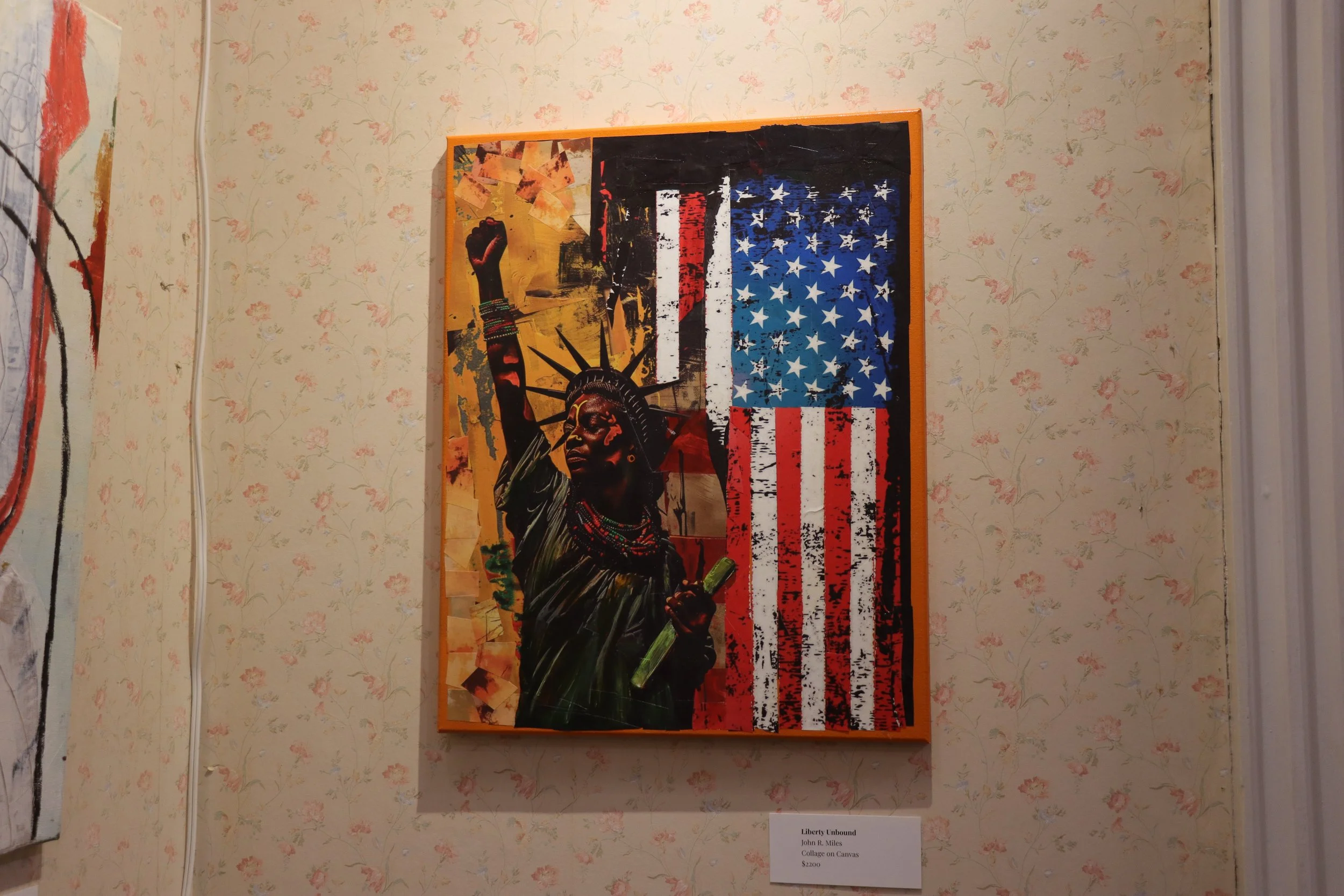
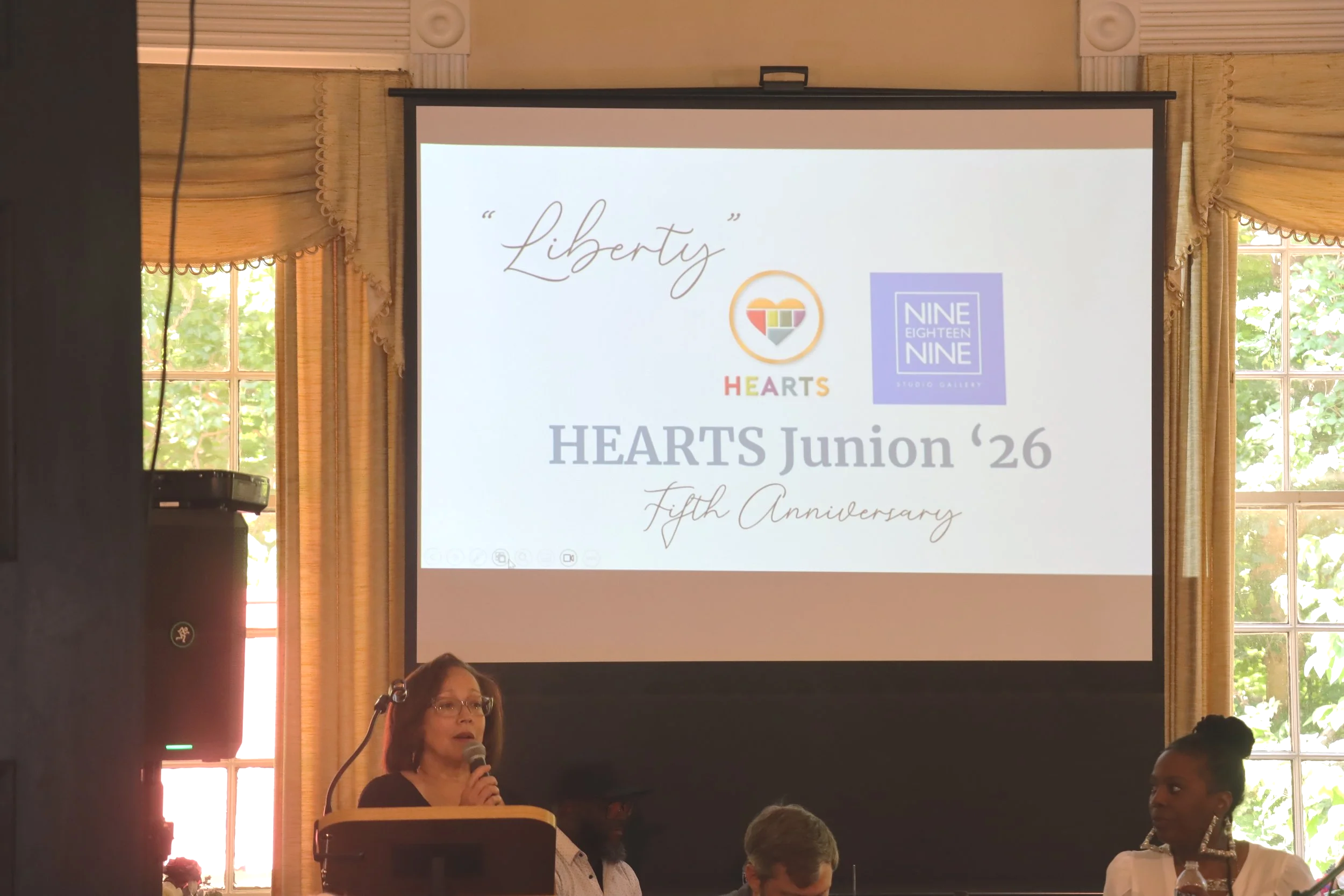
Randolph invited Joanne Rogers, founder and curator of Nine Eighteen Nine Studio Gallery, to share more about the exhibition. Joanne introduced herself and the Charlotte-based gallery, noting its ongoing commitment to supporting local artists and community-centered creative work. She shared her excitement about stepping outside her usual curatorial approach with this exhibit, explaining that the theme of Liberty challenged her to think more broadly about representation. “Liberty affects us all… so I’m hoping that the works that you have seen speak to you in some way.”
She emphasized that the collection reflects both representational and abstract approaches, offering multiple ways of interpreting the theme. Throughout her remarks, she underscored that liberty is not a singular idea, but one that shifts depending on lived experience, perspective, and expression.
Joanne Rogers then invited two of the featured artists, Camisha McDaniel and Barbara Ellis, to share brief reflections on their work and interpretations of the theme Liberty.
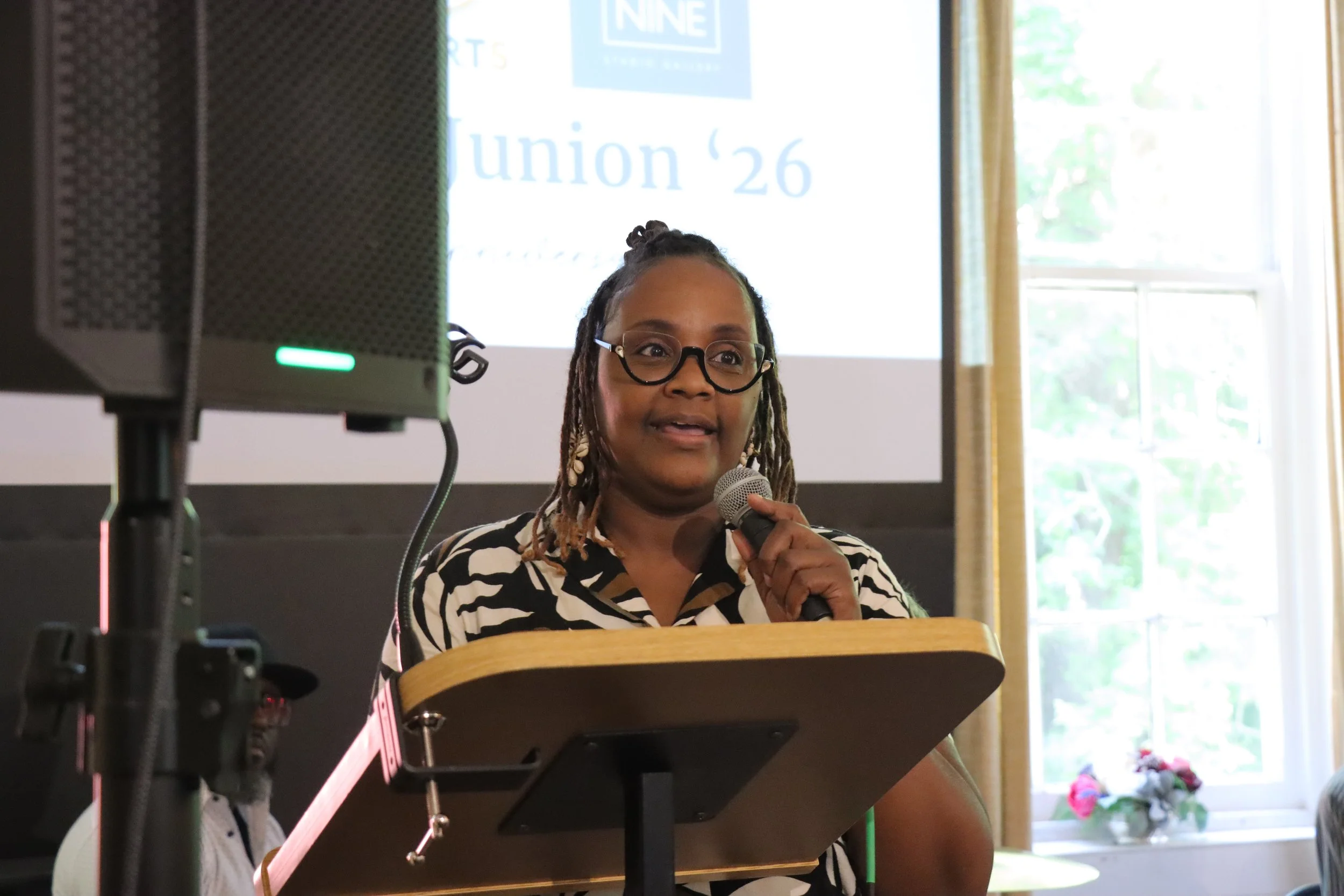
Camisha McDaniel, whose representational work was on display in the exhibit, spoke first. She introduced herself as a mixed-media artist whose practice is rooted in storytelling, lived experience, and spirituality. “I am a portfolio mixed-media artist who paints images that represent life experiences, my spirituality. I’m definitely a storyteller.” She shared that several of her pieces in the exhibition directly explore ideas of freedom and personal liberation, shaped through both memory and lived experience. “I have four pieces out there that definitely speak about liberty and freedom.”
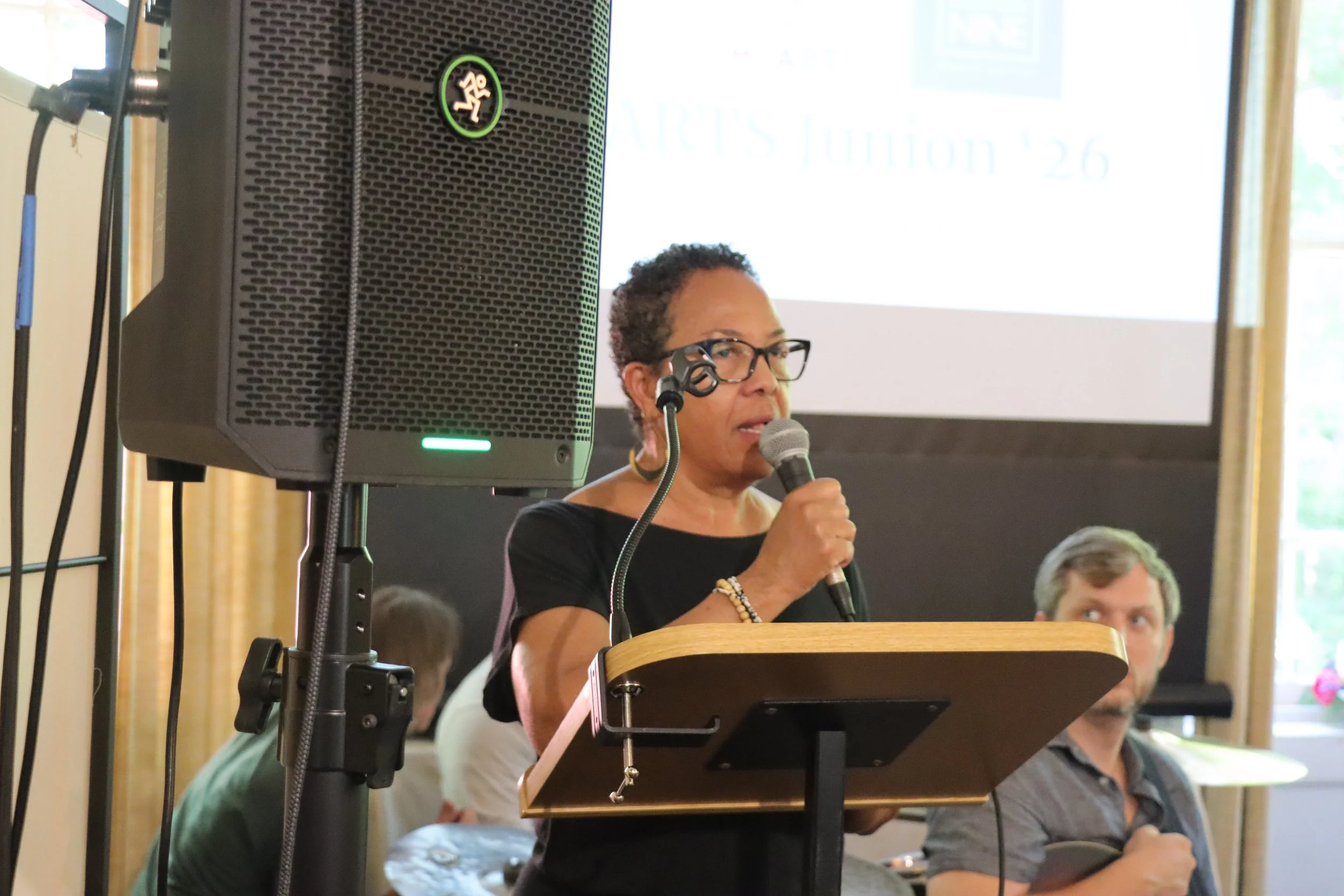
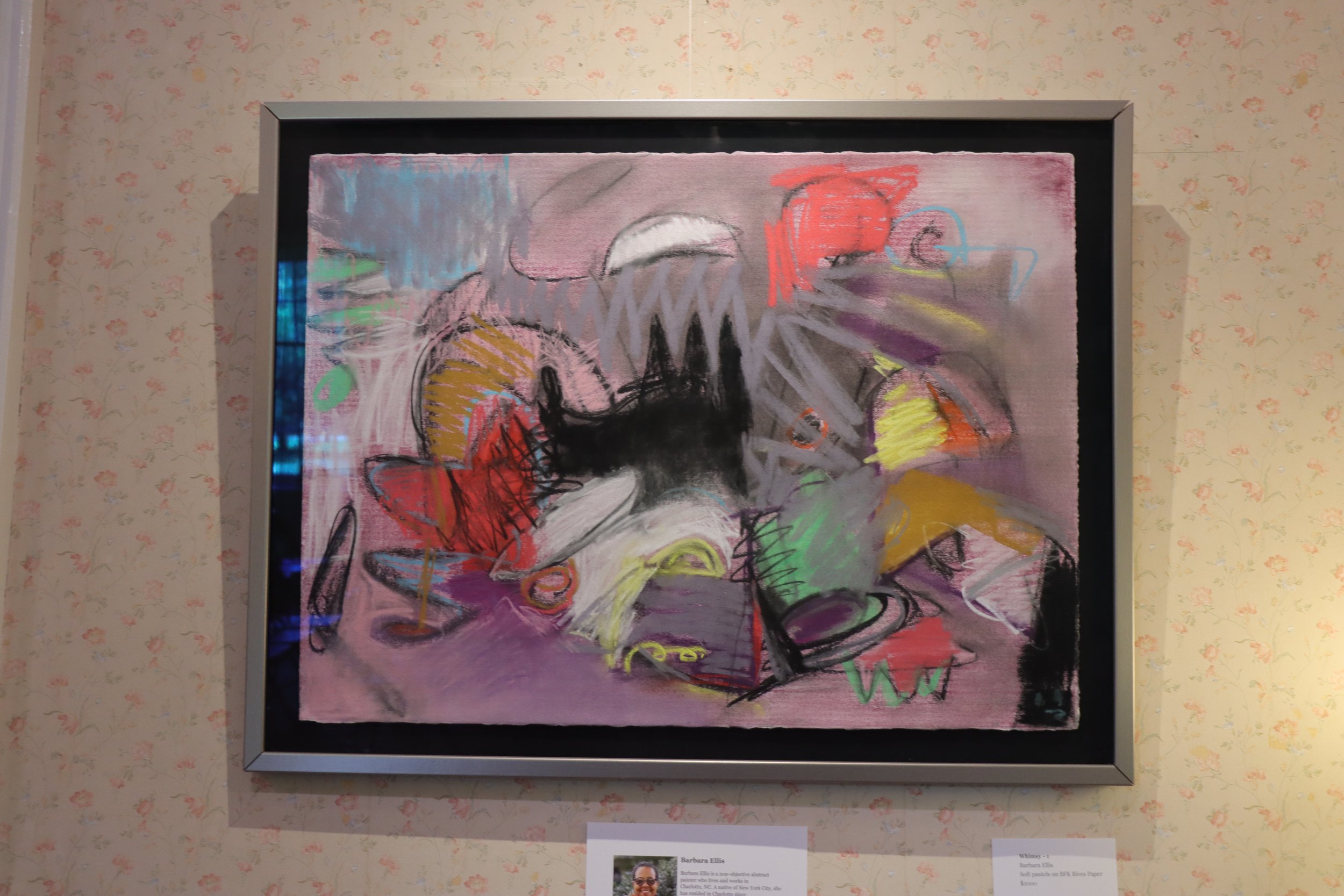
Barbara Ellis followed, introducing herself as an abstract artist whose work is largely non-representational, guided more by intuition, emotion, and internal reflection than by the physical world. “It does not express what we see in the 3D world, but more so from my spirit, what’s on my mind. I don’t even know sometimes what’s going to come out.” She shared that two of the works in the exhibition were created during the COVID-19 pandemic, a period when she stepped away from her studio and worked instead from her backyard. Using soft pastels and dry media, she described the process as both improvisational and grounding. “I was afraid to go to the studio, so I didn’t… I just started to create.”
Barbara reflected on how that time outside traditional studio space shaped the feeling of the work, connecting it to a sense of liberty and freedom found in making art under unexpected circumstances. “I just slap paint on canvas and stand back and see what is it that I need so that I can make some sense of it.” In one piece, she described discovering a figure emerging within the work, an expressive woman who ultimately became the focus of the composition, titled To Love Me the Way I Am. “That speaks to liberty as well, because we all have the freedom to be exactly who we are.” Barbara closed by connecting the idea of self-acceptance and artistic freedom to the broader theme of Liberty.
About HEARTS
Designed to inspire and enhance our community’s shared sense of place, HEARTS Happenings are grass-roots events known for juxtaposing regional history and ecology with curated local music, visual art, and dance in multi-faceted, place-based programs. HEARTS (History, Ecology, Arts, Reunion, Trails, and Store) is made possible by dedicated volunteers, HEARTS Circle members, 2026 HEARTS Presenting Sponsors Lake Norman Realty and blueharbor bank, and generous donations from the community. All proceeds further the HEARTS mission of historic preservation, ecological conservation, and forging community connections in our region. HEARTS Collaborative is actively working to help preserve, connect, and share some of our region’s most important historic landmarks. Learn more about HEARTS and join us to achieve goals to honor our local history and enhance our communities through sustainable uses of our special places. www.HEARTSCollaborative.org.
